Dipteryx oleifera
(Benth.) Taub.
Almendro, Tonka bean
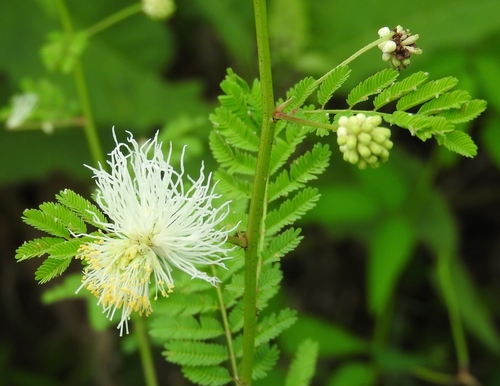
iNaturalist· cc-by-nc
(c) Ennio Arcia, some rights reserved (CC BY-NC), uploaded by Ennio Arcia
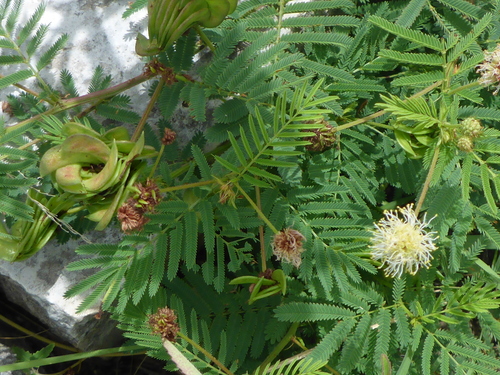
iNaturalist· cc-by-nc
(c) aparayil, some rights reserved (CC BY-NC)
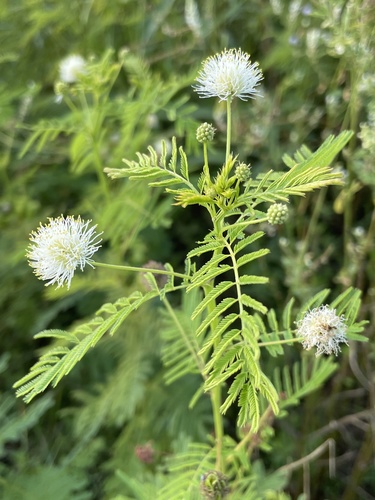
iNaturalist· cc-by-nc
(c) Jakob Rowny, some rights reserved (CC BY-NC), uploaded by Jakob Rowny
Summary
Source: WikipediaDipteryx oleifera (syns. Dipteryx panamensis and Coumarouna panamensis), the tonka bean, eboe, choibá, or almendro tree (almond in Spanish), is a species of emergent rainforest tree up to 55 m (180 ft) tall in the family Fabaceae (the subfamily Papilionoideae), native to Honduras, Nicaragua, Costa Rica, Panama, Colombia, and Ecuador. A valuable hardwood timber tree, its almond-flavored seeds are edible and sold in local markets. Its seedpods are so oily that locals use them as torches. It has "great potential" as an ornamental due to its spectacular bloom of pink flowers which lasts for weeks, and is used as a street tree in Medellín, Colombia. The flowers are followed by green fruit up to 6 cm (2.4 in) with seeds which are a critical food item for the great green macaw (Ara ambigua). Remarkably, this species has been identified as benefiting from being struck by lightning: it is almost undamaged while its parasitic vines and nearby competitors are killed. The trees’ unusual height and wide crown make them up to 68 percent more likely to be struck by lightning relative to other similar trees, and trees living near a large almendro tree are 48 percent more likely to be killed by lightning than those living near another species.
Description
A tree. It grows 20-40 m high. The trunk is large and swollen at the base. It has rounded buttresses. The bark is smooth and flaky. It is light brown. The trunk can be 1 m across. The leaves are compound and alternate. They are 40 cm long. There are 10-20 leaflets. They are bright green. The flowers are in groups 40 cm long at the end of the branches. The flowers are 3 cm across. They are in large clusters. They are purple-pink. The fruit are oval and 4-6 cm long by 3 cm wide. There is one seed. The seed is in a soft woody shell. There is soft flesh around it in a shell.
Edible Uses
Seed - boiled or roasted. The seed, limited by the size of the pod, ranges from 4.5 to 6 cm long, 3 to 3.5 cm wide, and 1 to 1.6 cm thick.
Traditional Uses
The seeds are cooked by boiling and eaten. They are also roasted.
This uses section is brief — help expand it
Distribution
A tropical plant. It grows from sea level to 1,000 m altitude. It grows in the tropical lowlands.
Where It Grows
Central America, Colombia, Costa Rica, Cuba, Ecuador, Honduras, Nicaragua, Panama, South America, West Indies,
Cultivation
A tree of the lowland, humid tropics, found at elevations up to 1,300 metres. It grows in areas where the annual temperature varies between 24 - 30 °c, and the annual rainfall from 3,500 - 5,500mm. Found in the wild in alluvial or sandy soils, and sometimes in acid and clayey soils. A slow-growing tree. The trees begin to flower and set fruit when they are 11 - 12 years old. Fruits develop in about 4 months, usually during a dry period.
Propagation
Seed - viability is generally restricted to a period of 9 - 10 days. Without pre-treatment, germination takes 12 - 20 days and is 80 - 90%. The fruits should be placed on a germination bank or in sand with the peduncle up, taking care that they are half-covered by the medium. Sometimes fruits are planted directly in plastic bags. After 3 - 4 months in the nursery, seedlings can be outplanted. Even though the seeds could be recalcitrant, they can endure a certain degree of dryness. The dry fruits can be stored in moist sawdust for at least 3 months and some seeds will germinate. When pseudocuttings are used for reproduction, they must remain in the nursery for at least 6 months.
Other Uses
The seedpods are used to make torches. These torches consist of about 20 nuts of the almendra tree, rather like nutmegs in shape and size. They are strung tight against each other on a long sliver of black palm and give a light about as bright as a common kerosene lantern. As one nut is consumed, it lights up the next one. . . .Each nut burns for about 5 minutes. The beans are cured in rum to develop their flavour. The bean or its extract is used to perfume and flavour food, tobacco, soap and liqueurs. The heartwood is yellow, darkening to a reddish-yellow upon exposure; it is clearly demarcated from the thick band of much lighter, whitish sapwood that dries to a brown-yellow. The wood is cross and fine-grained; extremely heavy; dense; very hard; tough; strong; very durable, even in contact with the soil. It is difficult to work, taking a good polish. It can be used for industrial floors, bridges, railroad ties, marine construction in waters infested with marine borers, boats, oxcarts, handicrafts, sport implements, springboards, industrial machinery, and agricultural tool handles. It has been used for veneer. A large tree, it is grown in plantations to provide shade for cacao trees (Theobroma cacao).
Synonyms
Also Known As
Almendro de montana, Almendro corozo, Amarillo, Choiba, Choiva, Ebo, Eboe, Ebu, Ibu, Igua sapi, Murube
References (13)
- Chizmar Fernandez, C., et al, 2009, Plantas comestibles de Centroamerica. Instituto de Biodiversidad, Costa Rica. p 199
- Coe, F. G., and Anderson, G. J., 1996, Ethnobotany of the Garifuna of Eastern Nicaragua. Economic Botany 50(1) pp 71-107
- Coe, F. G. & Anderson, G. J., 1997, Ethnobotany of the Miskitu of Eastern Nicaragua. Journal of Ethnobiology 17(2): 171-214
- Coe, F. G. and Anderson, G. J., 1999, Ethnobotany of the Sumu (Ulwa) of Southeastern Nicaragua and Comparisons with Miskitu Plant Lore. Economic Botany Vol. 53. No. 4. pp. 363-386
- Condit, R., et al, 2011, Trees of Panama and Costa Rica. Princeton Field Guides. p 220
Show all 13 references Hide references
- Galeano, G., 2000, Forest Use at the Pacific Coast of Choco, Colombia: A Quantitative Approach. Economic Botany, Vol. 54, No. 3, pp. 358-376
- Grandtner, M. M. & Chevrette, J., 2013, Dictionary of Trees, Volume 2: South America: Nomenclature, Taxonomy and Ecology. Academic Press p 206 (Also as Dipteryx panamensis)
- Kermath, B. M., et al, 2014, Food Plants in the Americas: A survey of the domesticated, cultivated and wild plants used for Human food in North, Central and South America and the Caribbean. On line draft. p 316
- Martin, F. W., et al, 1987, Perennial Edible Fruits of the Tropics. USDA Handbook 642 p 98 (As Coumarouna oleifera)
- Miguel, E., et al, 1989, A checklist of the cultivated plants of Cuba. Kulturpflanze 37. 1989, 211-357 (As Dipteryx panamensis)
- Roa, J. A. G. & Boada, D. S. G., 2018, Fundación para el Fortalecimiento de la Fruticultura y Plantas Alimenticias no Convencionales en Colombia.
- Timbers trop. Amer. 303. 1924 (As Dipteryx panamensis)
- Zuchowski W., 2007, Tropical Plants of Costa Rica. A Zona Tropical Publication, Comstock Publishing. p 240 (As Dipteryx panamensis)