Albizia lebbekoides
(DC.) Benth.
Kariskis
iNaturalist· cc-by
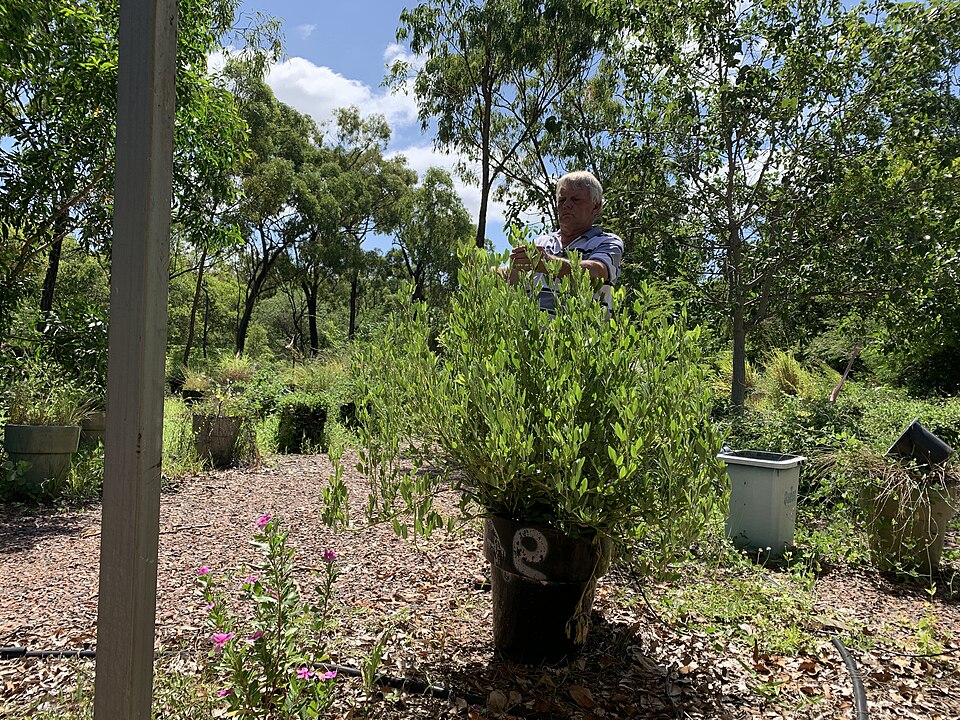
(c) Ian Cowie, some rights reserved (CC BY)
iNaturalist· cc-by
(c) Ian Cowie, some rights reserved (CC BY)
iNaturalist· cc-by
(c) Ian Cowie, some rights reserved (CC BY)
Description
A small tree. It grows 7-8 m tall. It has drooping branches. The young branches are slightly hairy. The bark is hard and grey. The leaves are twice divided and have two rows of leaflets and the leaflets are narrow. There are 7-8 pairs of first leaflets then 10-23 pairs of small leaflets. These leaflets are oblong and 0.7-1.8 cm long by 2-4.2 mm wide. They are asymmetrical at the base. The flower cluster is towards the ends of branches. The flowers are small, greenish yellow and occur in clusters in compound flowers. They have a thin pod. The pod is 8-12 cm long by 1.6-2.2 cm wide. It is dark brown. They contain 7-10 seeds.
Edible Uses
The bark is used in fermenting a traditional Philippine drink known as 'basi'.
Traditional Uses
The bark is used in fermenting a drink known as "basi" in the Philippines.
This uses section is brief — help expand it
Medicinal Uses
The bark is used medicinally.
Known Hazards
The bark contains a toxic alkaloid.
Distribution
It is a tropical plant. It is common and distributed from northern Luzon to southern Mindanao. It grows from sea level to 20 m altitude. It tends to grow in drier savannah locations.
Where It Grows
Asia, Cambodia, East Timor, Indochina, Indonesia, Laos, Pacific, Papua New Guinea, PNG, Philippines, SE Asia, Thailand, Timor-Leste, Vietnam,
Cultivation
Grows in the wild in both red volcanic soils and limestone. This species has a symbiotic relationship with certain soil bacteria; these bacteria form nodules on the roots and fix atmospheric nitrogen. Some of this nitrogen is utilized by the growing plant but some can also be used by other plants growing nearby.
Propagation
Seed - it has a hard seedcoat and may benefit from scarification before sowing to speed up germination. This can usually be done by pouring a small amount of nearly boiling water on the seeds (being careful not to cook them!) and then soaking them for 12 - 24 hours in warm water. By this time they should have imbibed moisture and swollen - if they have not, then carefully make a nick in the seedcoat (being careful not to damage the embryo) and soak for a further 12 hours before sowing.
Other Uses
The bark contains 12 - 17% tannins. It is used to preserve fishing nets. The tannins yield a red dye, formerly used for colouring cloth and known as 'soga tekik' in eastern Java. The dirty white coloured wood is durable and little attacked by insects. It is too light for construction purposes. It is suited for indoor construction. Paddy mills are constructed from the wood. The wood is used for fuel. The tree is sometimes planted to provide shade.
Other Information
It is not known if it is used for food in Papua New Guinea.
Notes
There are 145-150 Albizia species. They grow in the tropics and subtropics. The bark of this one is used as medicine. Also as Mimosaceae.
Synonyms
Also Known As
Camtrang, Songrang
References (9)
- Brown, W.H., 1920, Wild Food Plants of the Philippines. Bureau of Forestry Bulletin No. 21 Manila. p 66
- Burkill, I.H., 1966, A Dictionary of the Economic Products of the Malay Peninsula. Ministry of Agriculture and Cooperatives, Kuala Lumpur, Malaysia. Vol 1 (A-H) p
- Gardner, S., et al, 2000, A Field Guide to Forest Trees of Northern Thailand, Kobfai Publishing Project. p 160
- London J. Bot. 3:89. 1844
- Monsalud, M.R., Tongacan, A.L., Lopez, F.R., & Lagrimas, M.Q., 1966, Edible Wild Plants in Philippine Forests. Philippine Journal of Science. p 489
Show all 9 references Hide references
- Pham-Hoang Ho, 1999, An Illustrated Flora of Vietnam. Nha Xuat Ban Tre. p 828
- Sukarya, D. G., (Ed.) 2013, 3,500 Plant Species of the Botanic Gardens of Indonesia. LIPI p 116
- Verdcourt, B., 1979, Manual of New Guinea Legumes. Botany Bulletin No 11, Division of Botany, Lae, Papua New Guinea. p 185
- World Checklist of Useful Plant Species 2020. Royal Botanic Gardens, Kew