Albizia julibrissin
Durazz.
Silk Tree, Siris
iNaturalist· cc-by-sa
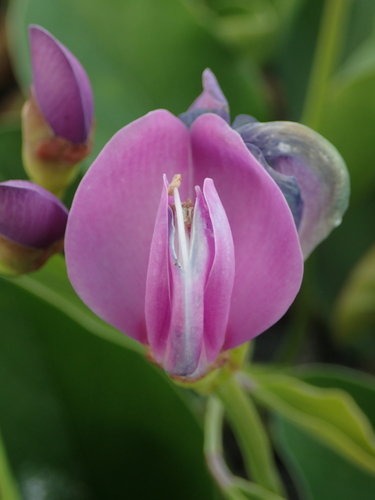
(c) Andrew Butko, some rights reserved (CC BY-SA)
iNaturalist· cc-by-sa
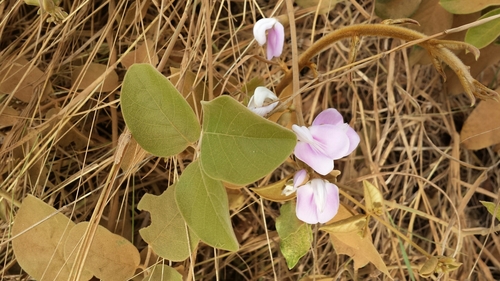
(c) Natureboy1977, some rights reserved (CC BY-SA)
iNaturalist· cc-by-sa
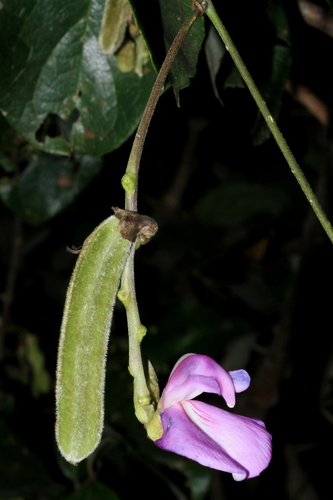
(c) Agnieszka Kwiecień, Nova, some rights reserved (CC BY-SA)
Summary
Source: WikipediaAlbizia julibrissin, the Persian silk tree, pink silk tree, or mimosa tree, is a species of tree in the Fabaceae family, native to southwestern and eastern Asia.
Description
A tree which grows up to 12 m tall and spreads to 10 m wide. It loses its leaves during the year. The crown tends to be flat. The bark is dark brown and smooth. The leaves are twice divided. Each primary leaflet has 20-30 pairs of secondary leaflets. These are 1.5 cm long. The leaflets fold together at night. The flowers are in round pink heads. The stamens are long and silky. The fruit are seed pods. They are 15 cm long.
Edible Uses
Young leaves are cooked and used as a potherb, offering an aromatic flavour. Flowers are also cooked and eaten as a vegetable. The dried leaves serve as a tea substitute.
Traditional Uses
The young leaves are cooked and eaten as a potherb. The flowers are eaten as a vegetable. The dried leaves are used as a tea.
This uses section is brief — help expand it
Medicinal Uses
The flower heads are carminative, digestive, sedative, and tonic. Internally they are used to treat insomnia, irritability, breathlessness, and poor memory. Flowers are harvested as they open and dried for later use. The stem bark is anodyne, anthelmintic, carminative, discutient, diuretic, oxytocic, sedative, stimulant, tonic, vermifuge, and vulnerary. It is used internally for insomnia, irritability, boils, and carbuncles, and applied externally to injuries and swellings. Bark is harvested in spring or late summer and dried for use. A gummy plant extract is also used as a plaster for abscesses and boils, and as a retentive dressing in fractures and sprains.
Known Hazards
The seeds contain toxic amino acids.
Distribution
It is a temperate to tropical plant. It grows naturally from Iran to China in open sunny ravines, forests and by rivers up to 2100 metres in the Himalayas. It needs a well drained but moist soil but can grow in dry soil. They can tolerate high pH, salty soils, drought and wind. Trees when dormant are hardy to -10°C or in continental climates - 20°C. Young growth is frost tender. It suits hardiness zones 6-12. It grows well in places with cool winters and hot summers. Arboretum Tasmania. in Yunnan. National Arboretum Canberra.
Where It Grows
Afghanistan, Africa, Argentina, Asia, Australia, Balkans, Bhutan, Brazil, Britain, Bulgaria, Canada, Caribbean, Central Asia, China, East Africa, East Timor, Europe, Greece, Himalayas, India, Indochina, Iran, Iraq, Italy, Jamaica, Japan, Korea, Mauritius, Mediterranean, Middle East, Myanmar, Nepal, New Zealand, North America, Pakistan, Peru, Portugal, Russia, SE Asia, South America, Spain, Taiwan, Tajikistan, Tasmania, Timor-Leste, Turkey, Türkiye, Uruguay, USA, Vietnam, West Indies, Zimbabwe,
Cultivation
Requires a well-drained moisture retentive soil and a very sunny position. Succeeds in dry soils. Highly fertile soils can promote soft sappy growth which is frost tender. Trees tolerate a high pH, saline soils, high winds and drought. They also succeed in poor soils. Trees prefer a more continental climate than Britain and when dormant are hardy to about -20°c in such a zone. They are only hardy to about -10°c in the maritime climate of this country. The young growth in spring, even on mature plants, is frost-tender and so it is best to grow the plants in a position sheltered from the early morning sun. They succeed on a sunny wall at Kew, and also in a more open but sunny sheltered position there, but only really succeed outdoors in the mildest areas of Britain. If killed back to the ground by a severe winter, plants can often resprout from the base. The form 'Rosea' is hardier and more compact, succeeding even in the drier parts of Britain if given some protection. Plants are quite tolerant of pruning and can be fan-trained for growing on a wall. Any pruning is best done in late winter or early spring. Often grown as a summer bedding plant. Quite tolerant of being transplanted. Plants often produce suckers. Plants in this genus are notably resistant to honey fungus. This species has a symbiotic relationship with certain soil bacteria, these bacteria form nodules on the roots and fix atmospheric nitrogen. Some of this nitrogen is utilized by the growing plant but some can also be used by other plants growing nearby.
Propagation
Pre-soak seed for 24 hours in hot water, then sow in March/April in a greenhouse, or sow fresh seed in a cold frame as soon as it ripens. Germination occurs in 2–3 months at 19°C, and scarification is beneficial. There are approximately 11,000 seeds per pound, with a germination rate of around 25–33%. Prick seedlings into individual pots of fairly rich soil when large enough and grow on under glass through at least their first winter. Plant out in late spring or early summer, with cold protection recommended for the first winter or two. Root cuttings can be taken in late winter in a greenhouse. Half-ripe cuttings are possible in July/August in a frame. Suckers can be planted out in late winter.
Other Uses
A gummy extract of the plant is used as a plaster, though no further details are given. The wood is dense, hard, strong, and takes a good polish, making it suitable for furniture, industrial applications, and firewood. The plant is valued in carbon farming and is a nitrogen fixer.
Production
It is fast growing. Trees live for about 20 years.
Notes
There are 145-150 Albizia species. They grow in the tropics and subtropics. This one can become invasive. Also as Mimosaceae.
Synonyms
Also Known As
Hehuan, Ho huan, Hophoan, Nemu, Persian acacia, Pink siris, Seto siris, Shut happy, Vang-nyong
References (27)
- Benvenuti, S. & Mazzoncini, M., 2021, The Biodiversity of Edible Flowers: Discovering New Tastes and New Health Benefits. Frontiers in Plant Science Article 569499.
- Bircher, A. G. & Bircher, W. H., 2000, Encyclopedia of Fruit Trees and Edible Flowering Plants in Egypt and the Subtropics. AUC Press. p 17
- Blamey, M and Grey-Wilson, C., 2005, Wild flowers of the Mediterranean. A & C Black London. p 80
- Bodkin, F., 1991, Encyclopedia Botanica. Cornstalk publishing, p 62
- Brickell, C. (Ed.), 1999, The Royal Horticultural Society A-Z Encyclopedia of Garden Plants. Convent Garden Books. p 93
Show all 27 references Hide references
- Brown, D., 2002, The Royal Horticultural Society encyclopedia of Herbs and their uses. DK Books. p 109
- Coombes, A.J., 2000, Trees. Dorling Kindersley Handbooks. p 192
- Cundall, P., (ed.), 2004, Gardening Australia: flora: the gardener's bible. ABC Books. p 122
- Etherington, K., & Imwold, D., (Eds), 2001, Botanica's Trees & Shrubs. The illustrated A-Z of over 8500 trees and shrubs. Random House, Australia. p 84
- Facciola, S., 1998, Cornucopia 2: a Source Book of Edible Plants. Kampong Publications, p 151
- Hedrick, U.P., 1919, (Ed.), Sturtevant's edible plants of the world. p 31
- ILDIS Legumes of the World http:www;ildis.org/Legume/Web
- Kunkel,
- Llamas, K.A., 2003, Tropical Flowering Plants. Timber Press. p 211
- Lamberton, K (Ed.), 2004, The Australian gardening encyclodepia. Murdoch Books, NSW Australia. p 155
- Little, E.L., 1980, National Audubon Society Field Guide to North American Trees. Alfred A. Knopf. p 517
- Liu, Yi-tao, & Long, Chun-Lin, 2002, Studies on Edible Flowers Consumed by Ethnic Groups in Yunnan. Acta Botanica Yunnanica. 24(1):41-56
- Mag. Tosc. 3(4):11. 1772
- Manandhar, N.P., 2002, Plants and People of Nepal. Timber Press. Portland, Oregon. p 80
- Marinelli, J. (Ed), 2004, Plant. DK. p 443
- Pham-Hoang Ho, 1999, An Illustrated Flora of Vietnam. Nha Xuat Ban Tre. p 828
- Plants for a Future database, The Field, Penpol, Lostwithiel, Cornwall, PL22 0NG, UK. http://www.scs.leeds.ac.uk/pfaf/
- READ
- Ryan, S., 2008, Dicksonia. Rare Plants Manual. Hyland House. p 7
- Valder, P., 1999, The Garden Plants of China. Florilegium. p 263
- Woo, Y., et al, 2017, Antioxidant Potential of Selected Korean Edible Plant Extracts. Hindawi BioMed Research International Volume 2017, Article ID 7695606
- Young, J., (Ed.), 2001, Botanica's Pocket Trees and Shrubs. Random House. p 80