Pinus maximartinezii
Rzedowski
Martinez pinon
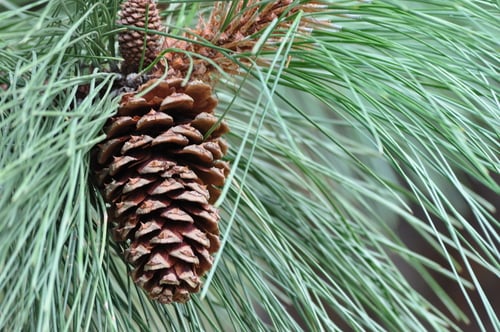
iNaturalist· cc-by-sa
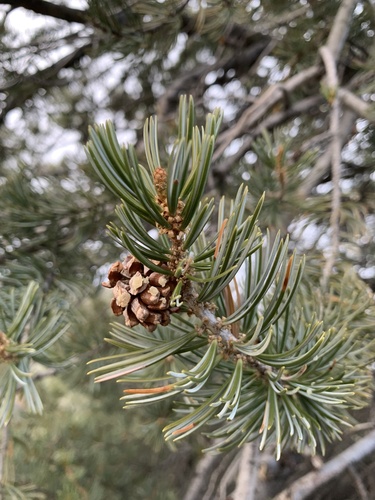
(c) M. Socorro González Elizondo, some rights reserved (CC BY-SA), uploaded by M. Socorro González Elizondo
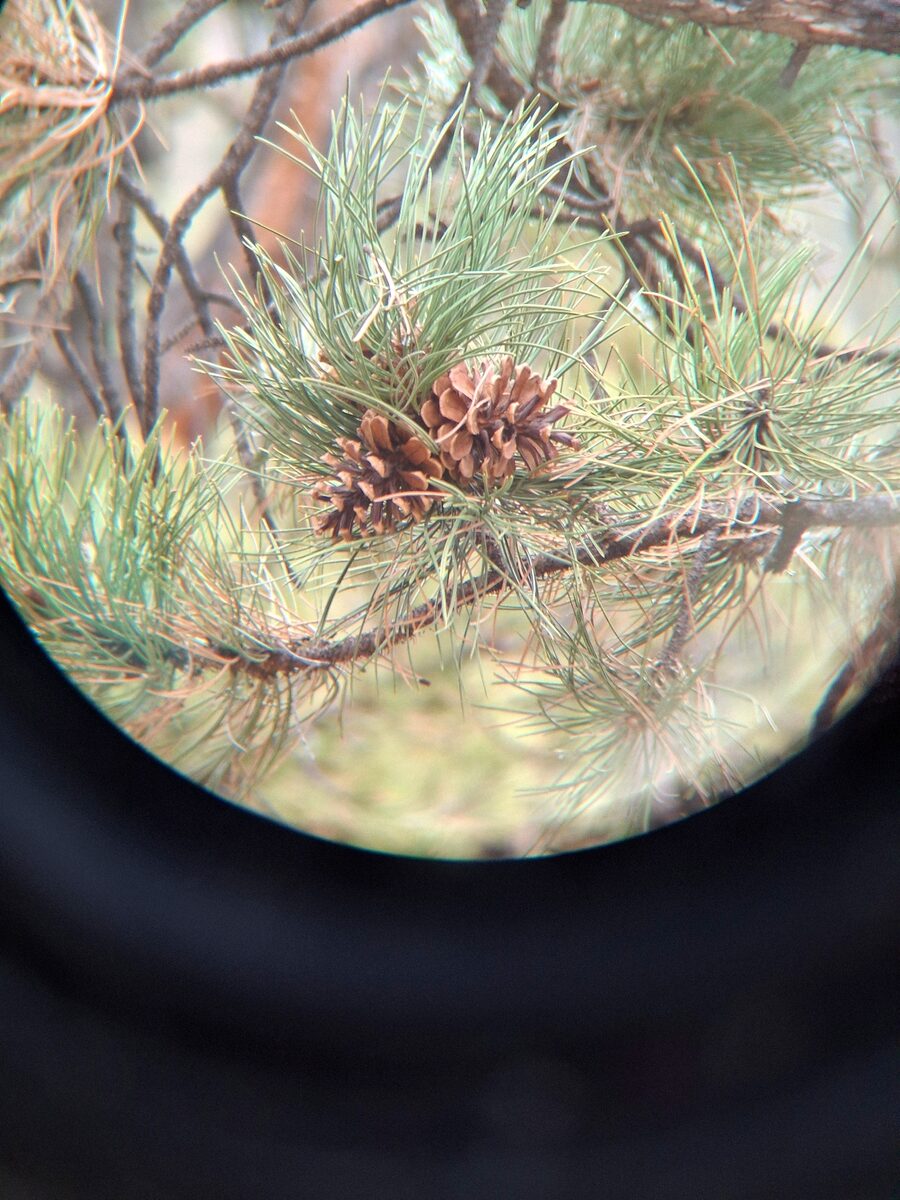
iNaturalist· cc-by-sa
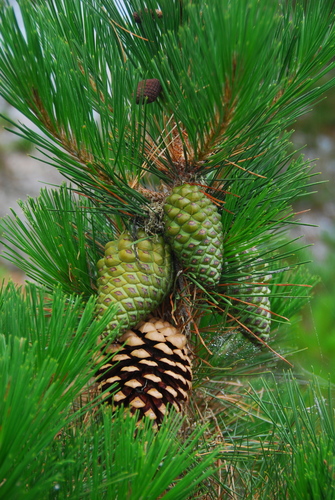
(c) M. Socorro González Elizondo, some rights reserved (CC BY-SA), uploaded by M. Socorro González Elizondo
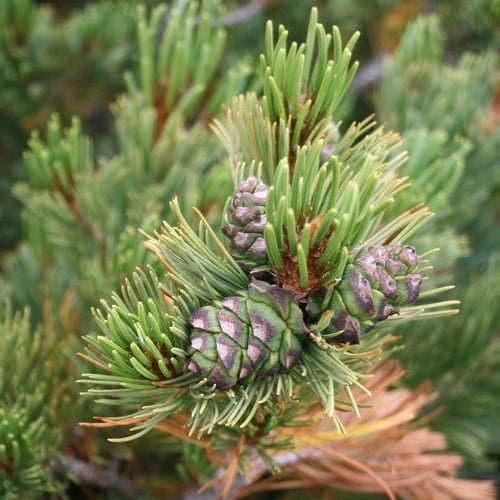
iNaturalist· cc-by-nc
(c) Jeff Bisbee, some rights reserved (CC BY-NC), uploaded by Jeff Bisbee
Summary
Source: WikipediaPinus maximartinezii, called Martinez pinyon, big-cone pinyon or maxipiñon, is a pine in the pinyon pine group, native to west-central Mexico.
Description
A tree. It grows 5-10 m high. The trunk is 40-50 cm across. It branches low. The trunk is often curved or twisted. The bark breaks into 10 cm square plates. The seeds are in groups of 5. The seeds can be 2.5 cm long.
Edible Uses
Seed - raw or cooked. Rich in oil, with a slightly resinous flavour. The seeds are very large, usually 22 - 26mm long and thus the largest of any pine species. A vanillin flavouring is obtained as a by-product of other resins that are released from the pulpwood.
Medicinal Uses
Oil of turpentine, obtained from the oleo-resin of all pine trees, is antiseptic, antispasmodic, astringent, diuretic, rubefacient, stimulant and vermifuge. It is a valuable remedy used internally in the treatment of kidney and bladder complaints and is used both internally and as a rub and steam bath in the treatment of rheumatic affections. It is also very beneficial to the respiratory system and so is useful in treating diseases of the mucous membranes and respiratory complaints such as coughs, colds, influenza and TB. Applied externally in the form of liniment plasters, poultices, herbal steam baths and inhalers, it is a very beneficial treatment for a variety of skin complaints, wounds, sores, burns, boils etc.
Known Hazards
The wood, sawdust and resins from various species of pine can cause dermatitis in sensitive people.
Distribution
It is a subtropical plant. Arboretum Tasmania.
Where It Grows
Australia, Central America, Mexico, North America, Tasmania,
Cultivation
Pinus maximartinezii is found in the subtropical to tropical climate of central Mexico. It is a not a very cold-hardy plant, those plants from the more northerly of its provenences are able to tolerate short periods with temperatures down to around -5°c when fully dormant, those from the more southerly provenence are less tolerant of cold. Precipitation is probably around 700 - 800mm annually, virtually restricted to four months in the summer. The plant is lkely to succeed in Mediterranean-type climates. Pine species in general require a sunny position if they are to grow well and, whilst the diferent species have their own soil preferences, most will thrive in a light well-drained sandy or gravelly loam. The ovoid-truncate seed cones can range from 15 - 27cm long and 10 - 15cm wide. The green cones can reach weights of 1.5 - 2 kilos. They can take 2 - 3 growing seasons to mature, usually remaining more or less closed on the tree until broken open by animals, particularly squirrels and birds. It is not known if fire stimulates the cones to open. This is one of several species of pine that have a mutualistic relationship with species of birds in the family Corvidae (in this case Jays and Nutcrackers) to disperse its seed. The birds have powerfull beaks which enable them to extricate the seeds and crack the shells. They store many of the seeds at some distance from the parent plant - some of these seeds never get eaten and can germinate and grow into new trees. Seedlings have up to 24 cotyledons on germination (the most of any plant), and continue to produce juvenile foliage only for several years, with nodding white shoots and single 3-4 cm leaves, strongly glaucous. Plants in this genus are notably susceptible to honey fungus.
Propagation
It is best to sow the seed in individual pots in a cold frame as soon as it is ripe if this is possible otherwise in late winter. A short stratification of 6 weeks at 4°c can improve the germination of stored seed. Plant seedlings out into their permanent positions as soon as possible and protect them for their first winter or two. Plants have a very sparse root system and the sooner they are planted into their permanent positions the better they will grow. Trees should be planted into their permanent positions when they are quite small, between 30 and 90cm. We actually plant them out when they are about 5 - 10cm tall. So long as they are given a very good weed-excluding mulch they establish very well. Larger trees will check badly and hardly put on any growth for several years. This also badly affects root development and wind resistance. Cuttings. This method only works when taken from very young trees less than 10 years old. Use single leaf fascicles with the base of the short shoot. Disbudding the shoots some weeks before taking the cuttings can help. Cuttings are normally slow to grow away.
Other Uses
A tan or green dye is obtained from the needles. Oleo-resins are present in the tissues of all species of pines, but these are often not present in sufficient quantity to make their extraction economically worthwhile. The resins are obtained by tapping the trunk, or by destructive distillation of the wood. In general, trees from warmer areas of distribution give the higher yields. Oil of Turpentine consists of an average of 20% of the oleo-resin and is separated by distillation. Turpentine has a wide range of uses including as a solvent for waxes etc, for thinning and dissolving varnish and paints, a shoe polish, medicinal etc. Rosin is also obtained by distillation of pine resin. This is used in paper glue and soap manufacturing, as a constituent of varnishes and paints, and for coating the bows of stringed musical instruments such as violins. Pitch can also be obtained from the resin and is used for waterproofing, as a wood preservative etc. Due to the tree's low stature and branching of the trunk, the timber is little used, though the wood used to be collected for fuel. The needles contain a substance called terpene, this is released when rain washes over the needles and it has a negative effect on the germination of some plants, including wheat.
Other Information
The seeds are sold in local markets.
Notes
There are over 100 species of Pinus. It is an endangered species.
Synonyms
Also Known As
Martinez pine, Maxipinon
References (9)
- Ciencia (Mexico) 23:17, t. 2. 1964
- Ciesla, W.M., 1998, Non-wood forest products from conifers. Non-wood forest products 12, FAO, Rome, p 73
- Facciola, S., 1998, Cornucopia 2: a Source Book of Edible Plants. Kampong Publications, p 170
- Farjon, A., and Styles, B. T., 1997, Pinus (Pinaceae): Flora Neotropica, Vol. 75, pp. 1-291
- Glowinski, L., 1999, The Complete Book of Fruit Growing in Australia. Lothian. p 134
Show all 9 references Hide references
- Grandtner, M. M., 2008, World Dictionary of Trees. Wood and Forest Science Department. Laval University, Quebec, Qc Canada. (Internet database http://www.wdt.qc.ca)
- Kermath, B. M., et al, 2014, Food Plants in the Americas: A survey of the domesticated, cultivated and wild plants used for Human food in North, Central and South America and the Caribbean. On line draft. p 661
- Mapes, C. & Basurto, F., 2016, Biodiversity and Edible Plants of Mexico. Chapter 5 in R. Lira, et al. (eds.), Ethnobotany of Mexico, Ethnobiology, Springer. p 91
- Segura, S., et al, 2018, The edible fruit species in Mexico. Genet Resour Crop Evol (2018) 65:1767–1793