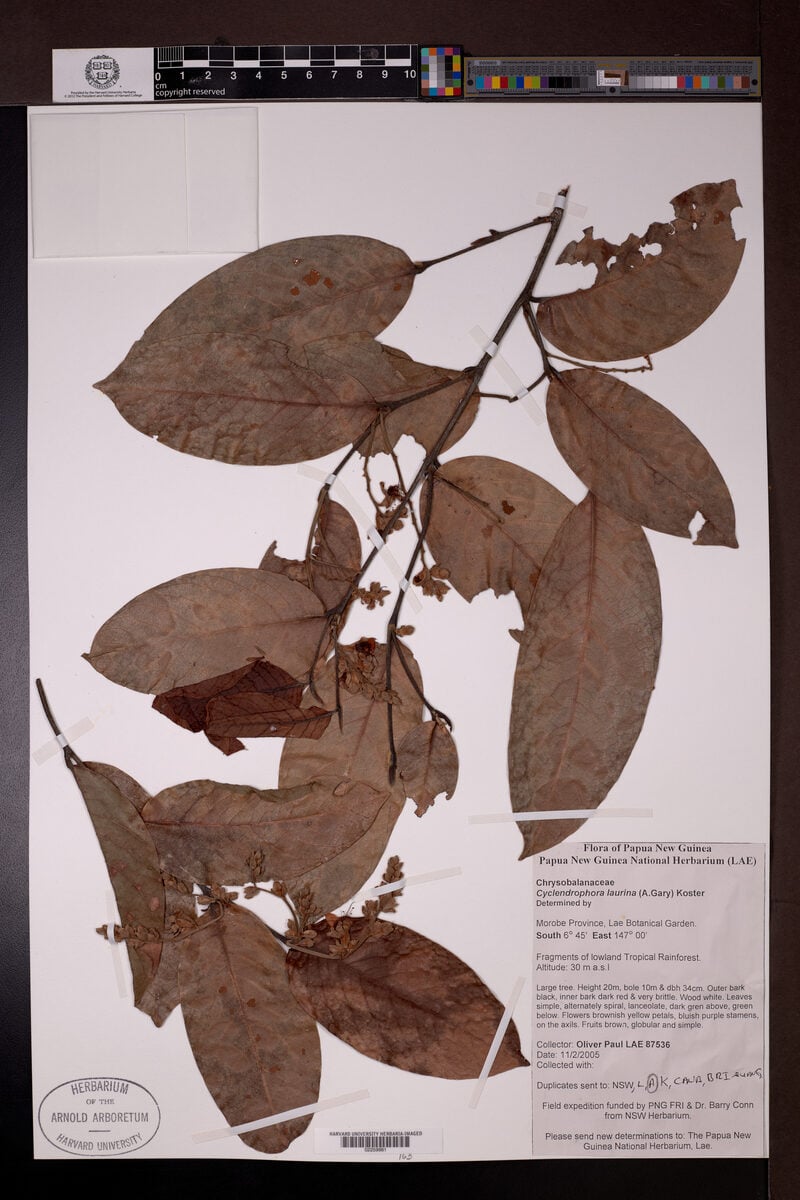
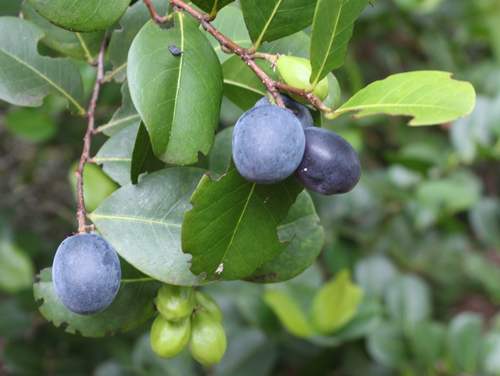
Couepia subcordata
Benth. ex Hook.f.
Umarirana
iNaturalist· cc-by-nc
(c) esa_bt, some rights reserved (CC BY-NC)
iNaturalist· cc-by-nc
(c) esa_bt, some rights reserved (CC BY-NC)
gbif· cc-by-nc
Field Museum of Natural History - Botany Department | GDI 2013-2015
Description
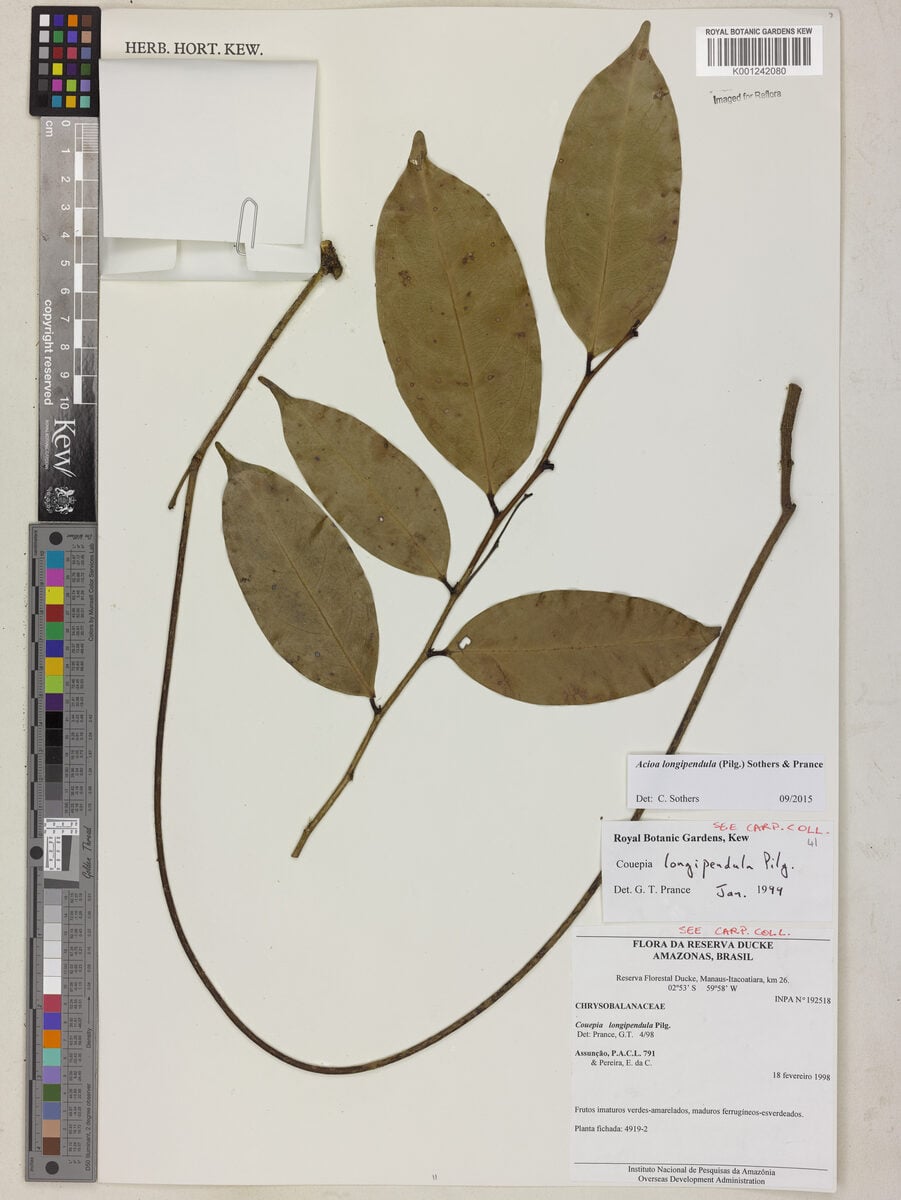
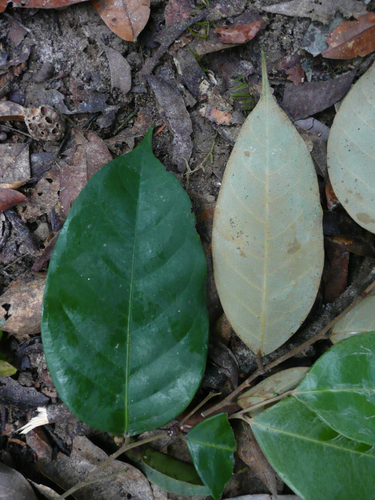
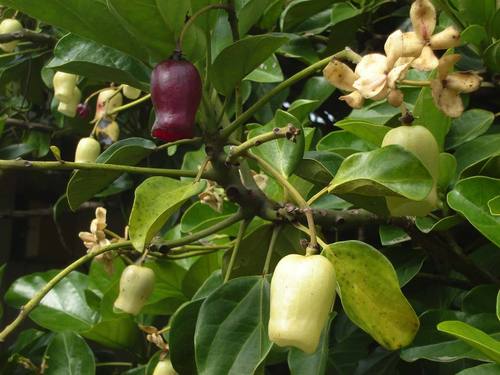
An evergreen tree. It grows 10-20 m tall. The crown has lots of leaves. The leaves are papery and smooth on the upper surface but brownish white with fine hairs underneath. The leaves are 12-17 cm long. The leaf stalks are hairy and 6-7 mm long. The flowers are in groups in the axils of leaves and at the ends of branches. The flowers are a dull white colour. The fruit is oval and fleshy. The skin is smooth and the pulp is fleshy.
Edible Uses
Fruit - raw. A sweet, fleshy, fibreless pulp. The fruit is rich in carotenoids. The yellow-green fruit is about 8cm long and 6 cm wide, containing a single, large seed.
Traditional Uses
Fruit are eaten fresh.
This uses section is brief — help expand it
Distribution
A tropical plant. It grows naturally in the dryland forests in the central Amazon in Brazil.
Where It Grows
Amazon, Brazil*, Colombia, Ecuador, Peru, South America,
Cultivation
Plants are grown from seed. The seeds are collected from ripe fruit and the fruit are stored in plastic bags to make it easier to remove the pulp. The seeds are washed under running water and planted fresh. Seeds emerge in 15-55 days.
Propagation
Seed - best sown as soon as it is ripe in a partially shaded position in individual containers. A germination rate in excess of 50% can be expected, with the seeds sprouting within 15 - 55 days. Seedlings grow away quickly.
Other Uses
The wood is medium-textured, irregular-grained, moderately heavy, hard, with an average susceptibility to rot. It is used in light carpentry and for carving. The wood is mainly used for fuel. A fast-growing tree that is a natural pioneer within its native range. It also provides an edible fruit and should make a good choice as a pioneer when establishing woodland.
Production
Trees grow quickly.
Other Information
It is sometimes cultivated. The fruit are sold in local markets.
Notes
There are 71 Couepia species. They are all in tropical America. The fruit are rich in carotenoids.
Synonyms
Also Known As
Guaiji, Huayhi, Mariramba, Marirana, Mary-rana, Sacha umari, Subcordate couepia, Supay ocote, Umarirana
References (14)
- Ferns, Useful Tropical Plants
- Grandtner, M. M. & Chevrette, J., 2013, Dictionary of Trees, Volume 2: South America: Nomenclature, Taxonomy and Ecology. Academic Press p 167
- Hermandez Bermejo, J.E., and Leon, J. (Eds.), 1994, Neglected Crops. 1492 from a different perspective. FAO Plant Production and Protection Series No 26. FAO, Rome. p15
- Kermath, B. M., et al, 2014, Food Plants in the Americas: A survey of the domesticated, cultivated and wild plants used for Human food in North, Central and South America and the Caribbean. On line draft. p 270
- Lopez-Diago, D. & Garcia, N., 2021, Wild edible fruits of Colombia. Biota ColomBiana 22 (2) p 35
Show all 14 references Hide references
- Lorenzi, H., Bacher, L., Lacerda, M. & Sartori, S., 2006, Brazilian Fruits & Cultivated Exotics. Sao Paulo, Instituto Plantarum de Estuados da Flora Ltda. p 122
- Lorenzi, H., 2009, Brazilian Trees. A Guide to the Identification and Cultivation of Brazilian Native Trees. Instituto Plantarum de Estuados da Flora Ltda. Vol. 3 p 80
- Martin, F. W., et al, 1987, Perennial Edible Fruits of the Tropics. USDA Handbook 642 p 92
- Paz, F. S., et al, 2021, Edible Fruit Plant Species in the Amazon Forest Rely Mostly on Bees and Beetles as Pollinators. Journal of Economic Entomology, XX(XX), 2021, 1–13
- Reis, S. V. and Lipp, F. L., 1982, New Plant Sources for Drugs and Foods from the New York Botanical Garden herbarium. Harvard. p 108
- Roa, J. A. G. & Boada, D. S. G., 2018, Fundación para el Fortalecimiento de la Fruticultura y Plantas Alimenticias no Convencionales en Colombia.
- Torre, de la, L., et al, 2008, Enciclopedia de las Plantas Útiles del Ecuador. Herbario QCA. Pontificia Universidad Católica del Ecuador. p 281
- Vasquez, R. and Gentry, A. H., 1989, Use and Misuse of Forest-harvested Fruits in the Iquitos Area. Conservation Biology 3(4): 350f
- World Checklist of Useful Plant Species 2020. Royal Botanic Gardens, Kew