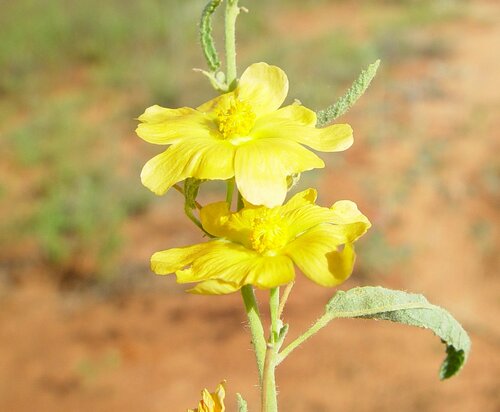
Quararibea funebris
(La Llave) Vischer
Rosita de Cacao
iNaturalist· cc-by-nc
(c) jaumeizquierdo, some rights reserved (CC BY-NC), uploaded by jaumeizquierdo
iNaturalist· cc-by-nc
(c) Bodo Nuñez Oberg, some rights reserved (CC BY-NC)
Summary
Source: WikipediaQuararibea funebris has common names including huyu (Maya), flor de cacao, madre de cacao, coco mama, swizzle stick tree, cacahuaxochitl or cacaoxochitl, (Nahuatl = chocolate flower) rosa de cacao, rosita de cacao, tepecacao, funeral tree, flor de tejate and tejate. It is a tree native to Belize, Costa Rica, El Salvador, Guatemala, Honduras, Mexico and Nicaragua. This plant is used as a medicinal plant, and the flowers as one of the essential ingredients in the traditional chocolate-maize drink known as tejate. The twigs also have some of the distinctive flavour and are used for mixing and frothing tejate while preparing it. Quararibea fieldii and Quararibea guatemalteca flowers and twigs were reported as used in the same manner but these species are now regarded as synonyms of Q. funebris subsp. funebris. There are two recognised subspecies: Q. funebris subsp. funebris and Q. funebris subsp. nicaraguensis The flowers of plants of this genus are also depicted on Maya drinking vessels used for cacao. The first report by Europeans was in the 16th century by Bernardino de Sahagún who provided an illustration of the flowers being harvested by Aztecs and reported: "There are also other trees called cacauaxochitl which bear flowers which are called cacauaxochitl. They are like jasmine and have a very delicate but pungent fragrance." As well as adding flavour, the flowers are mucilaginous and thicken the drinks made from it. Schultes reported that all species of Quararibea have the distinctive odour and the smell remains strong even on herbarium specimens more than a century old. The epithet funebris meaning "of funerals, funereal" comes from the observations reported by Pablo de La Llave, who published the first botanical description of the plant. In Izucar, funerals were held under the lowest branches of their one large tree. The flowers were taken from the tree to flavour a cold cocoa drink called pozonqui, drunk at weddings and festivals.
Description
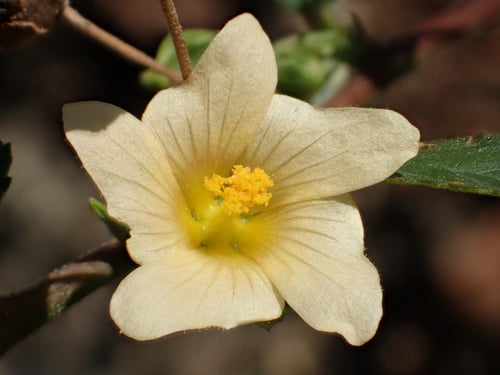
An evergreen tree. It grows 15-25 m tall. The trunk can be 25 cm across. It is smooth and slightly fluted. The branches are arranged in rings and come out horizontally from the trunk. The upper half droops. The leaves are alternate, simple and entire. The leaf stalk is 7-27 mm long. The leaf blade is oval and 8-40 cm long by 3-13 cm wide. The flowers can occur singly or as a few together. The flower stalk is 1-1.5 cm long. The flowers are tubular or funnel shaped. There are 5 petals that are spoon shaped. They are 1.5-4 cm long and white. The fruit is fleshy with one stone inside. It is 2-3 cm long by 1.5 cm wide. There are 1-2 seeds.
Edible Uses
The flowers are dried and used as an aromatic spice to flavour chocolate drinks. The leaves are sold as a spice on local markets and can be eaten.
Traditional Uses
The flowers yield an aromatic spice. The dried flowers are used to flavour chocolate drinks.
This uses section is brief — help expand it
Medicinal Uses
The flowers have aromatic properties used in traditional chocolate preparations.
Distribution
It is native to Mexico. It grows in moist, wet primary forest. It needs fertile, well-drained soils. It can grow in full sun or light shade. It grows up to 1600 m altitude. It suits hardiness zones 10-12.
Where It Grows
Belize, Central America, Costa Rica, El Salvador, Guatemala, Honduras, Mexico, Nicaragua, North America, Panama,
Cultivation
The tree appears to be somewhat hardy and able to survive brief periods of temperatures around freezing. Succeeds in sun or shade. It takes 5 - 6 years for seedling trees to commence flowering. leaves smell strongly and pleasantly of maple syrup after they are pressed and dried.
Other Uses
A perfume is made from the essential oil in the flowers.. The tree provides a good quality wood. The wood is chalky white or slightly yellowish, not highly lustrous, subject to blue-stain; sapwood not clearly defined; rather hard and heavy, straight-grained, medium-textured; tough and strong, easy to work, takes a smooth finish, is not durable when exposed.
Production
It takes 5-6 years before trees start to flower. It can produce flowers all year round but especially in the wet season.
Other Information
Leaves are sold as a spice on local markets.
Notes
Also put in the family Bombacaceae. In the subfamily Bombacoideae.
Synonyms
Also Known As
Arbol canelo, Cacaoxichitl, Canela, Flor de cacao, Madre de cacao, Molinillo, Palanco, Palo de chocolate, Pataste, Saha, Sapote tape, Swizzle stick tree
References (11)
- Barwick, M., 2004, Tropical and Subtropical Trees. A Worldwide Encyclopedic Guide. Thames and Hudson p 352
- Bull. Soc. Bot. Geneve ser. 2, 11:205. 1919
- Grandtner, M. M., 2008, World Dictionary of Trees. Wood and Forest Science Department. Laval University, Quebec, Qc Canada. (Internet database http://www.wdt.qc.ca)
- Hermandez Bermejo, J.E., and Leon, J. (Eds.), 1994, Neglected Crops. 1492 from a different perspective. FAO Plant Production and Protection Series No 26. FAO, Rome. p 12
- Ibarra-Manriquez, G., et al, 1997, Useful Plants of the Los Tuxtlas Rain Forest (Veracruz, Mexico): Considerations of their Market Potential. Economic Botany, Vol. 51, No. 4, pp. 362-376
Show all 11 references Hide references
- Kermath, B. M., et al, 2014, Food Plants in the Americas: A survey of the domesticated, cultivated and wild plants used for Human food in North, Central and South America and the Caribbean. On line draft. p 732
- Llamas, K.A., 2003, Tropical Flowering Plants. Timber Press. p 265
- Piedra-Malagón, E. M., et al, 2022, Edible native plants of the Gulf of Mexico Province. Biodiversity Data Journal 10: e80565 p 24
- PROSEA handbook Volume 13 Spices. p 262
- Roa, J. A. G. & Boada, D. S. G., 2018, Fundación para el Fortalecimiento de la Fruticultura y Plantas Alimenticias no Convencionales en Colombia.
- Smith, N., Mori, S.A., et al, 2004, Flowering Plants of the Neotropics. Princeton. p 57