Durio kutejensis
(Hassk.) Becc.
Durian pulu, Durian kulu, Yellow durian
iNaturalist· cc-by-sa
(c) Ong Jyh Seng, some rights reserved (CC BY-SA), uploaded by Ong Jyh Seng
iNaturalist· cc-by-nc
(c) Andre Ronaldo, some rights reserved (CC BY-NC)
iNaturalist· cc-by-nc
(c) muhammad fantry, some rights reserved (CC BY-NC)
Summary
Source: WikipediaDurio kutejensis, commonly known as durian pulu, durian merah, nyekak, pakan, kuluk, or lai, is a primary rainforest substorey fruit tree from Borneo.
Description
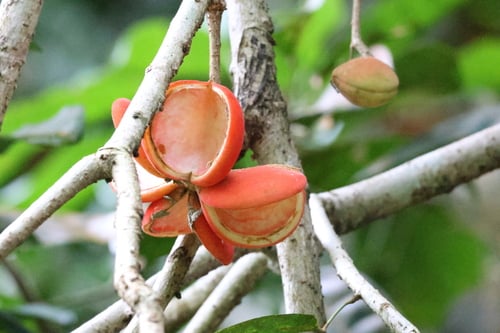
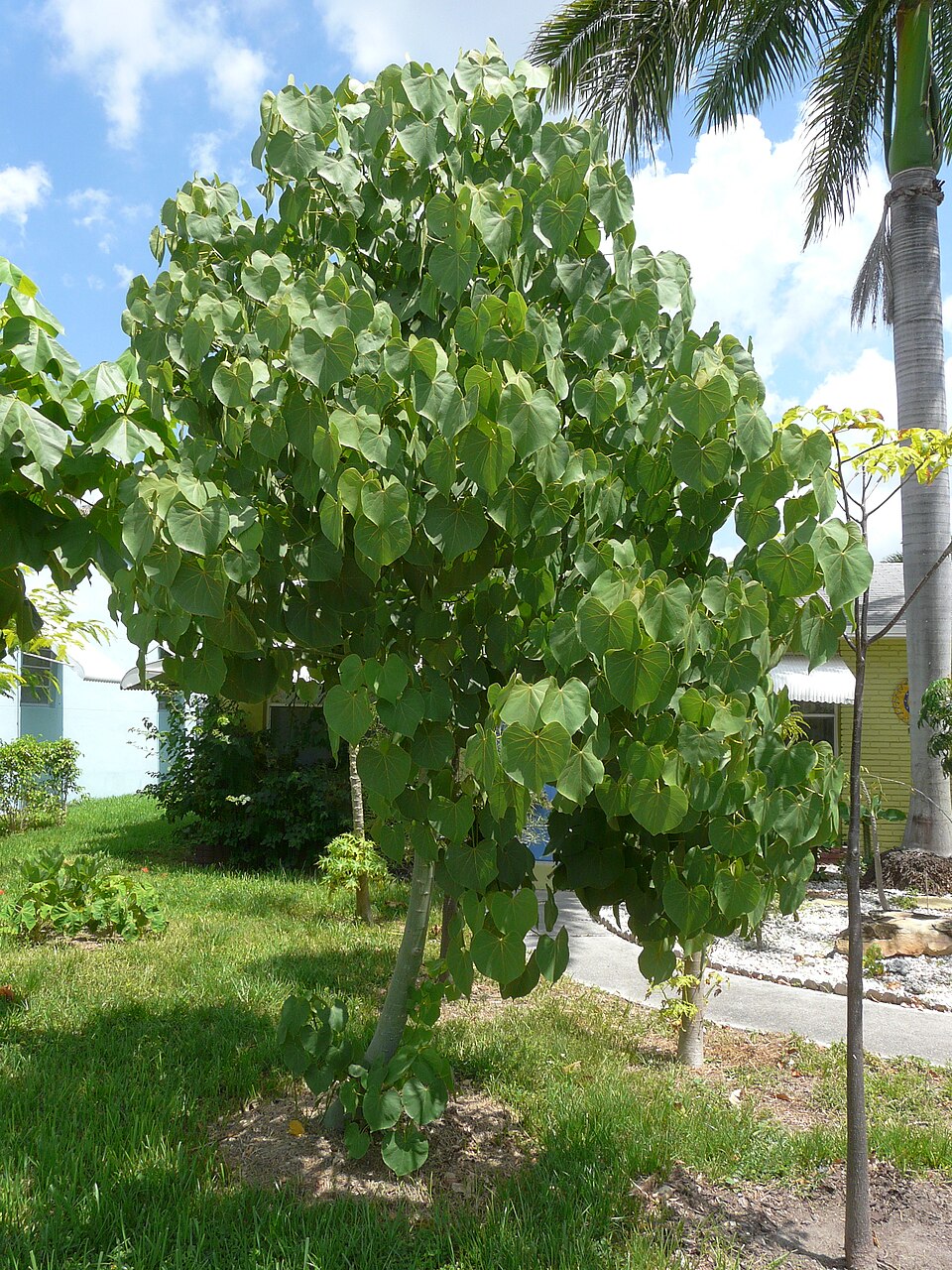
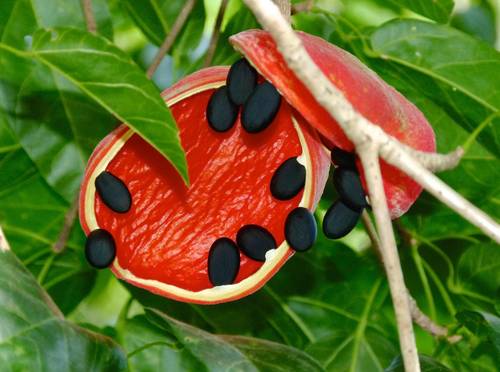
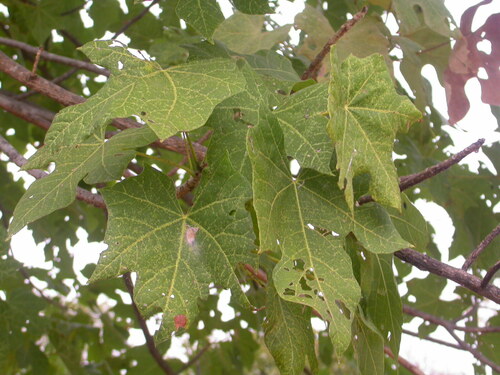
A tree. It grows up to 24 m high. The trunk is 40 cm across. The leaves are alternate and simple. They are silvery on the lower surface. The flowers are 7 cm across. They are pink to red. The fruit are oval and orange-yellow. They are 20 cm long by 12 cm wide. The fruit are covered with slightly curved soft spines 1-1.5 cm long. The seed are narrowly oval and 4 cm long. They are a shiny brown. The fleshy yellow seed coat or aril is edible.
Edible Uses
Fruit - raw. The thick-textured, yellowish-orange flesh has a distinctive flavour that is sweetish but less sweet and less strong than that of the common durian (D. Zibethinus). The fruit only has a slight aroma when fully ripe. The dirty-yellow coloured ovoid to ellipsoid fruit is up to 20 cm x 12 cm, covered with slightly curved soft spines 1 - 1.5 cm long It contains a number of glossy-brown, ellipsoid seeds up to 4 cm long that are completely enclosed by a fleshy, yellow, sweet-smelling, edible aril.
Distribution
A tropical plant. It grows in the foothills of Kalimantan. It grows up to 800 m above sea level. In Cairns Botanical Garden.
Where It Grows
Mixed dipterocarp forest in the foothills of the mountains. Occurs locally on fertile clay-rich soils on undulating land in mixed dipterocarp forest.
Cultivation
A tree of medium elevations in the moist tropics, found at elevations up to 1,300 metres. Trees are usually found on clay-rich soils in the wild. The flowers are produced on older branches. Trees can commence fruiting when 4 - 5 metres tall.
Other Uses
The heartwood is reddish-brown. The relatively durable wood is used in interior construction and for making cheaper types of furniture and packing cases. We do not have any more information on the wood of this species. However, a general description of the wood for species in this genus is as follows:- The heartwood is pink-brown, red, or deep red-brown; it is not always sharply demarcated from the white, pale yellow-brown or light reddish-yellow sapwood. The texture is coarse; the grain straight to interlocked; somewhat lustrous; it is reported to have a foetid odour. The wood is not durable, and not resistant to termite attack; the sapwood is prone to powder-post beetle attack. It dries rapidly, but thin boards may tend to cup. The wood saws easily and generally dresses smoothly; nailing qualities are good. It is used for purposes such as furniture components, veneer and plywood, light construction.
Synonyms
Also Known As
Dian bala, Durian isu, Durian kuning, Durian nyekak, Durian tinggang, Kawai, Laai, Lai, Layuk, Lembunyu, Luas, Nyekak, Paku, Pekawai, Pohon durian lai, Rian isu, Rian nyekak, Ruas, Sekawi
References (24)
- Arora, R. K., 2014, Diversity in Underutilized Plant Species - An Asia-Pacific Perspective. Bioversity International. p 68
- Burkill, I.H., 1966, A Dictionary of the Economic Products of the Malay Peninsula. Ministry of Agriculture and Cooperatives, Kuala Lumpur, Malaysia. Vol 2 (I-Z) p 1322 (As Lahia kutejensis)
- Chai, P. P. K. (Ed), et al, 2000, A checklist of Flora, Fauna, Food and Medicinal Plants. Lanjak Entimau Wildlife Sanctuary, Sarawak. Forestry Malaysia & ITTO. p 166
- Coronel, R.E., 1982, Fruit Collections in the Philippines. IBPGR Newsletter p 9
- Dodo, 2015, Keanekaragaman dan konservasi Tumbuhan Buah Langka Indonesia. Pusat Konservasi Tumbuhan Kebun Raya – LIPI. Warta Kebun Raya 13(2)
Show all 24 references Hide references
- Facciola, S., 1998, Cornucopia 2: a Source Book of Edible Plants. Kampong Publications, p 50
- Heyne, K, 1927, p 1056
- Kebler, P. J. A., & Kidiyasa, 1994, Trees of the Balikpapan-Samarinda area of East Kalimantan, Indonesia. The Tropenbos Foundation, Wageningen, The Netherlands. p 59
- Khoo, H. E., et al, 2008, Carotenoid Content of Underutilized Tropical Fruits. Plant Foods for Human Nutrition 63:170-175
- Lembaga Biologi Nasional, 1977, Buah-Buahan, Balai Pustaka, Jakarta. p 78
- Malesia 3:251. 1889
- Milow, P., et al, 2013, Malaysian species of plants with edible fruits or seeds and their evaluation. International Journal of Fruit Science. 14:1, 1-27
- Mulyoutami, E., et al, 2009, Local knowledge and management os simpikng (forest gardens) among the Dayak people in East Kalimatan, Indonesia. Forest Ecology and Management. 257:2054-2061
- Oldfield, S., et al, 1998, The World List of Threatened Trees. World Conservation Press. p 192
- PROSEA (Plant Resources of South East Asia) handbook, Volume 2, 1991, Edible fruits and nuts.
- Shaffiq, A. M., A., et al, 2013, Marketable wild fruits of Sarawak, Borneo: Their mode of consumption, uses and sugar profiles. Indian Journal of Traditional Knowledge. Vol 12(2): 195-201
- Siong, K. H., 2003, Indigenous Fruits of Sarawak. ITTO & Sarawak Forest Department. p 24
- Slik, F., www.asianplant.net
- Sukarya, D. G., (Ed.) 2013, 3,500 Plant Species of the Botanic Gardens of Indonesia. LIPI p 250
- Tankard, G., 1990, Tropical fruit. An Australian Guide to Growing and using exotic fruit. Viking p 118
- Verheij, E. W. M. and Coronel, R.E., (Eds.), 1991, Plant Resources of South-East Asia. PROSEA No 2. Edible fruits and nuts. Pudoc Wageningen. p 330
- World Checklist of Useful Plant Species 2020. Royal Botanic Gardens, Kew
- www.worldagroforestrycentre.org/sea/products/afdbases/af/asp/SpeciesInfo.asp?SpID=18196
- Zeven, A. C. & de West, J. M. J., 1982, Dictionary of cultivated plants and their regions of diversity. Wageningen. p 51