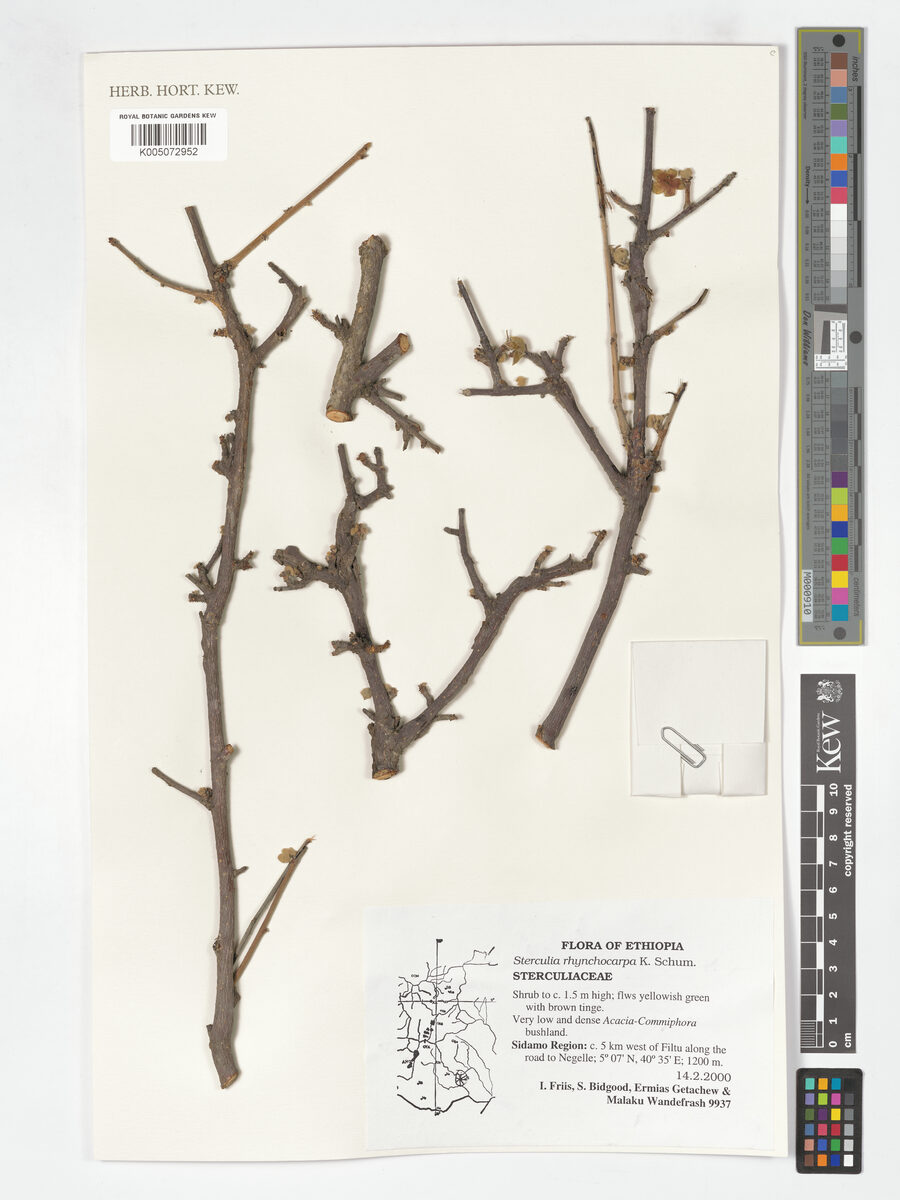
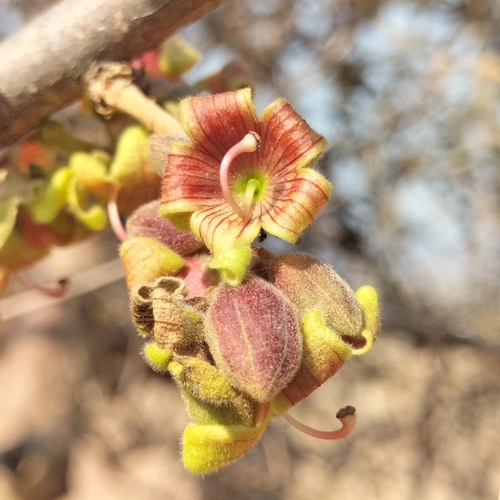
Durio grandiflorus
(Mast.) Kosterm. & Soegeng
Durian munjit
wikimedia· cc-by
Wikimedia Commons - Credit:RECOLNAT (ANR-11-INBS-0004) - Picturae - 2016 Project:RECOLNAT (ANR-11-INBS-0004)
wikimedia· cc-by-sa
Wikimedia Commons - Nurazwana iffah
gbif· cc0
President and Fellows of Harvard College
Description
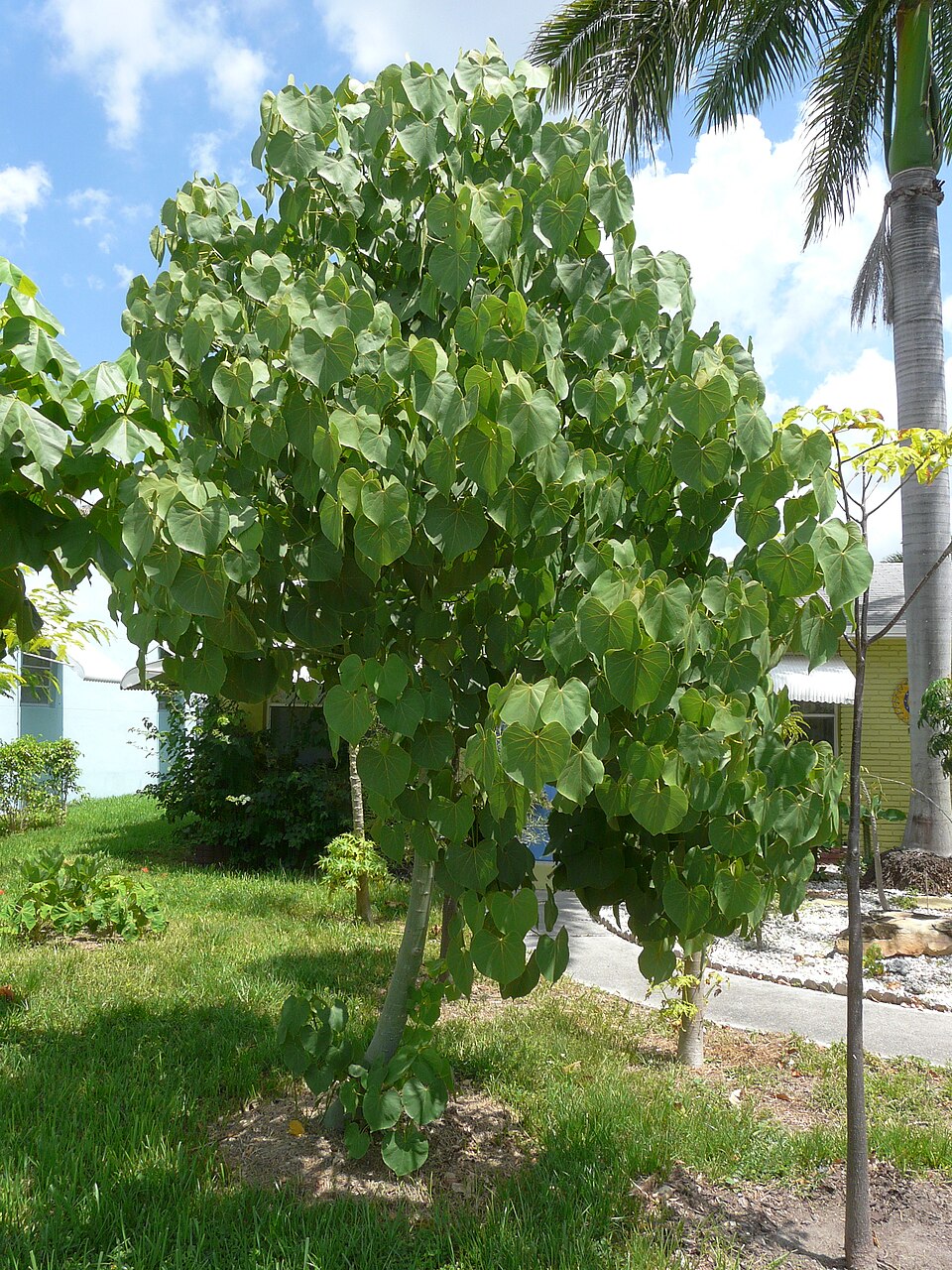
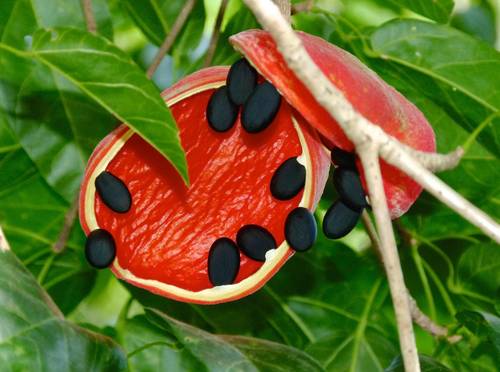
A tree. It grows 20 m tall. The fruit is an oval capsule. It can be 20 cm long by 15 cm wide. It has stiff spines up to 2 cm long. The seeds are brown and narrowly oval. They are 3 cm long and covered with a yellow layer or aril.
Edible Uses
Boschia grandiflora is an edible species, formerly in the genus Durio, which produces the popular fruit known as durian. The fruit of this species has yellow flesh. The seeds have a red, edible aril. The wood is used in construction and for furniture.
Traditional Uses
The fleshy layer or aril around the seed is eaten.
This uses section is brief — help expand it
Distribution
A tropical plant. It grows in rain forest in Kalimantan up to 500 m altitude.
Where It Grows
Asia, Brunei, Indonesia*, Malaysia*, SE Asia,
Cultivation
A plant of the lowland moist tropics, where it is found at elevations up to 500 metres. Often found on clay-rich soils in the wild.
Other Uses
The relatively durable wood is used in interior construction and for making cheaper types of furniture and packing cases. We do not have any more information on the wood of this species. However, a general description of the wood for species in this genus is as follows:- The heartwood is pink-brown, red, or deep red-brown; it is not always sharply demarcated from the white, pale yellow-brown or light reddish-yellow sapwood. The texture is coarse; the grain straight to interlocked; somewhat lustrous; it is reported to have a foetid odour. The wood is not durable, and not resistant to termite attack; the sapwood is prone to powder-post beetle attack. It dries rapidly, but thin boards may tend to cup. The wood saws easily and generally dresses smoothly; nailing qualities are good. It is used for purposes such as furniture components, veneer and plywood, light construction.
Other Information
It is occasionally cultivated as a fruit tree.
Notes
There are about 20 Durio species. Also put in the family Durionaceae. In the subfamily Bombacoideae.
Also Known As
Durian hantu hutan, Sukang
References (9)
- Arora, R. K., 2014, Diversity in Underutilized Plant Species - An Asia-Pacific Perspective. Bioversity International. p 69
- Commun. Forest Res. Inst. 61:10. 1958
- Dodo, 2015, Keanekaragaman dan konservasi Tumbuhan Buah Langka Indonesia. Pusat Konservasi Tumbuhan Kebun Raya – LIPI. Warta Kebun Raya 13(2)
- Milow, P., et al, 2013, Malaysian species of plants with edible fruits or seeds and their evaluation. International Journal of Fruit Science. 14:1, 1-27
- Oldfield, S., et al, 1998, The World List of Threatened Trees. World Conservation Press. p 192
Show all 9 references Hide references
- Siong, K. H., 2003, Indigenous Fruits of Sarawak. ITTO & Sarawak Forest Department. p 20
- Verheij, E. W. M. and Coronel, R.E., (Eds.), 1991, Plant Resources of South-East Asia. PROSEA No 2. Edible fruits and nuts. Pudoc Wageningen. p 330
- www.worldagroforestrycentre.org/sea/products/afdbases/af/asp/SpeciesInfo.asp?SpID=18194
- Zeven, A. C. & de West, J. M. J., 1982, Dictionary of cultivated plants and their regions of diversity. Wageningen. p 51