Hedyotis neesiana
Arn.
iNaturalist· cc-by-nc
(c) Radha Veach, some rights reserved (CC BY-NC), uploaded by Radha Veach
Description
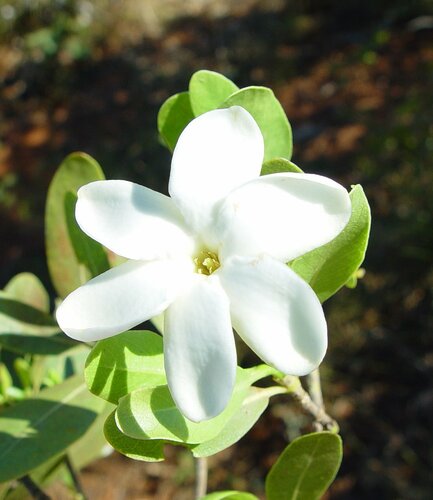
A herb. It is woody and lies along the ground. The stems are 4 angled. The leaves are simple and opposite. The leaves have short stalks. The leaves vary in size and shape. They are narrowly oval and 3-6 cm long by 1-2 cm wide. They are rough. The flowers are in clusters in the axils of leaves and do not have stalks. The lobes are spreading and white. The fruit is a capsule 3 mm long. It is oval. The seeds are dark brown and angled.
Edible Uses
The leaves are eaten with rice.
Traditional Uses
The leaves are eaten with rice.
This uses section is brief — help expand it
Known Hazards
Caution advised when consuming leaves.
Distribution
A tropical plant. It grows in moist deciduous forests.
Where It Grows
Asia, India, Maldives, Sri Lanka,
Notes
There are about 450 Hedyotis species.
Synonyms
Also Known As
Kallukkoduveli, Nithu, Pita sudu pala
References (3)
- Ambasta, S.P. (Ed.), 2000, The Useful Plants of India. CSIR India. p 259 (As Hedyotis nitida)
- Singh, H.B., Arora R.K.,1978, Wild edible Plants of India. Indian Council of Agricultural Research, New Delhi. p 86 (As Hedyotis nitida)
- Sujanapal, P., & Sankaran, K. V., 2016, Common Plants of Maldives. FAO & Kerala FRI, p 143