Vigna pilosa
(Klein ex Willd.) Baker
wikimedia· cc-by-sa
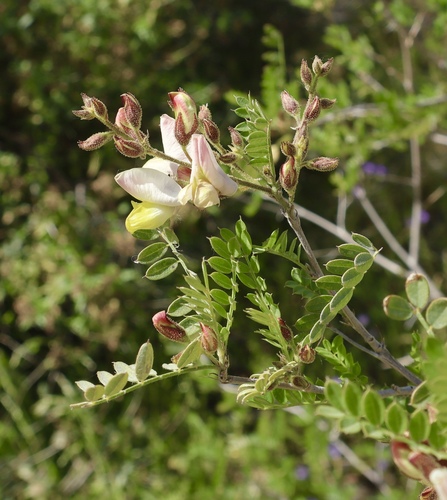
Wikimedia Commons - George Muttathil Pulikurumba
wikimedia· cc-by-sa
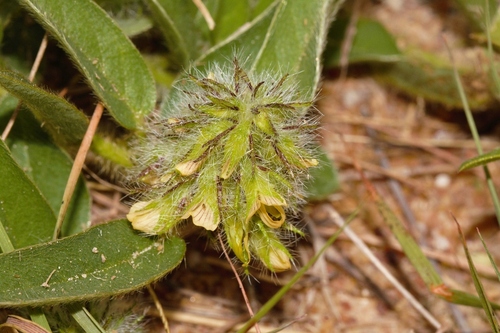
Wikimedia Commons - FarEnd2018
Description
A climbing bean plant herb. It grows 1-3 m long. The branches are tender and white and hairy. The leaves have 3 leaflets. The leaf stalk is 3-5 cm long. The leaflets are oval and taper to the tip while being rounded at the base. They are 2-10 cm long by 1-8 cm wide. The flowers are in a group 12 cm long in the axils of the leaves. The pods are narrow and 6-14 cm long by 5-7 mm wide. The seeds are cylinder shaped and 5-7 mm long by 4 mm wide. They are black.
Edible Uses
Root tubers of Vigna species have traditionally been used as food by the Indigenous Peoples of the Northern Territory of Australia.
Traditional Uses
The seeds are cooked and eaten in times of scarcity.
This uses section is brief — help expand it
Distribution
A tropical plant. It grows in hedges and bamboo forest. It grows from low elevation up to 1,000 m above sea level. It can withstand water-logging.
Where It Grows
Asia, Bhutan, Cambodia, China, Himalayas, India, Indochina, Indonesia, Laos, Myanmar, Northeastern India, Philippines, SE Asia, Taiwan, Thailand, Vietnam,
Production
It grows slowly and does not produce a lot of seeds.
Notes
There are about 150 Vigna species. They are mostly in the tropics.
Synonyms
Also Known As
Jhikrai, Malkonia, Taw-pe
References (5)
- Ambasta, S.P. (Ed.), 2000, The Useful Plants of India. CSIR India. p 677
- Davis, S.D., Heywood, V.H., & Hamilton, A.C. (eds), 1994, Centres of plant Diversity. WWF. Vol 1 or 2. p 140
- J. D. Hooker, Fl. Brit. India 2:207. 1876
- Singh, H.B., Arora R.K.,1978, Wild edible Plants of India. Indian Council of Agricultural Research, New Delhi. p 83
- Wild edible plants of Himachal Pradesh