Solanum erianthum
D. Don
Potato tree, Mullein Nightshade
iNaturalist· cc-by-nc
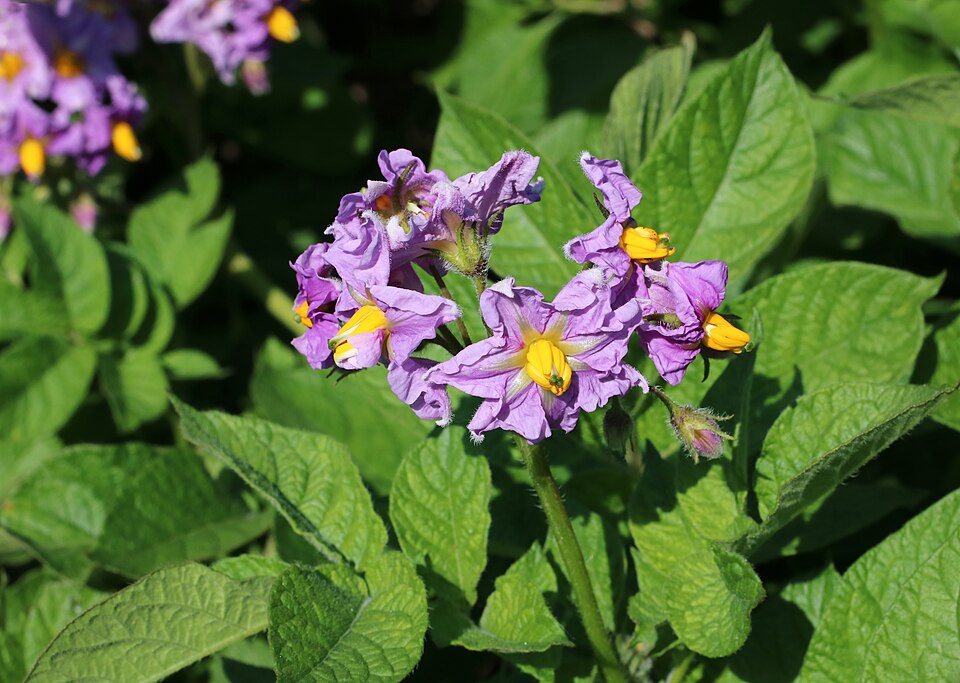
(c) 嚴世芳, some rights reserved (CC BY-NC), uploaded by 嚴世芳
iNaturalist· cc-by-sa
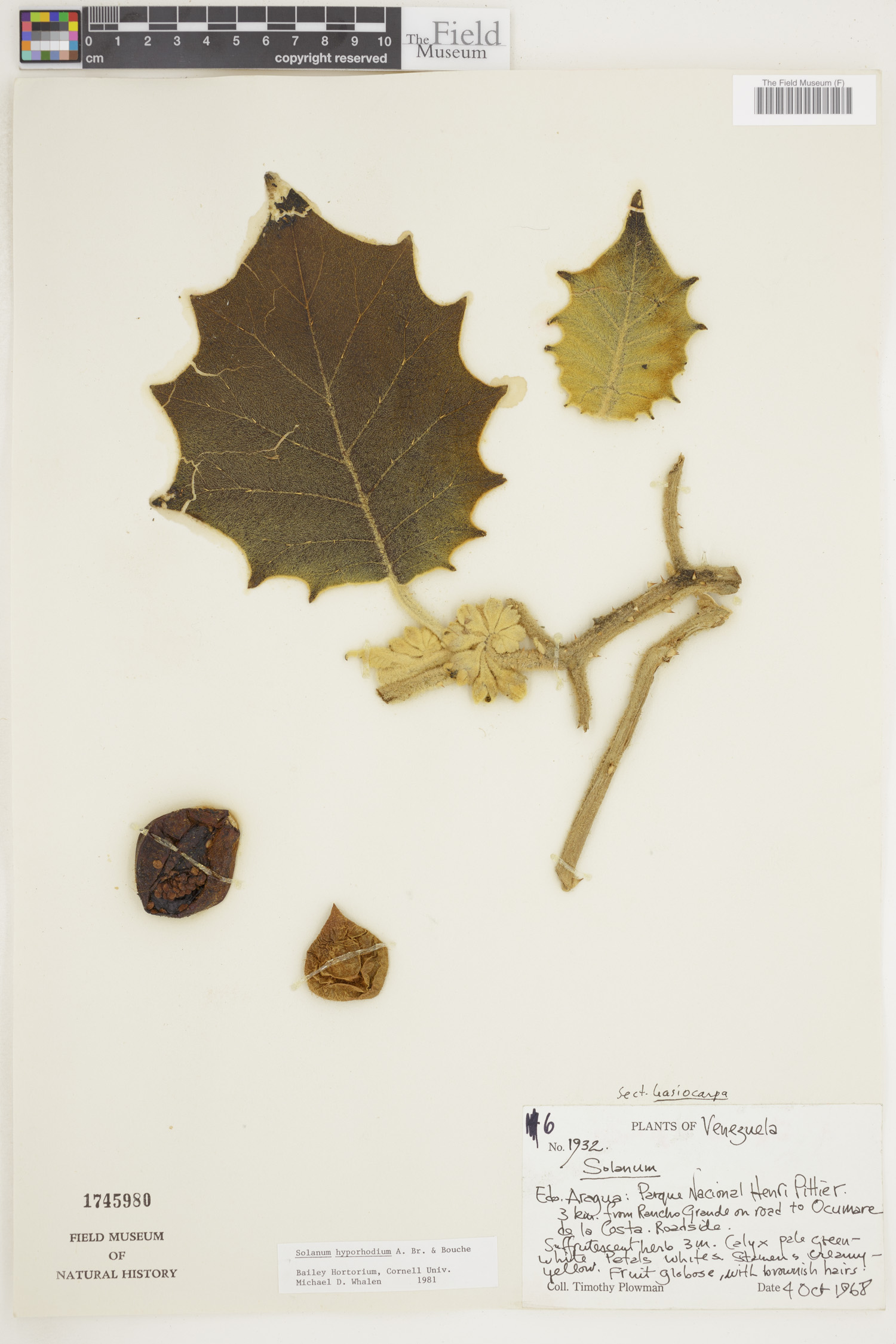
(c) Douglas Goldman, some rights reserved (CC BY-SA), uploaded by Douglas Goldman
iNaturalist· cc-by-nc
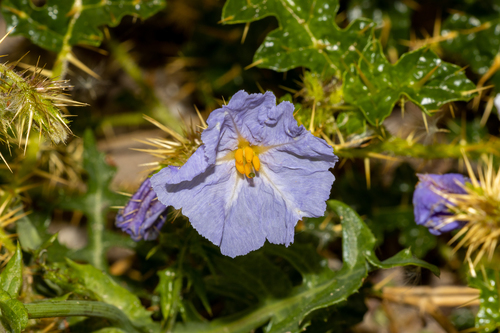
(c) Joechang, some rights reserved (CC BY-NC), uploaded by Joechang
Summary
Source: WikipediaSolanum erianthum is a species of nightshade that is native to southern North America and northern South America. It has been introduced to other parts of the world and has a nearly pantropical distribution. Common names include mullein nightshade (that may also refer to S. donianum), velvet nightshade, and salvadora.
Description
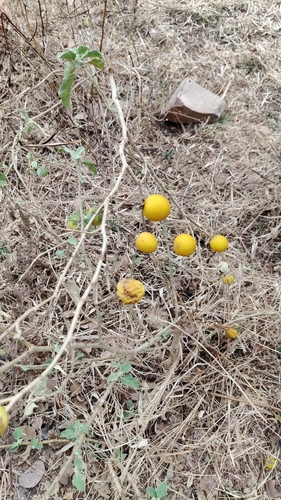
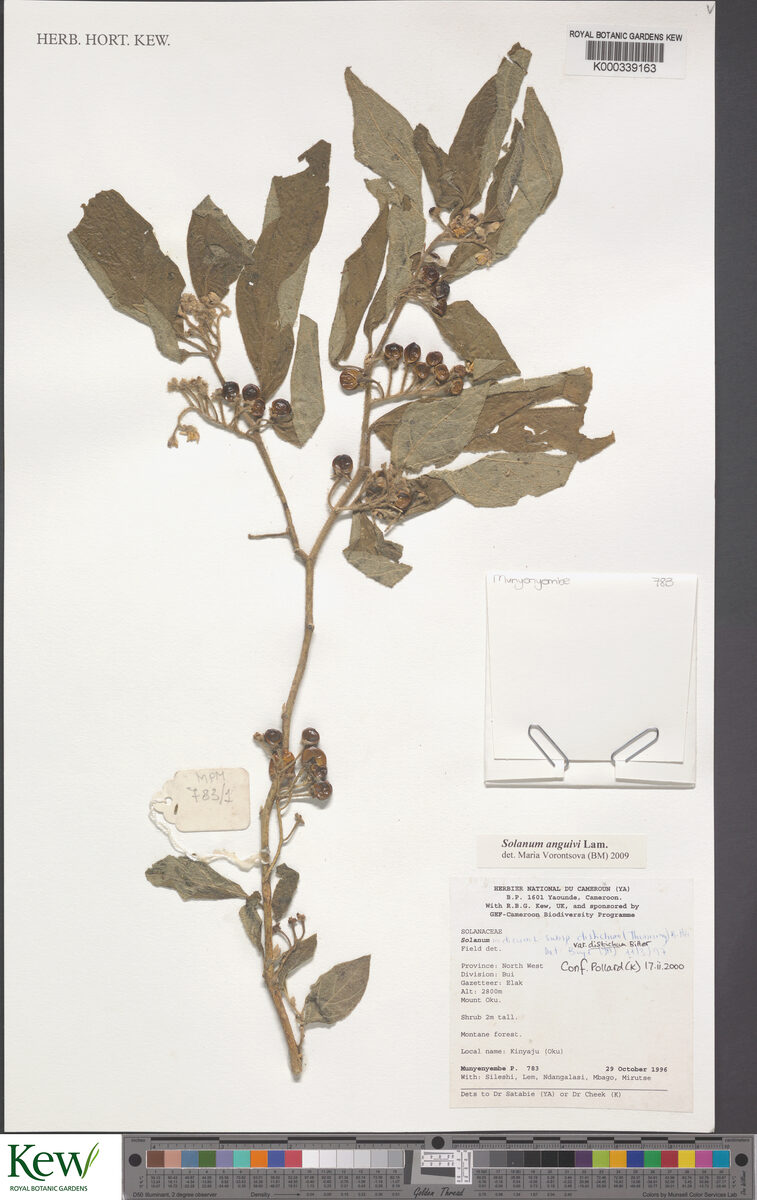
An evergreen shrub. It grows 2-8 m high. The leaves are oval and woolly. They are 15-30 cm long. The flowers rotate. The lobes are star shaped. They are white or greenish. The stalks are woolly. The fruit is round and orange when ripe. They are 4 cm across.
Edible Uses
Like other species in its genus, S. erianthum has a number of ethnobotanical and pharmaceutical uses. This is due to the presence of steroidal saponins, free genins, and steroidal alkaloids of the spirosolane group, such as solasodine and tomatidine. Alkaloids account for around 0.4% of the mass of dry berries and leaves. Steroidal alkaloids found in the plant are used by the pharmaceutical industry as precursors for the manufacture of synthetic steroids.
Traditional Uses
The unripe fruit are used in curries. The leaves are used as a vegetable.
This uses section is brief — help expand it
Medicinal Uses
Potatotree finds many uses as an herbal medicine in Tropical Asia. The leaves are believed to be effective with ridding the body of impurities through the urine and are used for leukorrhea for that reason. The leaves are also used to induce abortion, while a poultice made from crushed leaves is used for hemorrhoids and scrofula. Heated leaves are applied to the forehead as an analgesic for headaches and a leaf decoction is used for vertigo. A root decoction is used to treat dysentery, fever, diarrhea, digestive problems, and violent body pains. The root bark is used as an anti-inflammatory and to treat arthritis. In West Africa, a decoction made from the leaves is used to treat leprosy, sexually-transmitted diseases, and malaria due to its laxative and diuretic effects. The leaves are used in the Philippines to clean grease from dishes. The berries are toxic to humans, causing headache, cramps, and nausea, but are cooked and eaten in Southeast Asia and made into curry in southern India. They are a component of arrow poison in Tropical Asia. Potato Tree is grown as an ornamental in the Caribbean and is an acceptable shade plant for shade-grown coffee.
Known Hazards
The leaves, stems and roots contain various alkaloids and are poisonous. Although providing many well-known foods for people, including the potato, tomato, pepper and aubergine, most species in this genus also contain toxic alkaloids. Whilst these alkaloids can make the plant useful in treaing a range of medical conditions, they can also cause problems such as nausea, vomiting, salivation, drowsiness, abdominal pain, diarrhoea, weakness and respiratory depression. Unless there are specific entries with information on edible uses, it would be unwise to ingest any part of this plant.
Distribution
A tropical and subtropical plant. It does well in seasonally moist and dry climates. It will grow on average to poor, well-drained soils. It will grow in full or part sun. In Pakistan it grows up to 1,600 m altitude. It can grow in arid places. It suits hardiness zones 9-11. In Sichuan and Yunnan.
Where It Grows
Africa, Andes, Asia*, Australia, Bahamas, Belize, Benin, Cameroon, Caribbean, Central Africa, Central America*, China, Colombia, Costa Rica, Cuba, Dominican Republic, Ecuador, El Salvador, Greater Antilles, Guatemala, Haiti, Himalayas, Honduras, India, Indochina, Jamaica, Malaysia, Mexico, Myanmar, Nepal, Nicaragua, Nigeria, North America, Pacific, Pakistan, Panama, Paraguay, Puerto Rico, SE Asia, Sierra Leone, South America, Taiwan, Thailand, Tibet, USA, West Africa, West Indies,
Cultivation
Found at elevations from 300 - 2,100 metres in the tropics of Asia.
Propagation
Seed - sow in trays in a nursery. Prick out the seedlings into individual pots when they are large enough to handle and grow them on fast. Plant them out when 10cm or more tall. Cuttings of half-ripe wood. Very easy, the cuttings root within a couple of weeks.
Other Uses
The velvety leaves are used to remove grease from dishes. Considered to be suitable for use as a shade plant for coffee.
Notes
There are about 1400 Solanum species. It is used in medicine.
Synonyms
Also Known As
Daung-satpya, Flannel bush, Kattuchundai, Lava-potato, Paraval sunde, Terung rimba
References (23)
- Achigan-Dako, E, et al (Eds), 2009, Catalogue of Traditional Vegetables in Benin. International Foundation for Science.
- Ambasta, S.P. (Ed.), 2000, The Useful Plants of India. CSIR India. p 579 (As Solanum erianthum)
- Anderson, E. F., 1993, Plants and people of the Golden Triangle. Dioscorides Press. p 221
- Arinathan, V., et al, 2007, Wild edibles used by Palliyars of the western Ghats, Tamil Nadu. Indian Journal of Traditional Knowledge. 6(1) pp 163-168
- Avouhou, H. T., et al, 2012, Ethnobotanical Factors Influencing the Use and Management of Wild Edible Plants in Agricultural Environments in Benin. Ethnobotany Research & Applications Vol 10:571-592
Show all 23 references Hide references
- Cooper, W. and Cooper, W., 2004, Fruits of the Australian Tropical Rainforest. Nokomis Editions, Victoria, Australia. p 521
- Flora of Pakistan. www.eFloras.org
- Gallois, S., et al, 2020, Methodological priorities in assessing wild edible plant knowledge and use – a case study among the Baka in Cameroon.
- Gbile, Z. O. and Adesina, S. K., 1988, Nigerian Solanum Species of Economic Importance. Annals of the Missouri Botanical Garden, Vol. 75, No. 3. p 864
- Grandtner, M. M., 2008, World Dictionary of Trees. Wood and Forest Science Department. Laval University, Quebec, Qc Canada. (Internet database http://www.wdt.qc.ca)
- Grandtner, M. M. & Chevrette, J., 2013, Dictionary of Trees, Volume 2: South America: Nomenclature, Taxonomy and Ecology. Academic Press p 616
- Harisha, R. P. & Padmavathy, S., 2013, Knowledge and Use of Wild Edible Plants in Two Communities in Malai Madeshwara Hills, Southern India. International Journal of Botany 9(2): 64-72.
- Llamas, K.A., 2003, Tropical Flowering Plants. Timber Press. p 351
- Manandhar, N.P., 2002, Plants and People of Nepal. Timber Press. Portland, Oregon. p 431
- Milow, P., et al, 2013, Malaysian species of plants with edible fruits or seeds and their evaluation. International Journal of Fruit Science. 14:1, 1-2
- Plants of Haiti Smithsonian Institute http://botany.si.edu/antilles/West Indies
- Prodr. fl. nepal. 96. 1825
- Roa, J. A. G. & Boada, D. S. G., 2018, Fundación para el Fortalecimiento de la Fruticultura y Plantas Alimenticias no Convencionales en Colombia.
- Royal Botanic Gardens, Kew (1999). Survey of Economic Plants for Arid and Semi-Arid Lands (SEPASAL) database. Published on the Internet; http://www.rbgkew.org.uk/ceb/sepasal/internet [Accessed 11th June 2011]
- Salako, V. K. et al, 2013, Home gardens: an assessment of their biodiversity and potential contribution to conservation of threatened species and crop wild relatives in Benin. Genet Resour Crop Evol
- Singh, H.B., Arora R.K.,1978, Wild edible Plants of India. Indian Council of Agricultural Research, New Delhi. p 77
- Williams, J.B., Harden, G.J., and McDonald, W.J.F., 1984, Trees and shrubs in rainforests of New South Wales and Southern Queensland. Univ. of New England, Armidale. p 90 (Solanum erianthum ?)
- World Checklist of Useful Plant Species 2020. Royal Botanic Gardens, Kew