Pavetta indica
Linn.
White pavetta
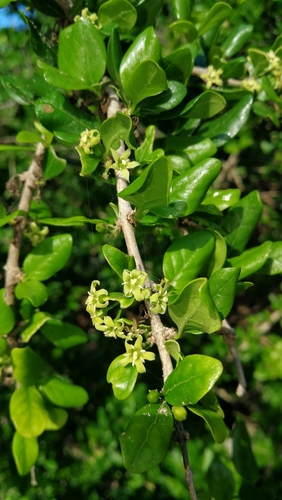
iNaturalist· cc-by-nc
(c) swanand kesari, some rights reserved (CC BY-NC), uploaded by swanand kesari
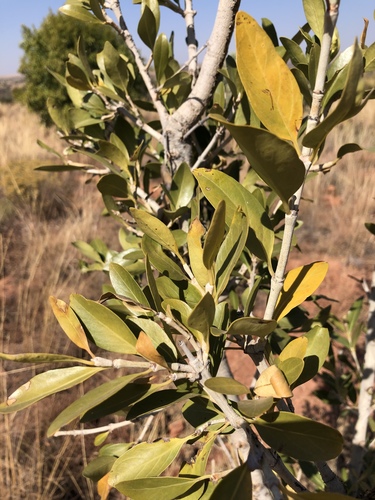
iNaturalist· cc-by-nc-sa
(c) Satish Nikam, some rights reserved (CC BY-NC-SA)
iNaturalist· cc-by-nc
(c) swanand kesari, some rights reserved (CC BY-NC), uploaded by swanand kesari
Summary
Source: WikipediaPavetta indica is a plant commonly found in South and Southeast Asia, including in India, Sri Lanka, and Thailand.
Description
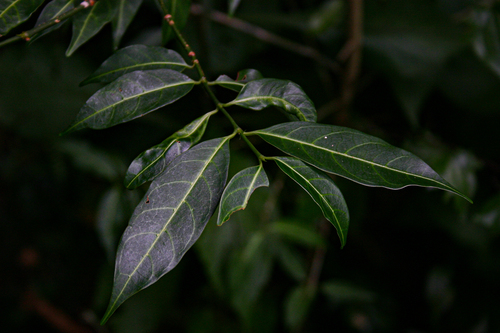
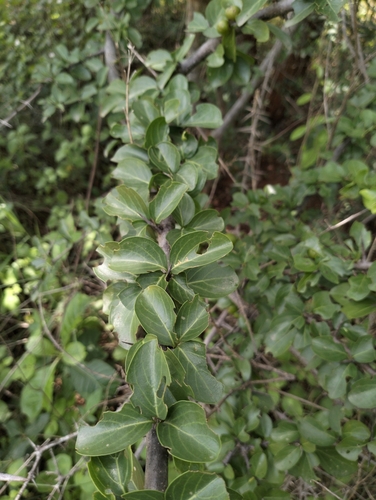
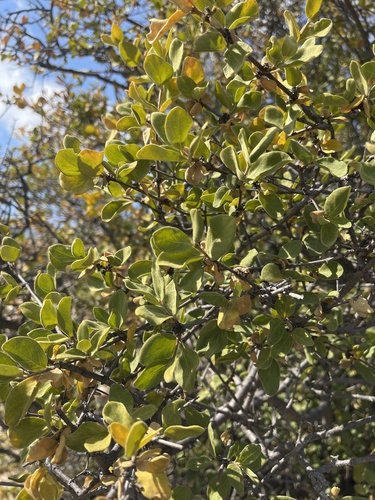
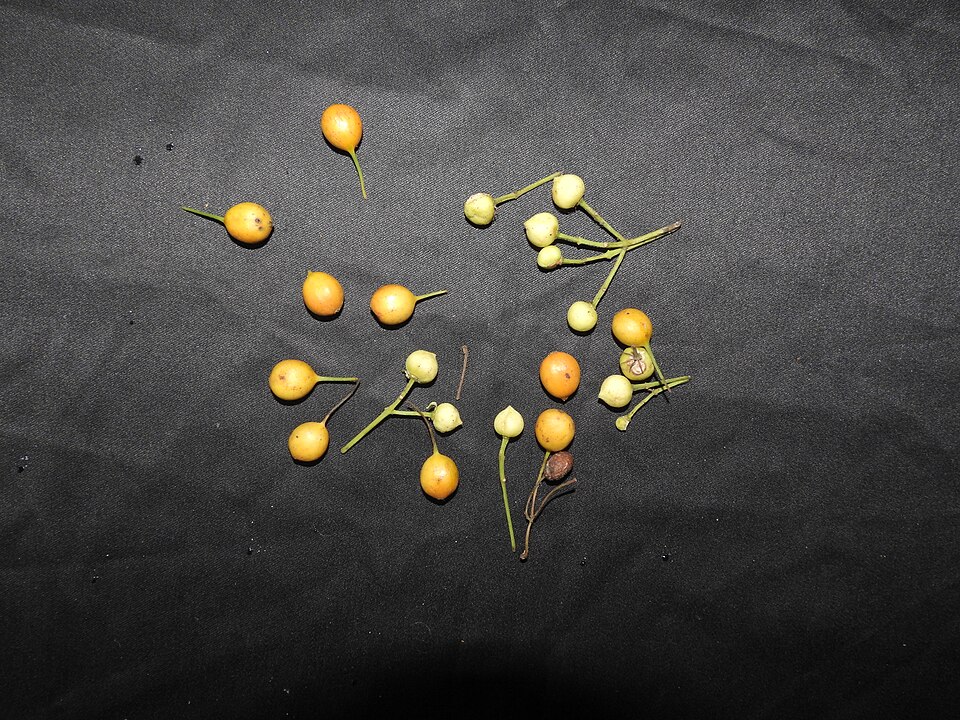
A slender shrub. It can be 2-3 m tall. It is erect. The branches are angular. The leaf blades can be narrowly oval or round. They taper to the tip and are wedge shaped at the base. There are 8 prominent veins each side of the midrib. They are 8-25 cm long. The flowers are in clusters without stalks. It has nitrogen fixing bacteria. These occur as nodules on leaves and spread into seedlings. The flowers are white and have a scent. The flowers are slender white tubes. They have 4 lobes. They occur in clusters of many flowers at the ends of branches. The fruit are black. They are 1 cm across.
Edible Uses
The ripe fruit are eaten raw or pickled, and can be candied in vinegar as pickles. The white flowers are eaten in curries.
Traditional Uses
The ripe fruit are eaten. They are eaten raw or pickled. The fruit candied in vinegar are used as pickles. The flowers are eaten in curries.
This uses section is brief — help expand it
Medicinal Uses
The entire plant used medicinally as a bitter tonic, diuretic, inflammation, rheumatism, jaundice and ulcer. In the indigenous system of medicine, it is reported that the decoction of the leaves are used to relieve haemorrhoidal pain, as a lotion for nose, analgesic, antipyretic, appetizer and the ulceration of mouth. In literature, it has been reported as an antibacterial, antiviral and antimalarial. It showed analgesic activity for the ethanolic leaf extract on laboratory animals. It is also used by the Hmong people of northern Thailand in religious ceremonies to communicate with ancestral spirits.
Distribution
A tropical plant.
Where It Grows
Asia, Australia, Cambodia, China, Hawaii, Himalayas, India, Indochina, Indonesia, Laos, Malaysia, Myanmar, Nepal, Pacific, SE Asia, Thailand, USA,
Cultivation
Grows best in a sunny position, preferring a humus-rich, well-drained soil. Many Pavetta species, including this one, produce leaves with bacterial nodes - these bacteria live in symbiosis with the plant and pass into any seeds that are produced, thus seedlings are already inocculated with the bacteria. It is not certain what function the bacteria play, theories include nitrogen-fixation, growth-regulation and making the leaves poisonous to livestock. Pavetta indica is confined to India and Sri Lanka - there are several closely related species in other areas formerly considered its range, from southern China through southeast Asia to Australia. In Java, there are Pavetta axillaris Bremek.; Pavetta montana Reinw. Ex Blume; Pavetta reinwardtii Bremek.; Pavetta subvelutina Miq.; and Pavetta sylvatica Blume. Plants from China, previously treated as Pavetta indica, belong to the species Pavetta hongkongensis Bremek..
Propagation
Seed - Cuttings of half-ripe wood taken at a node. Air-layering.
Other Uses
An infusion of the fragrant flowers is used as a cosmetic after bathing. The leaves provide a good green mulch.
Production
It grows quickly. In southern India the fruiting season is May to June.
Notes
There are about 400 Pavetta species. They grow in the tropics.
Also Known As
Angari, Asaval, Berenas, Berpusu bunga, Budhi ghasit, Duyi, Gading-gading, Gobor-hitha, Jarum-jarum, Jejarum, Jui, Kangyaphul, Kankra, Kathachampa, Kem pa, Khem-khao, Konda papata, Kotapengu, Kuku-chalia, Kukura-chura, Lakka papidi, Mata ayam, Menjarum, Myet-hna-pan, Myet-na-myin-gyin, Paapidi, Padera, Papadi, Papari, Papat, Papata, Papate kaayi, Pappadi, Papti, Pavati, Pavattai, Pawatta, Pechah periok puteh, Phingi, Puk chlma, Puldu, Samsuku, Se-baung-gyan, Sundok, Takali, Untai, White pavetta, Za-gwe-pan
References (17)
- Ambasta, S.P. (Ed.), 2000, The Useful Plants of India. CSIR India. p 434
- Arinathan, V., et al, 2007, Wild edibles used by Palliyars of the western Ghats, Tamil Nadu. Indian Journal of Traditional Knowledge. 6(1) pp 163-168
- Burkill, I.H., 1966, A Dictionary of the Economic Products of the Malay Peninsula. Ministry of Agriculture and Cooperatives, Kuala Lumpur, Malaysia. Vol 2 (I-Z) p 1708
- Dobriyal, M. J. R. & Dobriyal, R., 2014, Non Wood Forest Produce an Option for Ethnic Food and Nutritional Security in India. Int. J. of Usuf. Mngt. 15(1):17-37
- Gardner, S., et al, 2000, A Field Guide to Forest Trees of Northern Thailand, Kobfai Publishing Project. p 227
Show all 17 references Hide references
- Hedrick, U.P., 1919, (Ed.), Sturtevant's edible plants of the world. p 468
- Jadhav, R., et al, 2015, Forest Foods of Northern Western Ghats: Mode of Consumption, Nutrition and Availability. Asian Agri-History Vol. 19, No. 4: 293-317
- McMakin, P.D., 2000, Flowering Plants of Thailand. A Field Guide. White Lotus. p 60
- Milow, P., et al, 2013, Malaysian species of plants with edible fruits or seeds and their evaluation. International Journal of Fruit Science. 14:1, 1-2
- Phon, P., 2000, Plants used in Cambodia. © Pauline Dy Phon, Phnom Penh, Cambodia. p 491
- Pullaiah, Y., Krishnamurthy, K. V. & Bahadur, B., (Eds.), 2016, Ethnobotany of India, Volume 1: Eastern Ghats and Deccan.
- Ravikrishna, S., 2011, Ethno-medico-botanical survey on Wild Edible fruits of Udupi Taluq, Udupi p 108
- Reddy, K. N. et al, 2007, Traditional knowledge on wild food plants in Andhra Pradesh. Indian Journal of Traditional Knowledge. Vol. 6(1): 223-229
- Singh, H.B., Arora R.K.,1978, Wild edible Plants of India. Indian Council of Agricultural Research, New Delhi. p 77
- Sp. pl. 1:110. 1753
- Staples, G.W. and Herbst, D.R., 2005, A tropical Garden Flora. Bishop Museum Press, Honolulu, Hawaii. p 495
- World Checklist of Useful Plant Species 2020. Royal Botanic Gardens, Kew