Diospyros exsculpta
Buch.-Ham
Nepal ebony persimmon, Kendu
wikimedia· cc0
Wikimedia Commons - Govindoo
Description
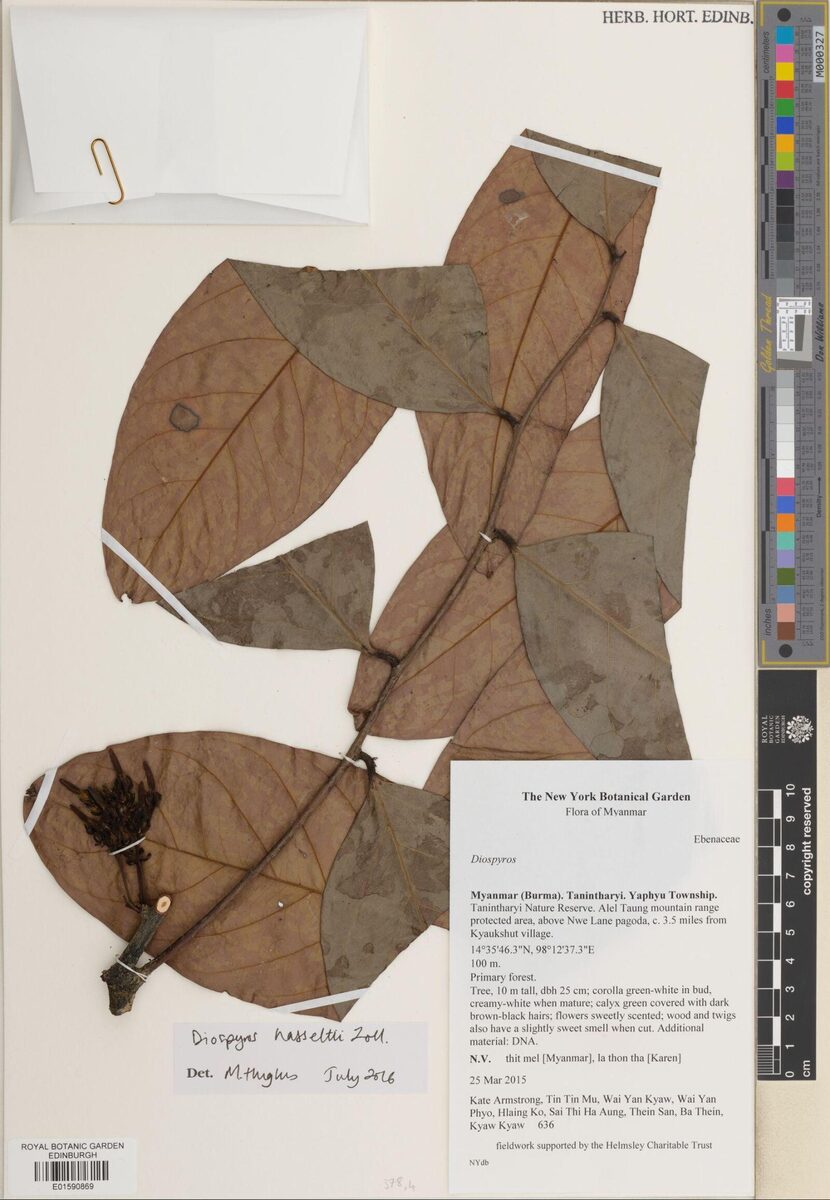
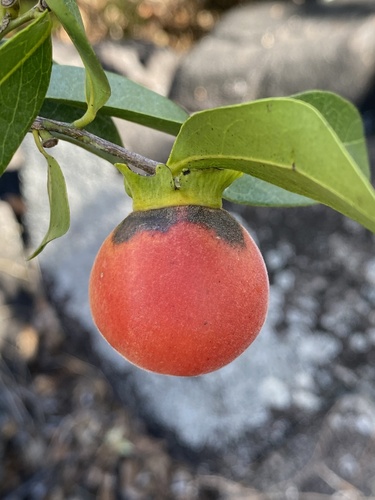
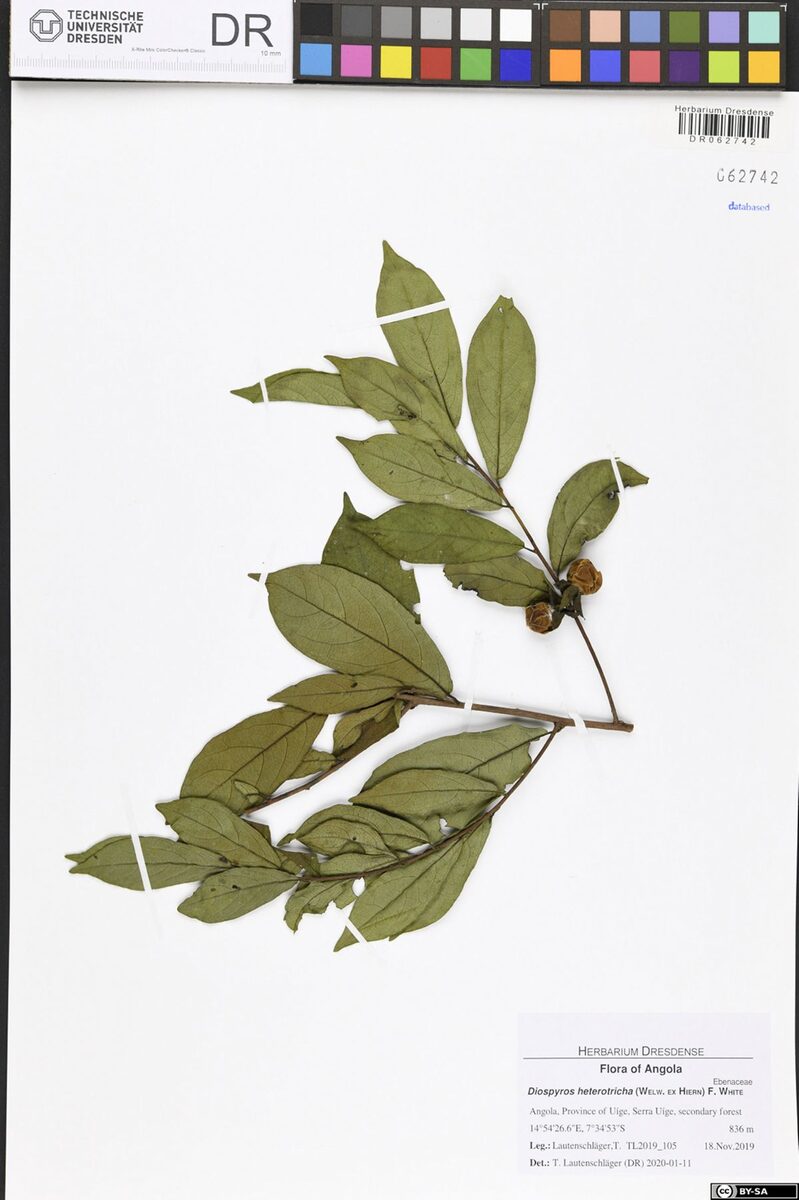
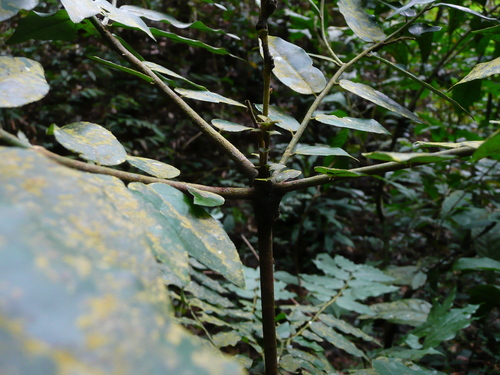
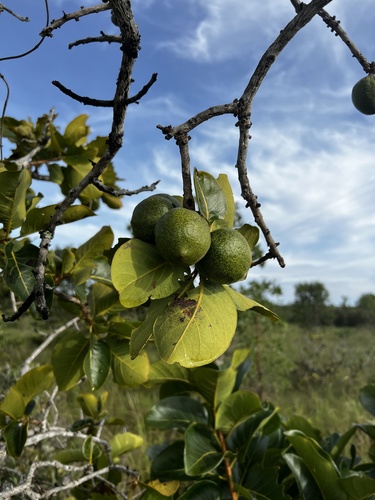
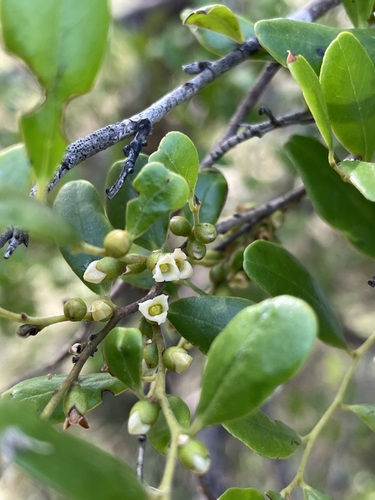
A medium sized tree. It loses its leaves during the year. The leaves are broadly oval. Flowers are separately male and female. Male flowers are in groups and female flowers occur singly. The fruit are oval. It has a hard smooth skin. The pulp is soft and yellow.
Edible Uses
The mature fruit are eaten.
Traditional Uses
The mature fruit are eaten.
This uses section is brief — help expand it
Medicinal Uses
The leaf of the tree contains valuable flavones. The pentacyclic triterpenes found in the leaves possess antimicrobial properties, while the bark shows antihyperglycemic activity. The bark of four Diospyros species found in India has been determined to have significant antiplasmodial effects against Plasmodium falciparum, which causes malaria in humans.
Distribution
A subtropical plant. In NW India it grows up to 800 m above sea level.
Where It Grows
Asia, East Indies, Himalayas, India, Northeastern India, Nepal,
Production
The fruit ripen during June and July.
Notes
There are about 485 species of Diospyros mostly in the tropics.
Synonyms
Also Known As
Cittatumiki, Kakatinduka, Kandhu, Kend, Kendu, Kinnu, Kyon, Kyou, Mancitumiki, Mitha tendu, Temru, Tendu, Timbutani, Tindu, Tindura, Tumal, Tumala, Tumari, Tumbi, Tumiki, Tumki, Tumri
References (9)
- Ambasta, S.P. (Ed.), 2000, The Useful Plants of India. CSIR India. p 178
- Bohra, N., et al, 2017, Ethnobotany of wild edible plants traditionally used by the local people in the Ramnagar regions from Nainital District, Uttarakhand, India. Biolife 5(1): 12-19 (As Diospyros tomentosa)
- Gouldstone, S., 1983, Growing your own Food-bearing Plants in Australia. Macmillan p 122
- Hedrick, U.P., 1919, (Ed.), Sturtevant's edible plants of the world. p 278
- Jayaraman, U., & Singh, V., 1987, A Census of Edible Species of Diospyros L. in India. J. Econ. Tax. Bot. Vol. 10 No. 2 pp 416-419
Show all 9 references Hide references
- Pandey, K. C. & Pande, N., 2016, Ethnobotanical Documentation of Wild Edible Plants used by Gujjar Community of Tarai West Forest Division Ramnagar, Nainital, India, Current World Environment. Vol. 11(3), 808-818
- Singh, H.B., Arora R.K.,1978, Wild edible Plants of India. Indian Council of Agricultural Research, New Delhi. p 55
- Singh, V. B., et al, (Ed.) Horticulture for Sustainable Income and Environmental Protection. Vol. 1 p 215
- Upreti, K., et al, 2010, Diversity and Distribution of Wild Edible Fruit Plants of Uttarakhand. Bioversity Potentials of the Himalaya. p 168