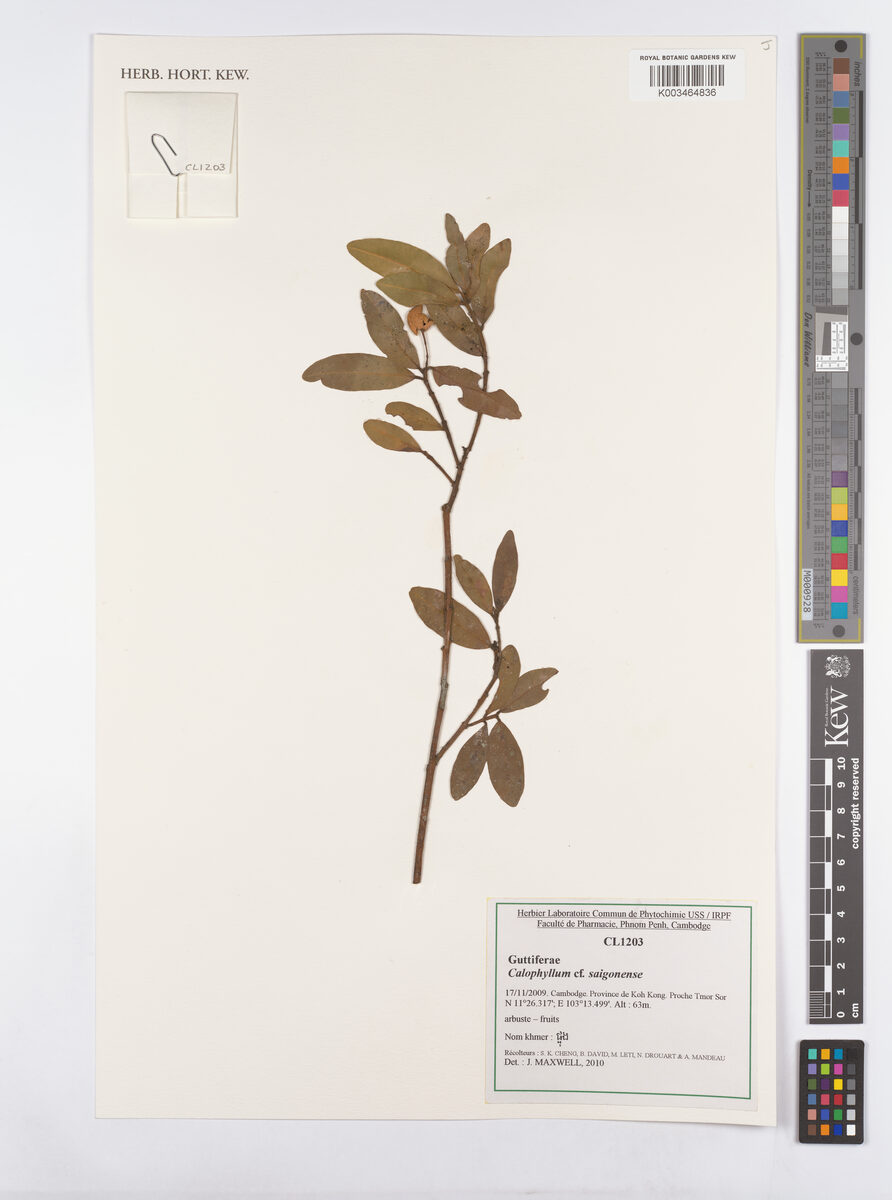
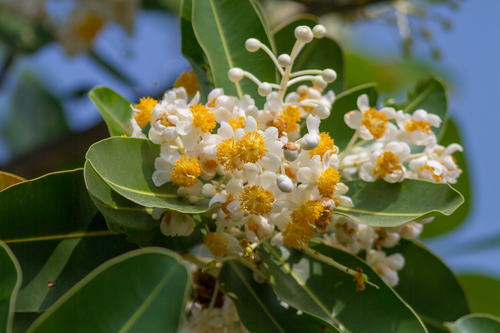
Calophyllum apetalum
Willd.
iNaturalist· cc-by
(c) Siddarth Machado, some rights reserved (CC BY), uploaded by Siddarth Machado
iNaturalist· cc-by-nc
(c) V.Arun, some rights reserved (CC BY-NC)
Summary
Source: WikipediaCalophyllum apetalum is a species of tree endemic to the Western Ghats region of India. It is also called as the Konkan beauty leaf tree or Poon spar of Travancore.
Description
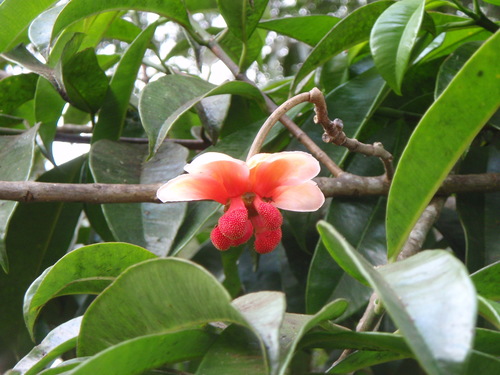
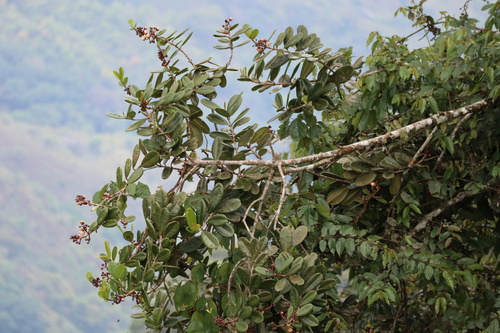
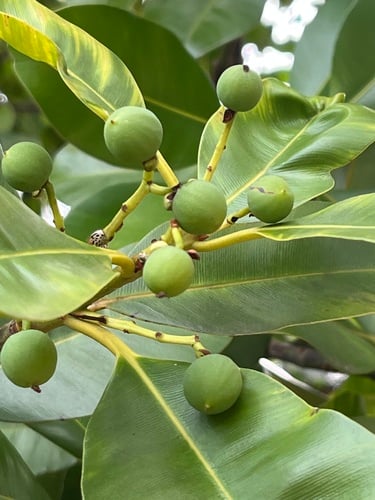
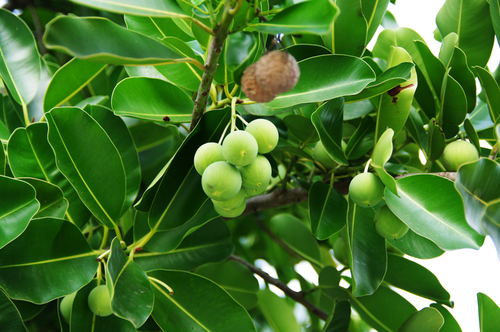
An evergreen tree. It grows 8-30 m tall. The trunk is 80 cm across. The young branches are angular. It has a yellow sticky sap. The leaves are simple and opposite. The cross over at the base. The leaf blade is 4-8 cm long by 2-5 cm wide. They are oval and rounded at the ends. The flowers are white and in groups in the axils of the leaves. The fruit is yellowish-brown and oval. It is 1.5 cm long and has one seed.
Edible Uses
The fruit is edible. An oil with a characteristic smell and a bitter taste can be extracted from the seeds; with refinement the bitterness is lost. The oil is composed of the glycerides of stearic, palmitic, oleic, and probably linoleic acids. The report does not say id the oil is edible.
Traditional Uses
The leaves are used as a vegetable.
This uses section is brief — help expand it
Distribution
A tropical plant. It grows in forests along rivers. It grows up to 900 m above sea level. It can grow up to higher elevations.
Where It Grows
Asia, India,
Cultivation
Plants are grown from seeds.
Other Uses
An oil with a characteristic smell and a bitter taste can be extracted from the seeds; with refinement the bitterness is lost. The oil is composed of the glycerides of stearic, palmitic, oleic, and probably linoleic acids. It is used for burning in India. The wood is strong. It is used both in the construction of boats and oil mills and in general building.
Notes
There are about 187-200 Calophyllum species. They are evergreen trees of the tropics. Also put in the family Hypericaceae.
Synonyms
Also Known As
Bobbi, Cherupinnai, Irai, Poon, Poonspar of Travancore, Sarpuna, Sirubinnai
References (8)
- Ambasta S.P. (Ed.), 2000, The Useful Plants of India. CSIR India. p 97
- Bandana, P. & Debabrata, P., 2015, Wild Edible Plant Diversity and its Ethno-medicinal use by Indigenous Tribes of Koraput, Odisha, India. Research Journal of Agriculture and Forestry Sciences. Vol. 3(9), 1-10, October (2015)
- Bircher, A. G. & Bircher, W. H., 2000, Encyclopedia of Fruit Trees and Edible Flowering Plants in Egypt and the Subtropics. AUC Press. p 74 (As Calophyllum wightiana)
- Fern, K., 2012, Tropical Species Database http://theferns.info/tropical/
- Ges. Naturf. Freunde Berlin Mag. Neuesten Entdeck. Gesammten Naturk. 5:79. 1811
Show all 8 references Hide references
- Jadhav, V. D. et al, 2011, Documentation and ethnobotanical survey of wild edible plants from Kolhapur district. Recent Research in Science and Technology. 3(12): 58-63
- Singh, H.B., Arora R.K.,1978, Wild edible Plants of India. Indian Council of Agricultural Research, New Delhi. p 50
- World Checklist of Useful Plant Species 2020. Royal Botanic Gardens, Kew