Ardisia thyrsiflora
D. Don
iNaturalist· cc-by-nc-sa
(c) Johannes Lundberg, some rights reserved (CC BY-NC-SA)
Description
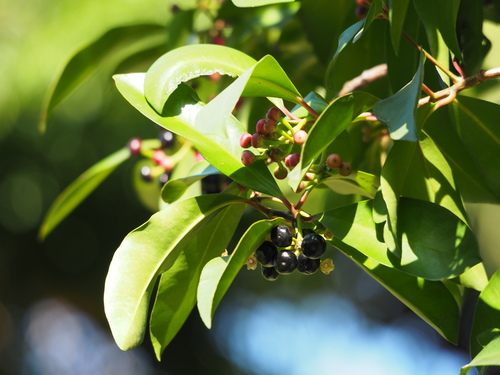
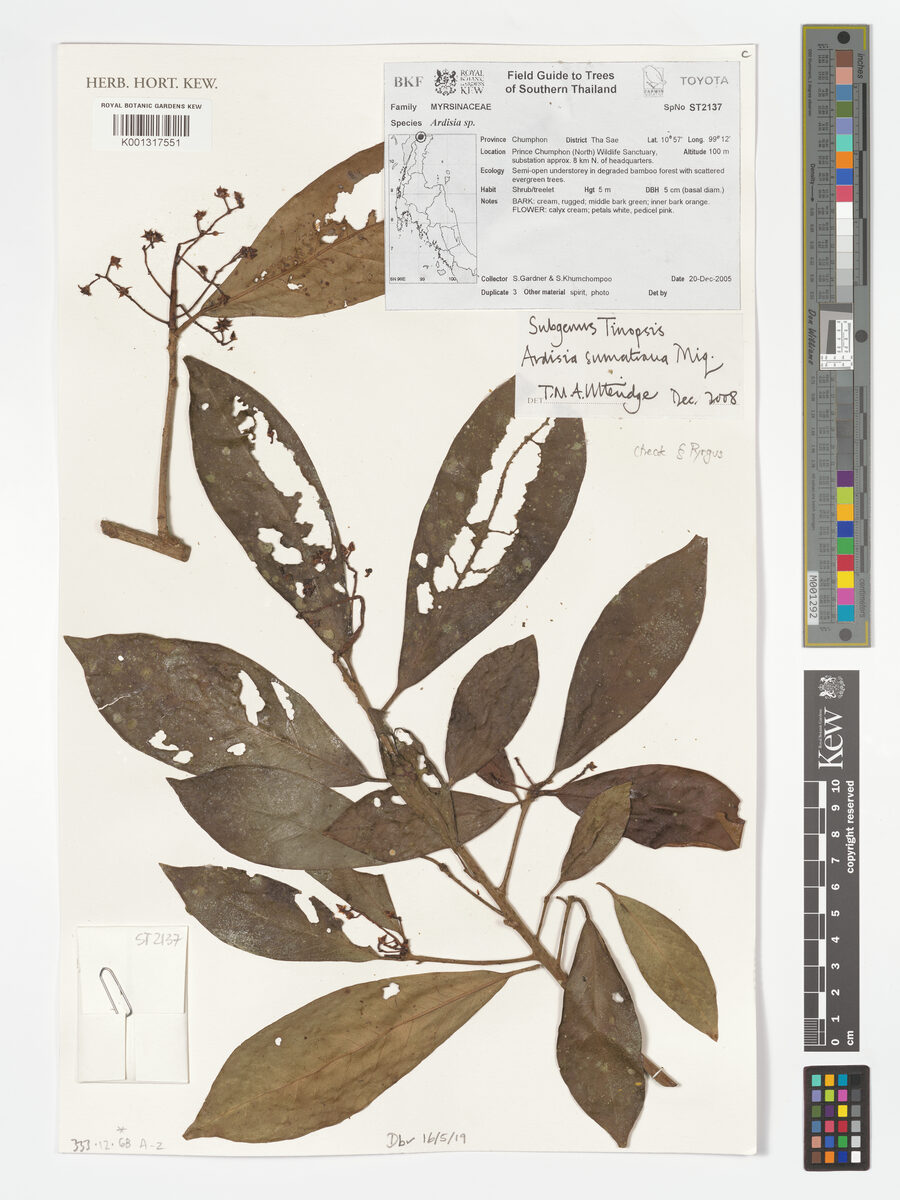
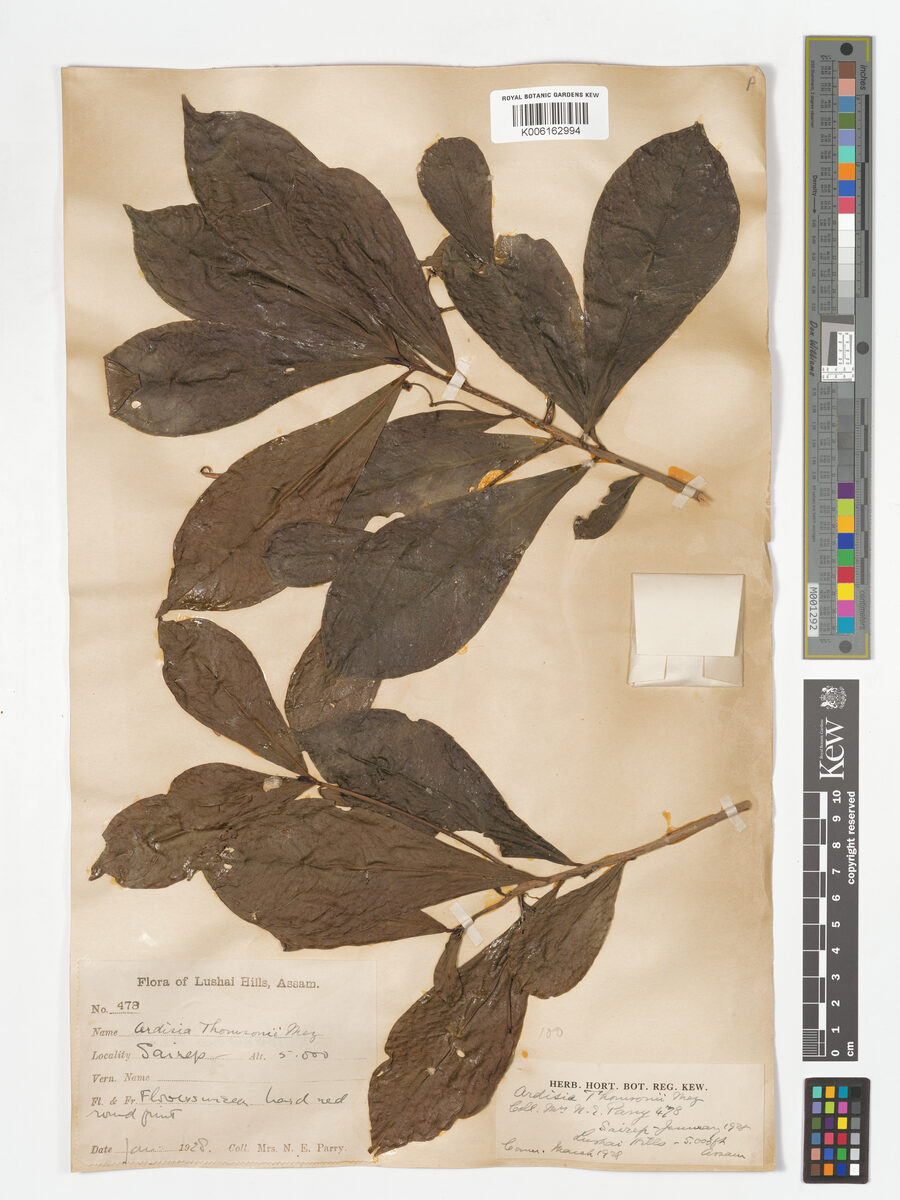
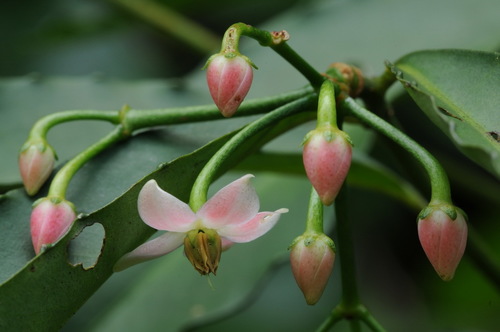
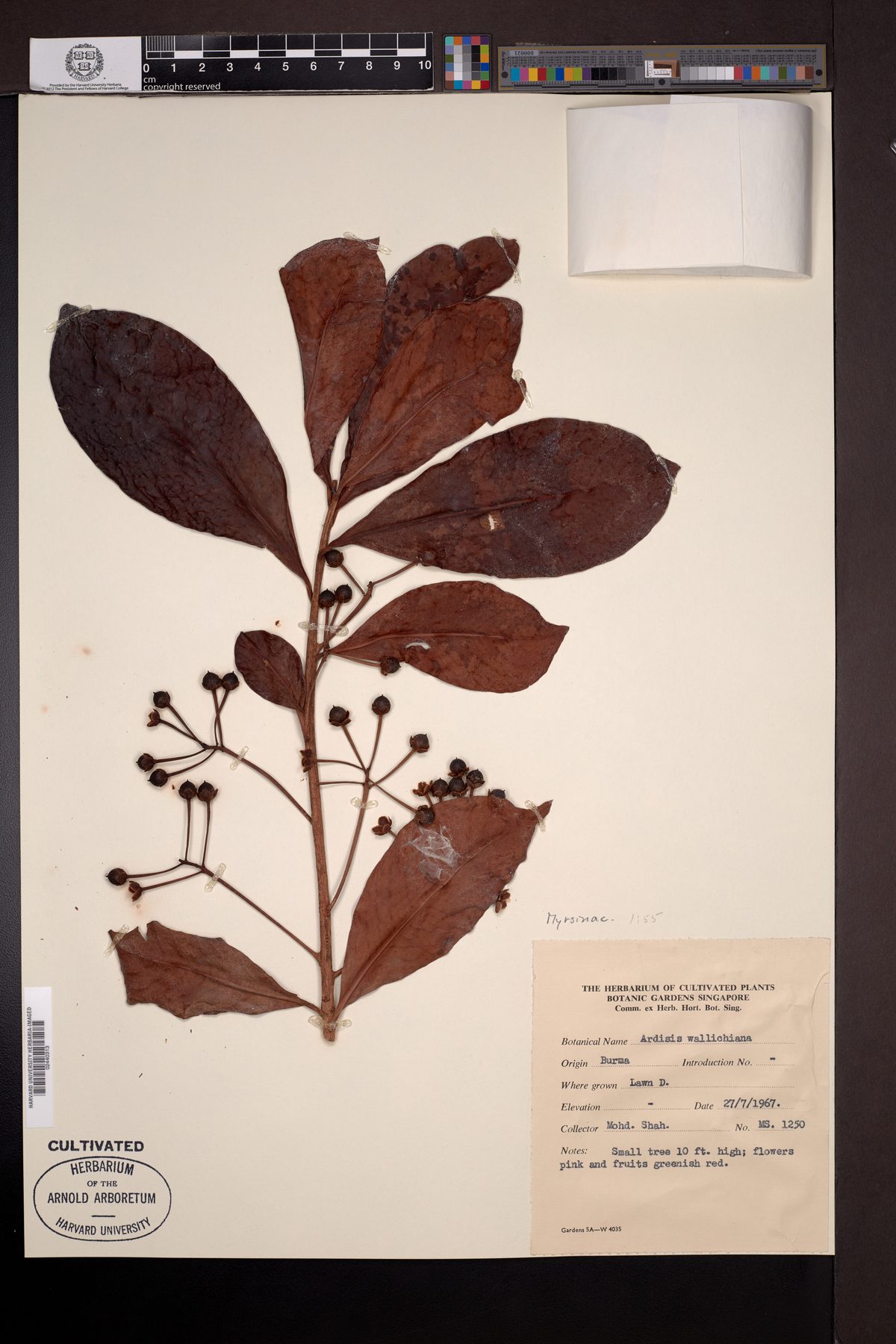
A shrub or small tree. It grows 2-5 m tall. The leaves are narrowly sword shaped. They are 12-20 cm long by 2-5 cm wide. They are entire and have gland dots. The flowers are red and in groups. The fruit is flattened and has red dots. They are 4 mm across. The fruit are 5 angled.
Edible Uses
The ripe fruit are eaten fresh.
Traditional Uses
The ripe fruit are eaten fresh.
This uses section is brief — help expand it
Distribution
A subtropical plant. In Assam it grows up to 1,300 m above sea level. It grows in valleys and damp places. Hobart Botanical Gardens. In Sichuan and Yunnan.
Where It Grows
Asia, Australia, China, Himalayas, India, Indochina, Myanmar, Nepal, Northeastern India, SE Asia, Tasmania, Tibet, Vietnam,
Notes
There are about 250-300 Ardisia species. They are mainly in the tropics. Also put in the family Myrsinaceae.
Synonyms
Also Known As
Hanvo-ok, Pachala rong, Thengpi chorleng
References (6)
- Murtem, G. & Chaudhrey, P., 2016, An ethnobotanical note on wild edible plants of Upper Eastern Himalaya, India. Brazilian Journal of Biological Sciences, 2016, v. 3, no. 5, p. 63-81 (Also confused with Ardisia nerifolia)
- Patiri, B. & Borah, A., 2007, Wild Edible Plants of Assam. Geethaki Publishers. p 75
- Sarma, H., et al, 2010, Updated Estimates of Wild Edible and Threatened Plants of Assam: A Meta-analysis. International Journal of Botany 6(4): 414-423
- Singh, H.B., Arora R.K.,1978, Wild edible Plants of India. Indian Council of Agricultural Research, New Delhi. p 49 (As Ardisia floribunda)
- Singh, V. B., et al, (Ed.) Horticulture for Sustainable Income and Environmental Protection. Vol. 1 p 214 (As Ardisia neriifolia)
Show all 6 references Hide references
- Teron, R. & Borthakur, S. K., 2016, Edible Medicines: An Exploration of Medicinal Plants in Dietary Practices of Karbi Tribal Population of Assam, Northeast India. In Mondal, N. & Sen, J.(Ed.) Nutrition and Health among tribal populations of India. p 153