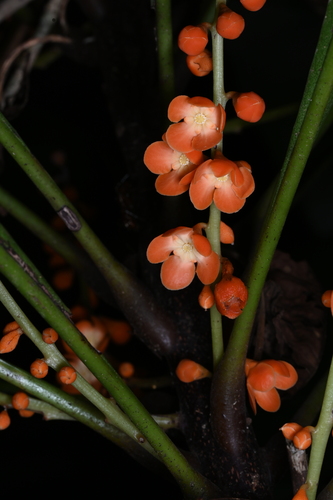
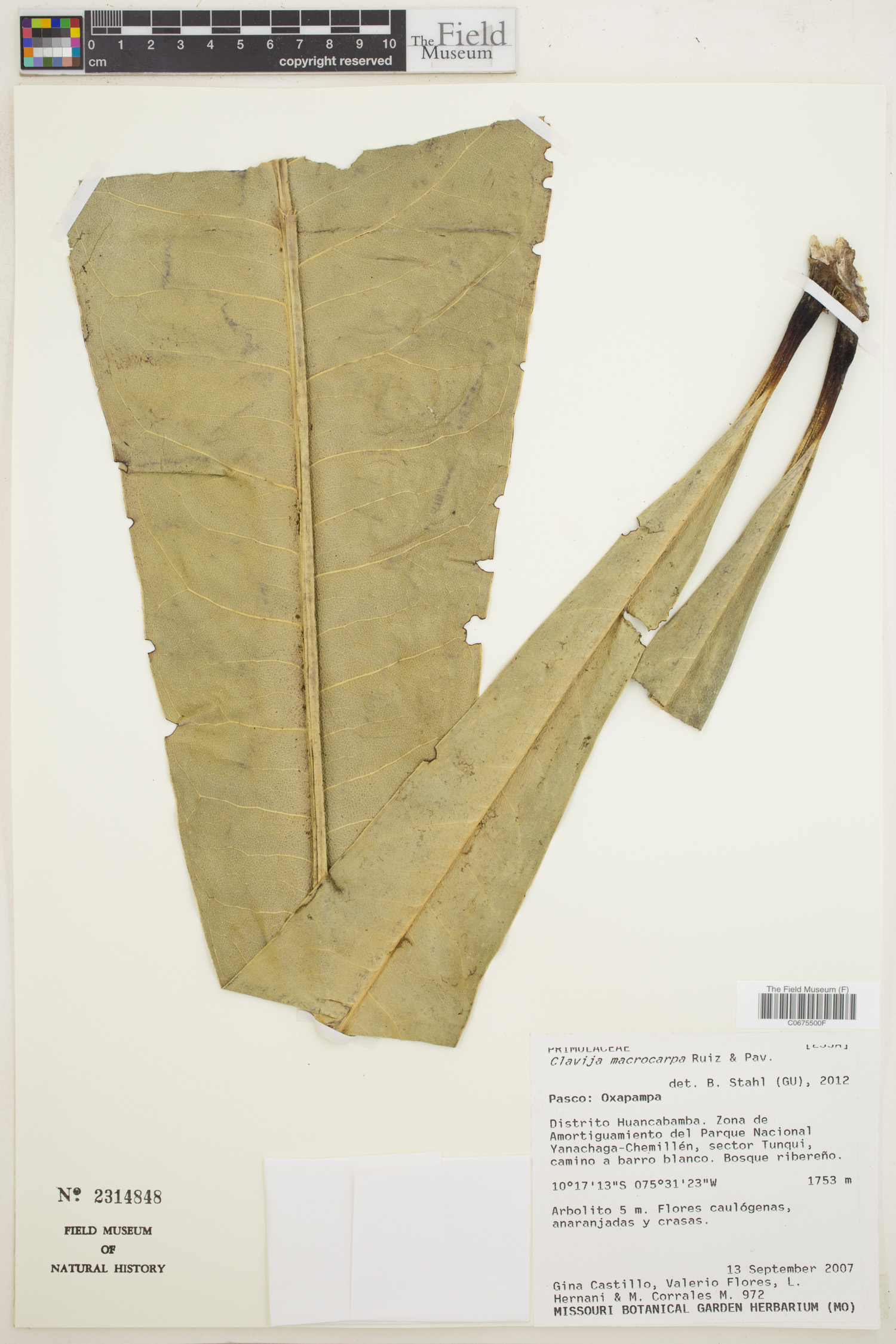
Embelia schimperi
Vatke
iNaturalist· cc-by-nc
(c) Odile Weber, some rights reserved (CC BY-NC), uploaded by Odile Weber
iNaturalist· cc-by-nc
(c) Bart Wursten, some rights reserved (CC BY-NC)
iNaturalist· cc-by-nc
(c) Bart Wursten, some rights reserved (CC BY-NC)
Summary
Source: WikipediaEmbelia schimperi is a shrubby climber or small tree within the family Primulaceae.
Description
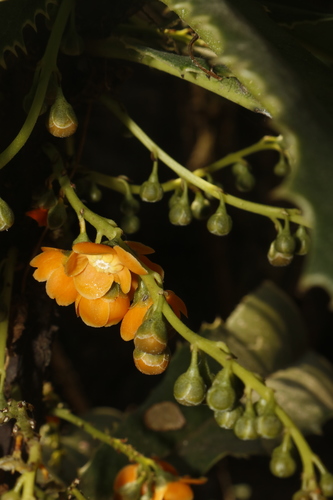
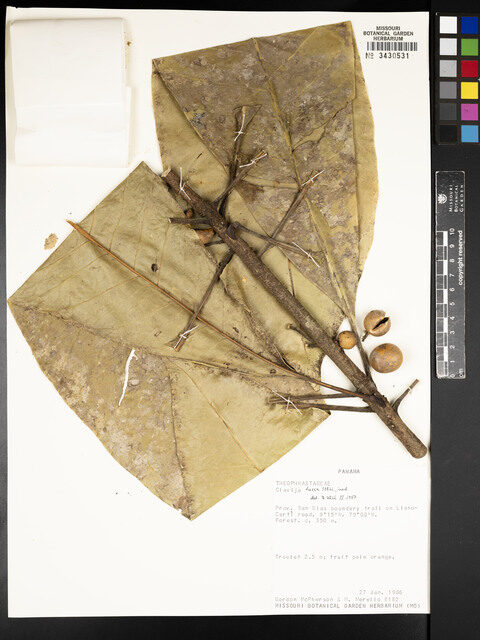
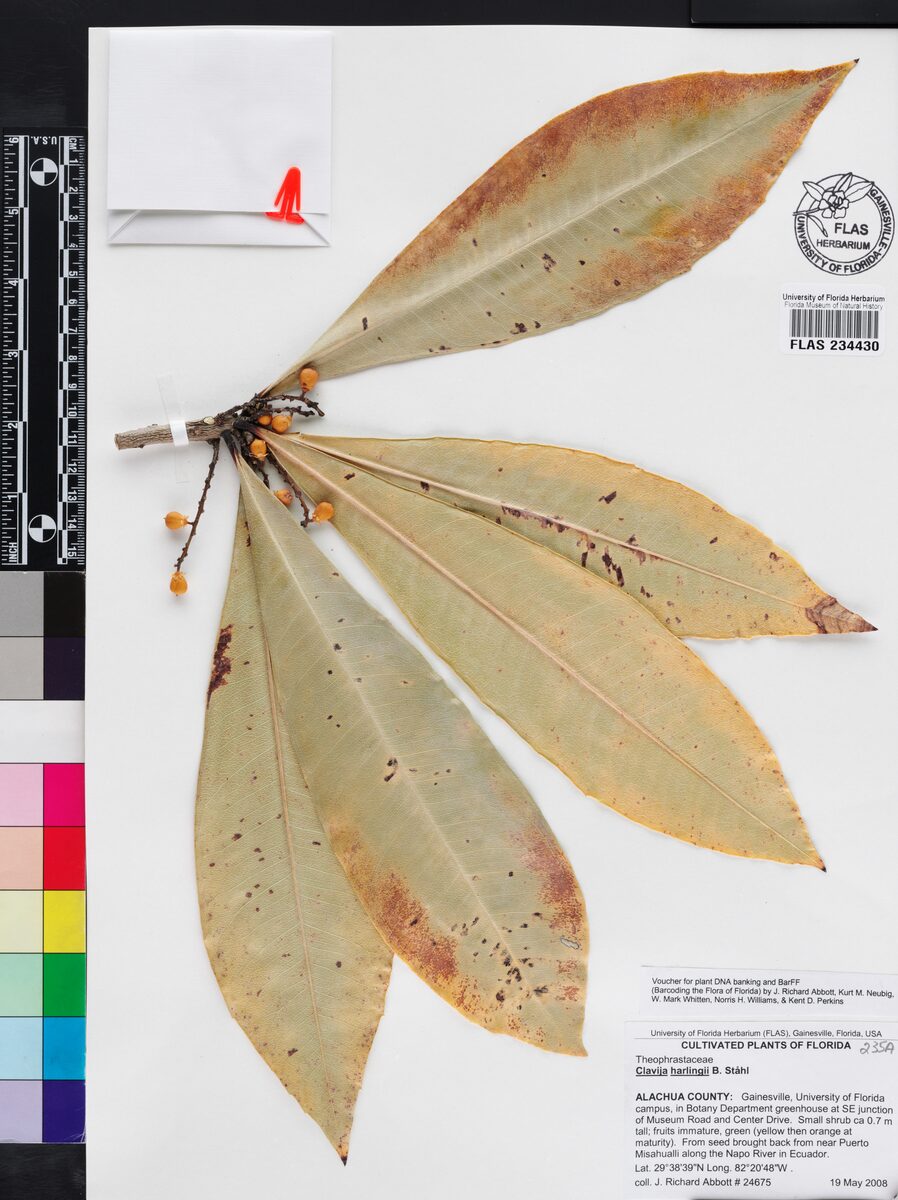
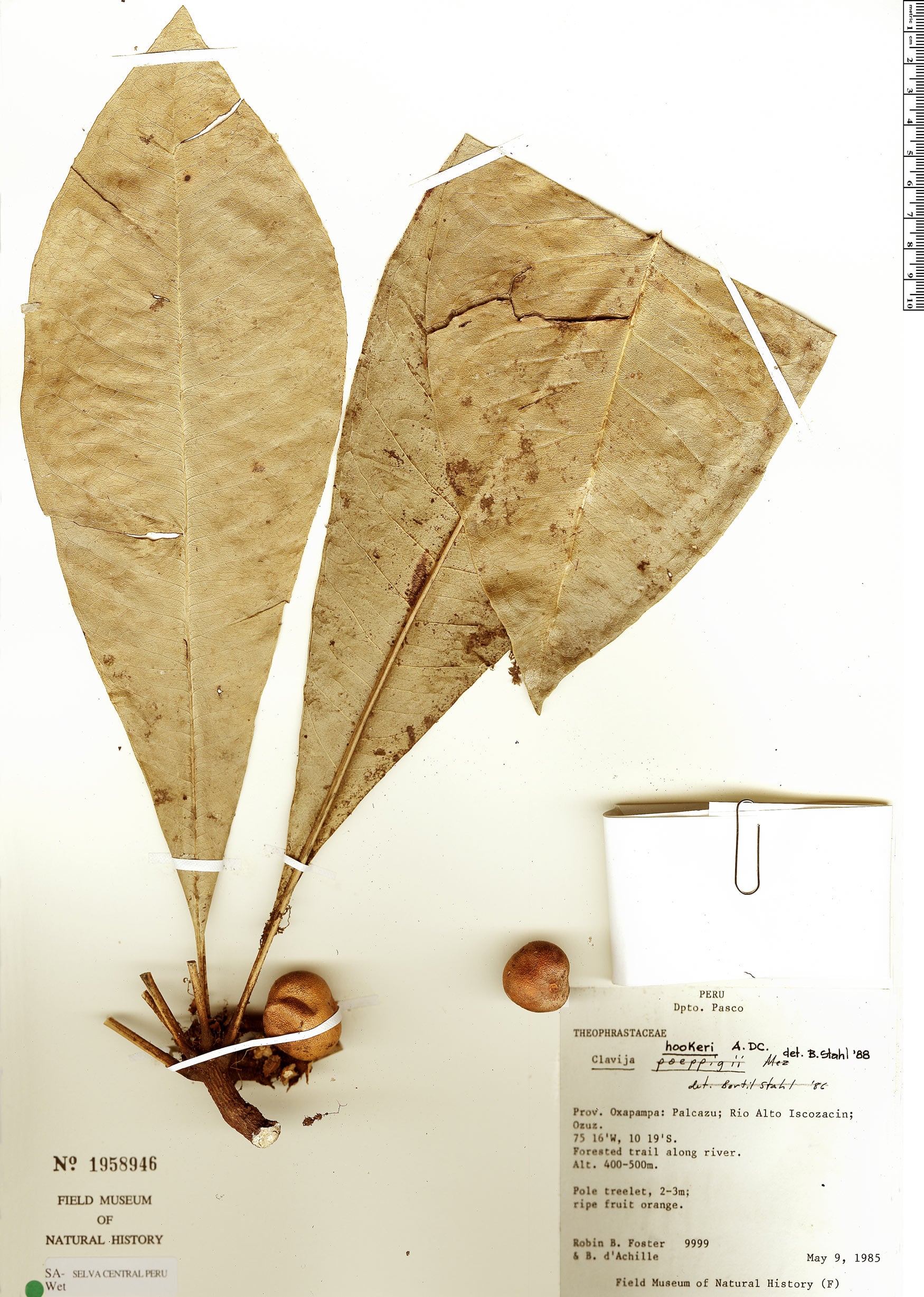
A small tree. It can be a shrubby climber. It grows 7 m tall. The bark is smooth and red-brown. The twigs have raised dots. The leaves are arranged in spirals and crowded at the ends of branches. The leaves vary a lot in shape. The leaves are oval and 8 cm long by 4 cm wide. There are 15 or more side veins. The flowers are small and green-white. There are many fruit on stalks. They are 6 cm across. They are red when ripe. There is one seed inside.
Edible Uses
Among the Maasai people, dry fruit and root extracts of the species is used as an antihelmintic, specifically against the tapeworm, Taenia saginata.
Traditional Uses
The leaves are eaten raw in small amounts as a snack. They taste salty. The ripe fruit are eaten raw.
This uses section is brief — help expand it
Medicinal Uses
The leaves are pounded and the powder is rubbed into swollen breasts of lactating mothers to treat mastitis. Alternatively, the powder is soaked in water and the infusion is drunk to treat difficult labour in women or for tapeworm. The fruits and roots are boiled and the decoction drunk to treat intestinal worms.
Distribution
A tropical plant. In Ethiopia is grows as an under-storey tree and grows between 1,700-2,600 m altitude. It grows along the edges of forests, on river banks and on termite mounds. In Tanzania it grows between 1,000-3,200 m above sea level. It grows in areas with a rainfall between 800-2,000 mm.
Where It Grows
Africa, Angola, Burundi, Cameroon, Central Africa, Congo, East Africa, Ethiopia, Guinea, Guinée, Kenya, Malawi, Mozambique, Nigeria, Rwanda, Southern Africa, Sudan, Tanzania, Uganda, West Africa, Zambia, Zimbabwe,
Cultivation
Plants are grown from seed.
Production
The leaves are collected during the early rains.
Other Information
It is a famine food.
Notes
There are about 140 Embelia species. Also put in the family Myrsinaceae.
Synonyms
Also Known As
Enkoko, Hanku, Hanqu, Inqoko, Inqoqo, Isasya-mubili, Kanko, Kemjach, Mzula, Nakonda, Qaanqo, Umukaragata
References (26)
- Alemneh, D., 2020, Ethnobotany of wild edible plants in Yilmana Densa and Quarit Districts of West Gojjam Zone, Amhara Region, Ethiopia. Ethnobotany Research & Applications. 20:47
- Asfaw, Z., Conservation and use of traditional vegetables in Ethiopia. FAO
- Asfaw, Z. and Tadesse, M., 2001, Prospects for Sustainable Use and Development of Wild Food Plants in Ethiopia. Economic Botany, Vol. 55, No. 1, pp. 47-62
- Balemie, K., & Kebebew, F., 2006, Ethnobotanical study of wild edible plants in Derashe and Kucha Districts, South Ethiopia. Journal of Ethnobiology and Ethnomedicine.
- Bekele-Tesemma A., Birnie, A., & Tengnas, B., 1993, Useful Trees and Shrubs for Ethiopia. Regional Soil Conservation Unit. Technical Handbook No 5. p 208
Show all 26 references Hide references
- Burkill, H. M., 1985, The useful plants of west tropical Africa, Vol. 4. Kew.
- Demise, S. & Asfaw, Z., 2020, Ethno Botanical Study of Wild Edible Plants in Adola District, Southern, Ethiopia. International Journal of Research and Analytical Reviews (IJRAR) 7(2).
- Ethiopia: Famine Food Field Guide. http://www.africa.upenn.edu/faminefood/category3.htm
- Fowler, D. G., 2007, Zambian Plants: Their Vernacular Names and Uses. Kew. p 49
- Glover et al, 1966b,
- Grivetti, L. E., 1980, Agricultural development: present and potential role of edible wild plants. Part 2: Sub-Saharan Africa, Report to the Department of State Agency for International Development. p 45
- Grubben, G. J. H. and Denton, O. A. (eds), 2004, Plant Resources of Tropical Africa 2. Vegetables. PROTA, Wageningen, Netherlands. p 561
- Jardin, C., 1970, List of Foods Used In Africa, FAO Nutrition Information Document Series No 2.p 76
- Linnaea 40:206. 1876
- Lulekal, E., et al, 2011, Wild edible plants in Ethiopia: a review on their potential to combat food insecurity. Afrika Focus - Vol. 24, No 2. pp 71-121
- Martin, F.W. & Ruberte, R.M., 1979, Edible Leaves of the Tropics. Antillian College Press, Mayaguez, Puerto Rico. p 207
- Molla, A., Ethiopian Plant Names. http://www.ethiopic.com/aplants.htm
- Peters, C. R., O'Brien, E. M., and Drummond, R.B., 1992, Edible Wild plants of Sub-saharan Africa. Kew. p 154
- Regassa, T., et al, 2014, Ethnobotany of Wild and Semi-Wild Edible Plants of Chelia District, West-Central Ethiopia. Science, Technology and Arts Research Journal. 3(4): 122-134
- Ruffo, C. K., Birnie, A. & Tengnas, B., 2002, Edible Wild Plants of Tanzania. RELMA p 296
- Seyoum, Y., et al, 2015, Edible Wild Fruit Trees and Shrubs and Their Socioeconomic Significance in Central Ethiopia. Ethnobotany Research & Applications. 14:183-197
- Sina, B. & Degu, H. D., 2015, Knowledge and use of Wild Edible Plants in the Hula District of the Sidama Zone. International Journal of Bio-resource and Stress Management 6(3):352-365
- von Katja Rembold, 2011, Conservation status of the vascular plants in East African rain forests. Dissertation Universitat Koblenz-Landau p 166
- White, F., Dowsett-Lemaire, F. and Chapman, J. D., 2001, Evergreen Forest Flora of Malawi. Kew. p 406
- World Checklist of Useful Plant Species 2020. Royal Botanic Gardens, Kew
- Yimer, A., et al, 2021, Ethnobotanical study of wild edible plants used by Meinit Ethnic Community at Bench-Maji Zone, Southwest Ethiopia. Research Square. p 6