Embelia tsjeriam-cottam
(Roem. & Schult.) A. DC.
Malabar embelia
iNaturalist· cc0
no rights reserved, uploaded by S.MORE
iNaturalist· cc-by-nc
(c) Om Dhuttargaonkar, some rights reserved (CC BY-NC)
Summary
Source: WikipediaEmbelia tsjeriam-cottam, commonly known as vidanga, bhasmaka, krimighna, or vaivilangam is a species in the family Primulaceae.
Description
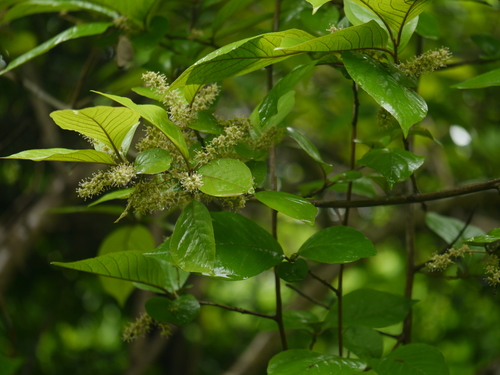
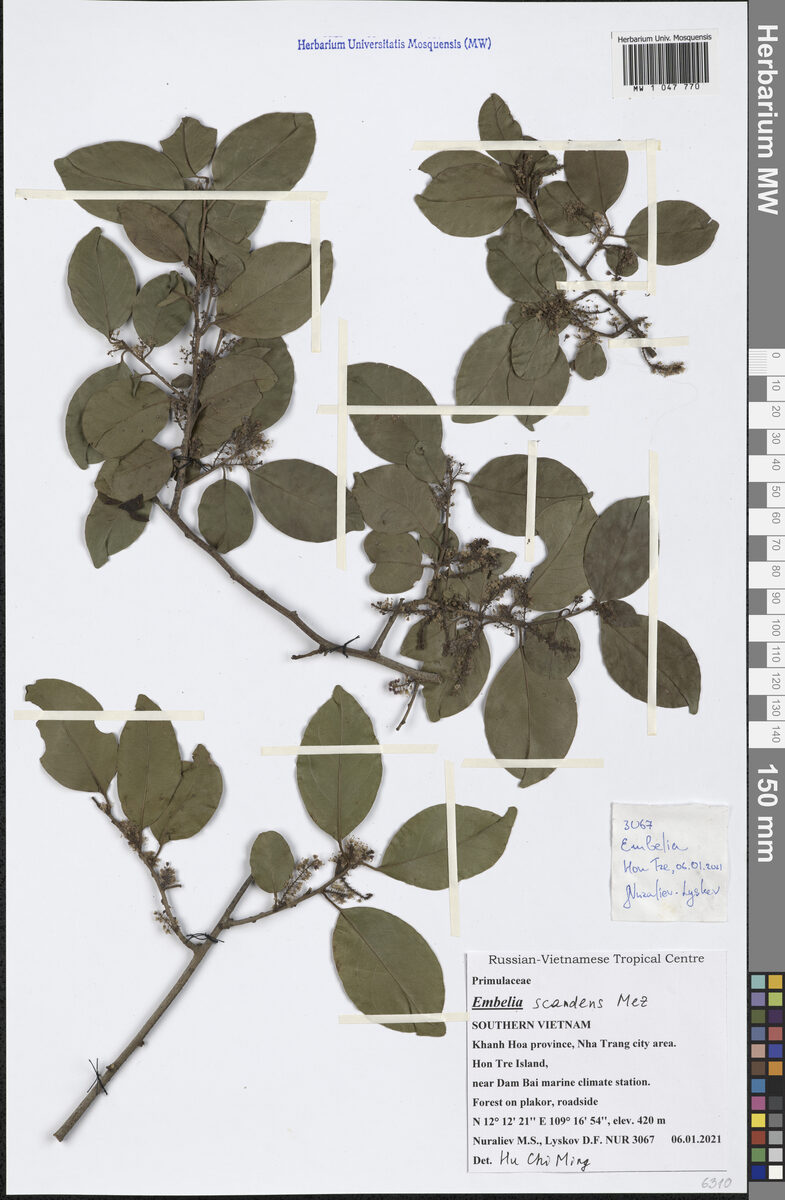
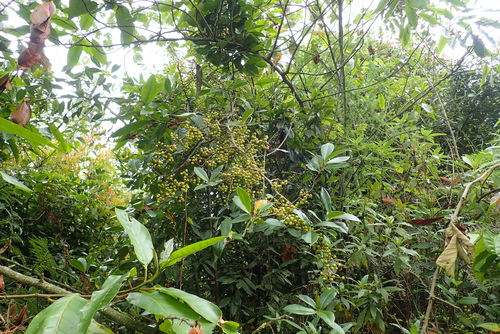
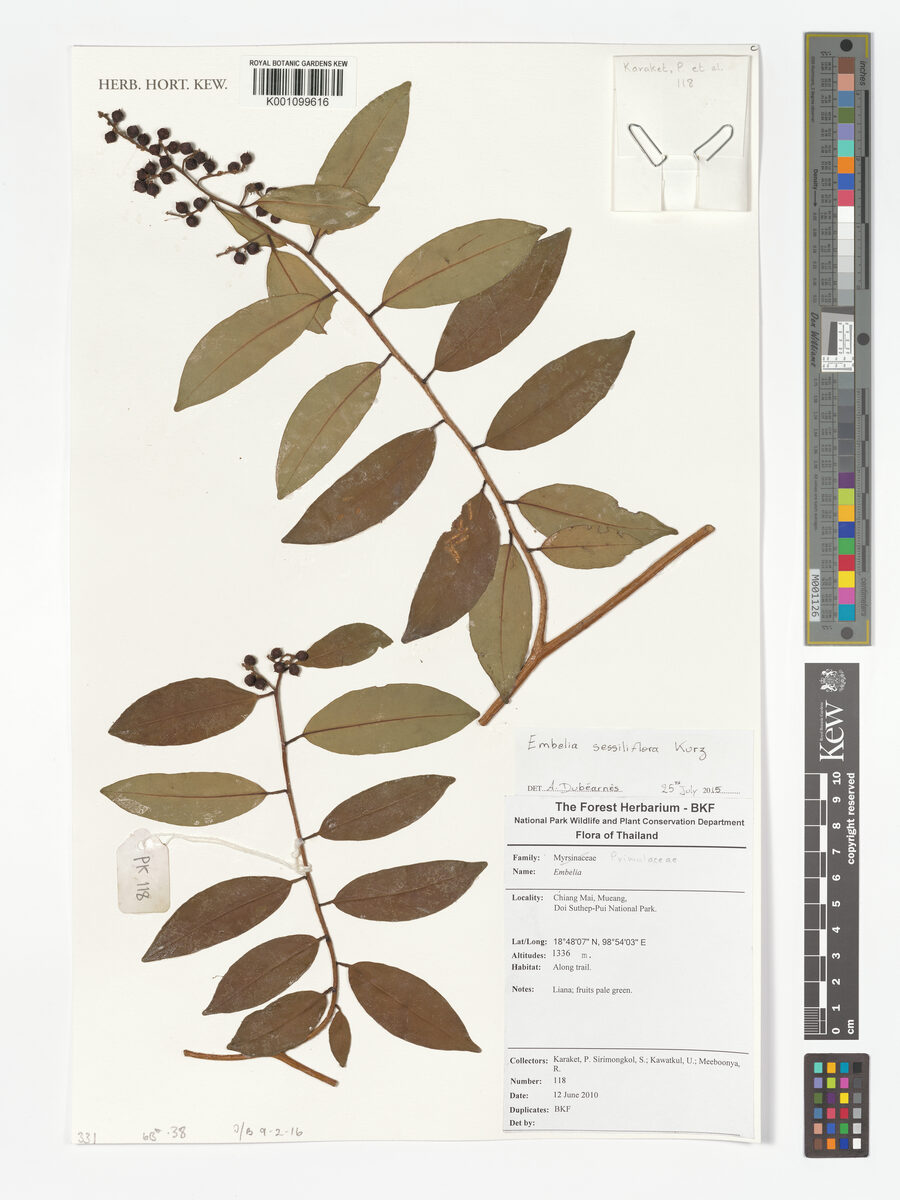
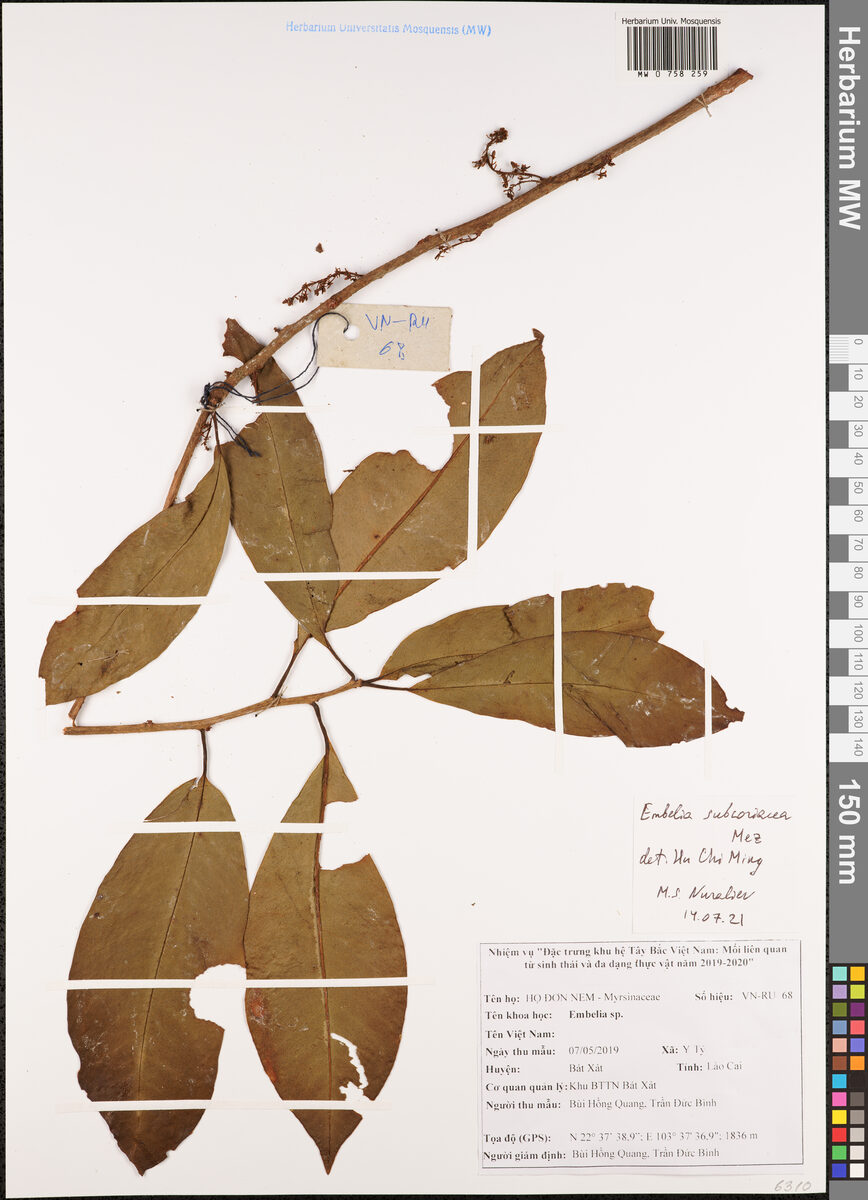
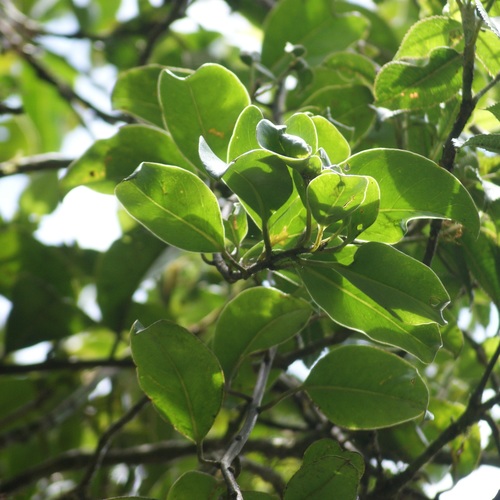
It is a shrub or small tree. It grows 1-2 m tall. It can be a climbing plant. The leaves are oval and pointed and usually at the end of the plant. The flowers are in groups on the side of the stems. They are small and greenish yellow. The fruit are very similar to Embelia ribes. They are round and red and when ripe are sweettasting.
Edible Uses
The dried berries are primarily used in medicine; they are acrid, astringent, and carminative, making them beneficial in treating constipation, colic, indigestion, flatulence, and piles. Additionally, a seed paste is applied externally to manage ringworm and other skin infections. The berries are abundant in quinones such as embelin, rapanone, homoembelin, himorapanone, and vilangin. Embelin has been reported to exhibit anti-inflammatory properties.
Traditional Uses
The fruit are used to adulterate black pepper.
This uses section is brief — help expand it
Medicinal Uses
The plant is highly esteemed in Ayurvedic medicine as a powerful anthelmintic, and is also an important ingredient of a number of formulations. A decoction is widely used in the treatment of insanity and heart diseases. The fruits are anthelmintic, antispasmodic and carminative. The finely powdered berries are formulated as an ointment for treating pleuritis. The bark of the root is reportedly used to treat toothache. The leaves, in combination with ginger (Zingiber officinale), are used as a gargle for remedying sore throats. The dried bark of the root is used as a remedy for toothache. The plant contains Embelin 1, a benzoquinone, and gallic acid 2, a polyphenol. Both the compounds were already reported to possess antioxidant and anticancer properties.
Distribution
It is a tropical plant. It occurs in the Western Ghats in India.
Where It Grows
Asia, India, Indochina, Laos, Malaysia, Myanmar, SE Asia, Sri Lanka, Thailand,
Notes
There are about 140 Embelia species. It has medicinal properties. Also put in the family Myrsinaceae.
Synonyms
Also Known As
Eik-hmwe-nwe, Marakkeera
References (3)
- Ambasta, S.P. (Ed.), 2000, The Useful Plants of India. CSIR India. p 194
- Narayanan Ratheesh, M. K. et al, 2011, Wild edible plants used by the Kattunaikka, Paniya and Kuruma tribes of Wayanad District, Kerala, India. Journal of Medicinal Plants Research Vol. 5(15), pp. 3520-3529
- Trans. Linn. Soc. 17:131. 1834