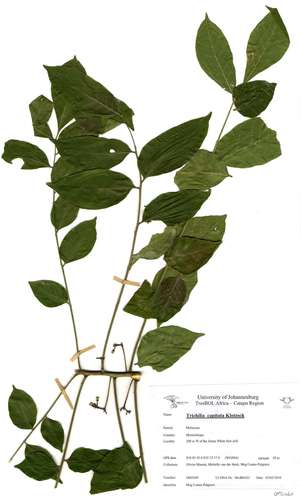
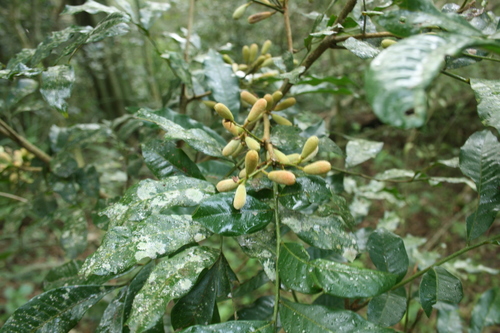
Aglaia elaeagnoidea
(Juss.) Benth.
Coastal boodyarra, Droopy leaf
iNaturalist· cc-by-nc
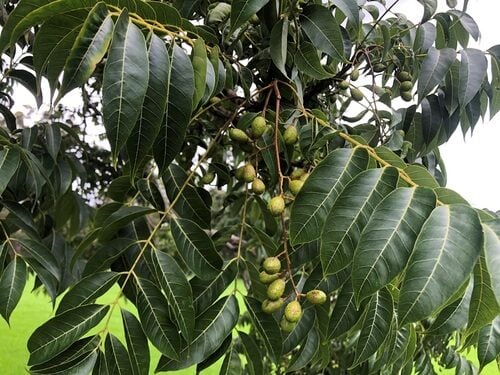
(c) Shiwalee Samant, some rights reserved (CC BY-NC), uploaded by Shiwalee Samant
iNaturalist· cc-by-nc
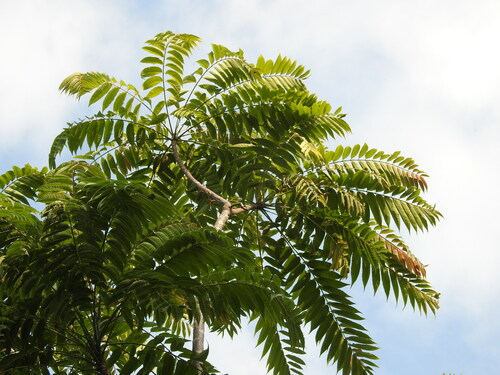
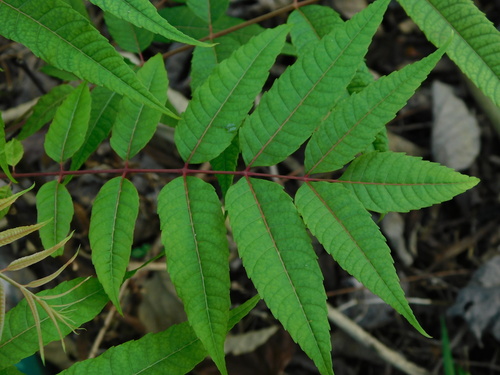
(c) Shiwalee Samant, some rights reserved (CC BY-NC), uploaded by Shiwalee Samant
iNaturalist· cc-by-nc
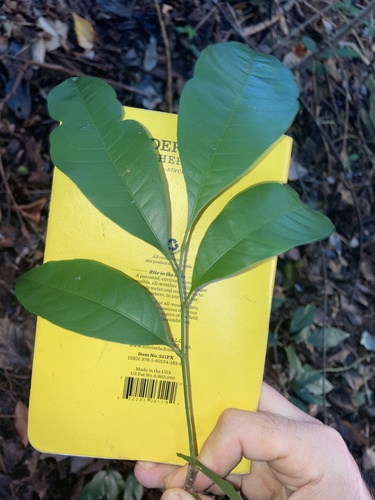
(c) Megan, some rights reserved (CC BY-NC), uploaded by Megan
Summary
Source: WikipediaAglaia elaeagnoidea, the droopy leaf or priyangu, is a species of plant in the family Meliaceae. It is a 10m tall tree found in American Samoa, Australia (Western Australia and Queensland), Cambodia, China, India, Indonesia, Malaysia, New Caledonia, Papua New Guinea, the Philippines, Samoa, Sri Lanka, Taiwan (Hengchun Peninsula), Thailand, Vanuatu, and Vietnam.
Description
A small tree. It can be 20 m tall. It can have buttresses. The leaves are compound. They are 6-19 cm long and 7-21 cm wide. There are less than 7 leaflets. The leaflets are oval. There are scales densely covering the lower surface of the leaflet. The flowers occur in a group. They are in the axils of leaves. The flowers have 5 petals and are white or yellow. They are 2-3 mm long. The fruit is 2.5 cm long and 1.5 cm across. It is a red berry dotted with small scales. There are 1 or 2 seeds about 10 mm long.
Edible Uses
Fruit - raw. An acid flavour. The seed is covered with a thin, white, gelatinous flesh (aril) that is sweet and tasty. The fruit is up to 20mm long and 15mm wide, containing up to 2 seeds.
Traditional Uses
The aril or layer around the seed is sweet and edible.
This uses section is brief — help expand it
Medicinal Uses
In Ayurveda, the fruits are reported to be astringent and cooling. They are recommended in the treatment of inflammations and febrile complaints. The seeds are said to be useful in the treatment of painful micturition. The genus 'Aglaia' is the only source of the group of about 50 known representatives of compounds that bear a unique cyclopenta[b]tetrahydrobenzofuran skeleton. These compounds are more commonly called rocaglate or rocaglamide derivatives, or flavaglines, and most have been found to have potent insecticidal properties, antifungal, antiviral, antibacterial or anthelmintic bioactivity. Several of them exhibit pronounced cytotoxic activity against a range of human cancers. Since the first representative in this group was only discovered in 1982, this is one of the few recent examples of a completely new class of plant secondary metabolites of biological promise (see B. G. Wang et al., Biochem. Syst. Ecol. 32: 1223-1226. 2004; L.W. Chaidir et al., J. Nat. Prod. 64: 1216-1220. 2001).
Distribution
It is a tropical plant. In grows in rainforest and monsoon forest. It needs well-drained soils. In tropical Queensland it grows from sea level to 280 m altitude. In Thailand it grows between 30-800 m above sea level. In southern China it grows in dense moist forests between sea level and 1,500 m above sea level. In Yunnan.
Where It Grows
Asia, Australia, Cambodia, China, India, Indochina, Indonesia, Laos, Malaysia, New Caledonia, Pacific, Papua New Guinea, PNG, Philippines, Samoa, SE Asia, Sri Lanka, Taiwan, Thailand, Vanuatu, Vietnam,
Cultivation
Plants are grown from fresh seed.
Propagation
Seed - best sown fresh, it can germinate within a few weeks.
Other Uses
The genus 'Aglaia' is the only source of the group of about 50 known representatives of compounds that bear a unique cyclopenta[b]tetrahydrobenzofuran skeleton. These compounds are more commonly called rocaglate or rocaglamide derivatives, or flavaglines, and most have been found to have potent insecticidal properties, antifungal, antiviral, antibacterial or anthelmintic bioactivity. Several of them exhibit pronounced cytotoxic activity against a range of human cancers. Since the first representative in this group was only discovered in 1982, this is one of the few recent examples of a completely new class of plant secondary metabolites of biological promise (see B. G. Wang et al., Biochem. Syst. Ecol. 32: 1223-1226. 2004; L.W. Chaidir et al., J. Nat. Prod. 64: 1216-1220. 2001). The heartwood is red, the sapwood yellow. The bright red heartwood is heavy, hard, close-grained, lustrous and handsomely marked. It is useful for the spokes of wheels. We do not have any more specific information on the wood of this species, but the general description of wood from trees in this genus is as follows:- The heartwood is pale red to deep coppery red; it is clearly but not sharply distinguished from the pinkish or pale red sapwood. The texture is fine and dense; the grain often distinctly crossed and generally wavy, forming a regular diagonal wavy ribbon on radial sections; on tangential sections, an irregular, curly figure, marked with characteristic fine zigzag lines; most species have a distinct, even pungent, aromatic odour resembling both cedar and camphor. The wood is hard to very hard; heavy to very heavy; durable, the heartwood rarely if ever being attacked by termites, nor even the sapwood by beetles. It seasons well. It can be rather difficult to work, the curly and wavy grain requiring a very sharp and fine-set plane to surface it well; it can, however, take a very smooth surface under sharp tools. An attractive, strong and durable wood, individual species rarely come into the market, except in occasional very small lots. They are often well known locally for their strength and durability, being favourites for house posts, beams, window sills, windows, agricultural implements, etc. When available in sufficient size, the wood is suitable for a wide range of uses, including posts; ties; bridge and wharf building; beams, joists, rafters; flooring; sheathing and ceiling; fine furniture and cabinetwork.
Production
In Thailand flowering and fruiting can occur throughout the year but flowering is most commonly September to November and fruiting March to July.
Notes
There are about 104 Aglaia species. They occur in Asia and the Pacific.
Synonyms
Also Known As
Chang khru, Chokkala, Daeng khao, Jangamana hannu, Kraduk khiat, Kudka parndh, Nam phueng, Pohon langsat priyangu, Punyava, Sang khriat dam, Shanluo, Ta maeo, Yerra aduga
References (14)
- Ambasta S.P. (Ed.), 2000, The Useful Plants of India. CSIR India. p 21
- Argent, G et al, nd, Manual of the Larger and More important non Dipterocarp Trees of Central Kalimantan Indonesia. Volume 2 Forest Research Institute, Samarinda, Indonesia. p 410
- Cooper, W. and Cooper, W., 2004, Fruits of the Australian Tropical Rainforest. Nokomis Editions, Victoria, Australia. p 285
- Dobriyal, M. J. R. & Dobriyal, R., 2014, Non Wood Forest Produce an Option for Ethnic Food and Nutritional Security in India. Int. J. of Usuf. Mngt. 15(1):17-37
- Fl. austral. 1:383. 1863
Show all 14 references Hide references
- Jackes, B.R., 2001, Plants of the Tropics. Rainforest to Heath. An Identification Guide. James Cook University. p 63
- Paczkowska, G. & Chapman, A.R., 2000, The Western Australian Flora. A Descriptive Catalogue. Western Australian Herbarium. p 294
- Ravikrishna, S., 2011, Ethno-medico-botanical survey on Wild Edible fruits of Udupi Taluq, Udupi p 46
- Singh, H.B., Arora R.K.,1978, Wild edible Plants of India. Indian Council of Agricultural Research, New Delhi. p 48
- Slik, F., www.asianplant.net
- Sukarya, D. G., (Ed.) 2013, 3,500 Plant Species of the Botanic Gardens of Indonesia. LIPI p 110
- Thaman, R. and W. Clarke, Paper on Agroforestry on Aneityum and Tanna, Vanuatu from Internet (?Aglaia eleagnoides)
- Wongprasert, T. et al, 2011, A Synoptic Account of the Meliaceae of Thailand. Thai For. Bull. 39:210-266
- World Checklist of Useful Plant Species 2020. Royal Botanic Gardens, Kew