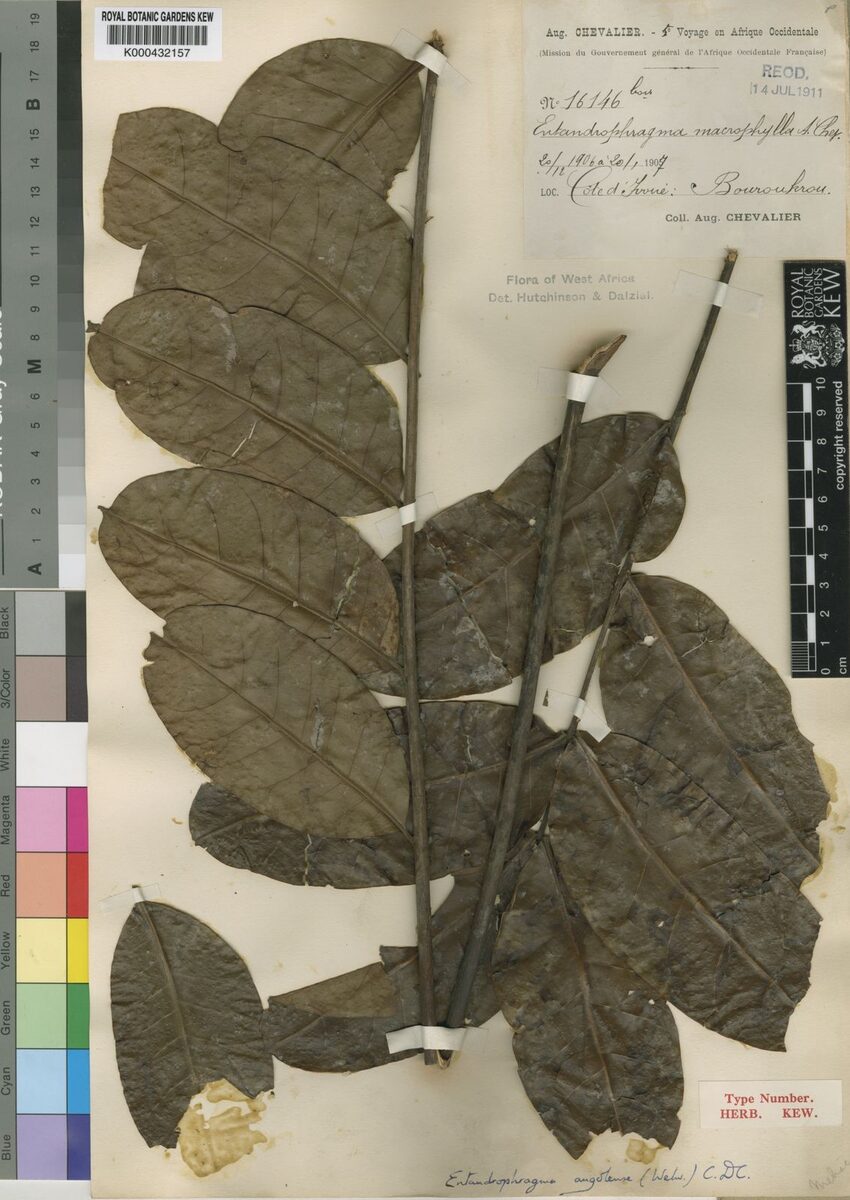
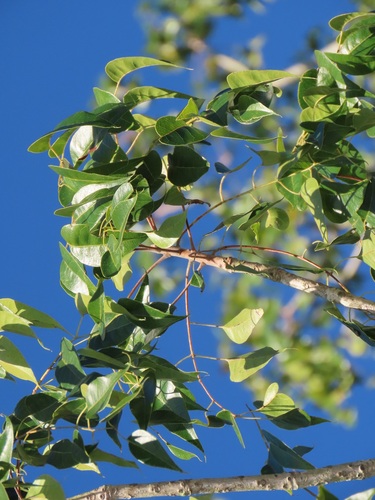
Aglaia edulis
(Roxb.) A. Gray
Langsatan
Wikipedia· cc-by-sa
Wikimedia Commons - Aglaia_edulis_(A_samarensis,_LT)_A44690_(7989642117).jpg
wikimedia· cc-by-sa
Wikimedia Commons - Vinayaraj
Summary
Source: WikipediaAglaia edulis is a tree species of plant in the family Meliaceae. It occurs in Tropical Asia from India to Yunnan and South-Central China. The wood and timber are used for various purposes.
Description
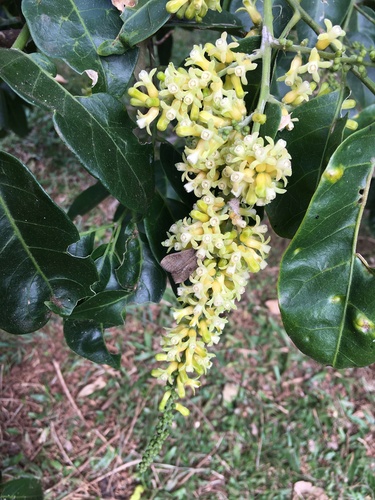
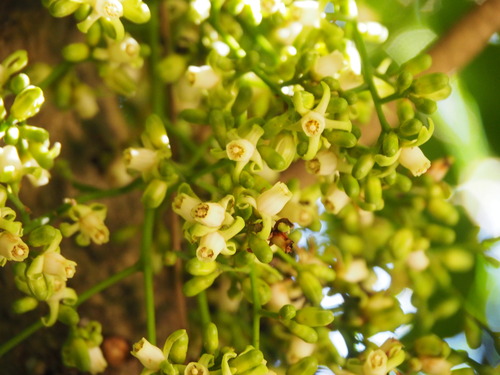
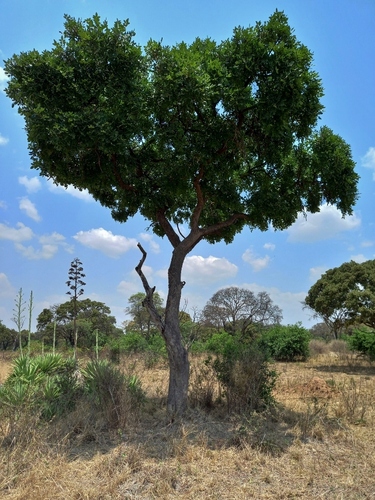
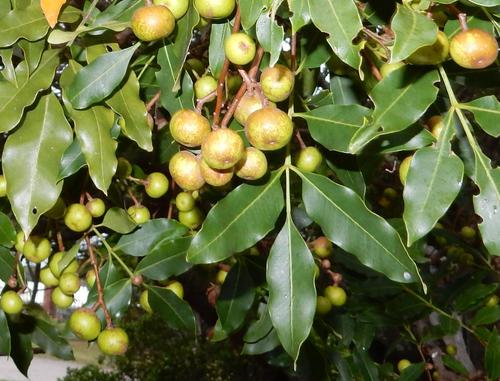
A tree. It grows up to 20 m tall. The trunk is straight. It is 50 cm across. It has buttresses. The bark is smooth and coppery. It has cylindrical branches. They are brown and with a somewhat flaky skin near the tips. The leaves are compound. There are 5-9 leaflets. These taper to the tip. The flowers are many and are small and round. The fruit is a round berry and is velvety. They are up to 3.2 cm long by 3.8 cm across. There is a depression at the end. There are 2-3 seeds.
Edible Uses
In Cambodia, the fruits of the trees known as -mchu:l are eaten, when ripe, while the wood is used in temporary constructions and for firewood. The timber of the trees known as bâng' kew, bângkô:ng or bangkuv (which is common in Pursat Province and also found in Stung Treng Province) is valued highly in construction, even though it is a Third-class (lowest-grade) timber, with very low royalties due for extraction. The timber of this species is red, hard, and usually used for making carts, boats, furniture, etc.
Traditional Uses
The aril or layer around the seed is edible. The pulp of the fruit is eaten.
This uses section is brief — help expand it
Medicinal Uses
The pericarp has medicinal properties. It is used in the treatment of diarrhoea. The genus 'Aglaia' is the only source of the group of about 50 known representatives of compounds that bear a unique cyclopenta[b]tetrahydrobenzofuran skeleton. These compounds are more commonly called rocaglate or rocaglamide derivatives, or flavaglines, and most have been found to have potent insecticidal properties, antifungal, antiviral, antibacterial or anthelmintic bioactivity. Several of them exhibit pronounced cytotoxic activity against a range of human cancers. Since the first representative in this group was only discovered in 1982, this is one of the few recent examples of a completely new class of plant secondary metabolites of biological promise (see B. G. Wang et al., Biochem. Syst. Ecol. 32: 1223-1226. 2004; L.W. Chaidir et al., J. Nat. Prod. 64: 1216-1220. 2001).
Distribution
A tropical plant. It grows between sea level and 1,700 m above sea level. It is often in dry forest. They are especially abundant in the forests of Luzon. In southern China it grows in evergreen broad-leaved forests on limestone between 1,200-1,800 m above sea level. In Yunnan.
Where It Grows
Asia, Bhutan, Cambodia, China, Fiji, Himalayas, India, Indochina, Indonesia, Laos, Malaysia, Myanmar, Northeastern India, Pacific, Philippines, SE Asia, Sikkim, Thailand, Vietnam,
Cultivation
Plants can be grown from seeds.
Other Uses
The genus 'Aglaia' is the only source of the group of about 50 known representatives of compounds that bear a unique cyclopenta[b]tetrahydrobenzofuran skeleton. These compounds are more commonly called rocaglate or rocaglamide derivatives, or flavaglines, and most have been found to have potent insecticidal properties, antifungal, antiviral, antibacterial or anthelmintic bioactivity. Several of them exhibit pronounced cytotoxic activity against a range of human cancers. Since the first representative in this group was only discovered in 1982, this is one of the few recent examples of a completely new class of plant secondary metabolites of biological promise (see B. G. Wang et al., Biochem. Syst. Ecol. 32: 1223-1226. 2004; L.W. Chaidir et al., J. Nat. Prod. 64: 1216-1220. 2001). The sapwood is pale brown, red or yellow. The wood is a hard and heavy with a light aroma of cedar. It is used locally for light construction work. The wood is used for boat, house and bridge building, furniture and agricultural implements, but supplies are limited. We do not have any more specific information on the wood of this species, but the general description of wood from trees in this genus is as follows:- The heartwood is pale red to deep coppery red; it is clearly but not sharply distinguished from the pinkish or pale red sapwood. The texture is fine and dense; the grain often distinctly crossed and generally wavy, forming a regular diagonal wavy ribbon on radial sections; on tangential sections, an irregular, curly figure, marked with characteristic fine zigzag lines; most species have a distinct, even pungent, aromatic odour resembling both cedar and camphor. The wood is hard to very hard; heavy to very heavy; durable, the heartwood rarely if ever being attacked by termites, nor even the sapwood by beetles. It seasons well. It can be rather difficult to work, the curly and wavy grain requiring a very sharp and fine-set plane to surface it well; it can, however, take a very smooth surface under sharp tools. An attractive, strong and durable wood, individual species rarely come into the market, except in occasional very small lots. They are often well known locally for their strength and durability, being favourites for house posts, beams, window sills, windows, agricultural implements, etc. When available in sufficient size, the wood is suitable for a wide range of uses, including posts; ties; bridge and wharf building; beams, joists, rafters; flooring; sheathing and ceiling; fine furniture and cabinetwork.
Production
In India plants flower and fruit March to June.
Notes
There are about 104 Aglaia species. They occur in Asia and the Pacific.
Synonyms
Also Known As
Bang kau, Bang kew, Bangkew si phlae, Dieng-soh-longar, Gulli, Gumi, Khang khao, Khi phueng, Khrang, Lagakala, Lagakali, Malasaging, Mchu:l, Momailateku, Mumai-leteku, Salulahsune, Sabg khriat ai kong, Sang khriat sai, Sinakedang
References (25)
- Ambasta S.P. (Ed.), 2000, The Useful Plants of India. CSIR India. p 21
- Argent, G et al, nd, Manual of the Larger and More important non Dipterocarp Trees of Central Kalimantan Indonesia. Volume 2 Forest Research Institute, Samarinda, Indonesia. p 410
- Badwar, R. R., & Fernandez, R. R., 2011, Edible Wild Plants of the Himachal Pradesh State by IHBT, Himalayas, Daya Publishing House,. Delhi, India
- Bircher, A. G. & Bircher, W. H., 2000, Encyclopedia of Fruit Trees and Edible Flowering Plants in Egypt and the Subtropics. AUC Press. p 14. p 13 (As Aglaia acida). p 14 (As Aglaia cambodiana)
- Dobriyal, M. J. R. & Dobriyal, R., 2014, Non Wood Forest Produce an Option for Ethnic Food and Nutritional Security in India. Int. J. of Usuf. Mngt. 15(1):17-37
Show all 25 references Hide references
- Forest Inventory and Planning Institute, 1996, Vietnam Forest Trees. Agriculture Publishing House p 494
- Hazarika, T. K., et al, 2012, Studies on wild fruits of Mizoram, India used as ethno-medicines. Genetic Resources and Crop Evolution. Published on line 03 February, 2012
- Hedrick, U.P., 1919, (Ed.), Sturtevant's edible plants of the world. p 30
- Jeeva, S., 2009,Horticultural potential of wild edible fruits used by the Khasi tribes of Meghalaya. Journal or Horticulture and Forestry Vol. 1(9) pp. 182-192
- Kachenchart, B., et al, 2008, Phenology of Edible Plants at Sakaerat Forest. In Proceedings of the FORTROP II: Tropical Forestry Change in a Changing World. Bangkok, Thailand.
- Monsalud, M.R., Tongacan, A.L., Lopez, F.R., & Lagrimas, M.Q., 1966, Edible Wild Plants in Philippine Forests. Philippine Journal of Science. p 495 (As Aglaia diffusa)
- Parham, H. B. R, 1940, Supplement to the Journal of the Polynesian Society No. 16. Fiji Plants: Their Name and Uses.
- Phon, P., 2000, Plants used in Cambodia. © Pauline Dy Phon, Phnom Penh, Cambodia. p 14 (As Aglaia cambodiana and Aglaia pirifera)
- Sawian, J. T., et al, 2007, Wild edible plants of Meghalaya, North-east India. Natural Product Radiance Vol. 6(5): p 413
- Singh, H.B., Arora R.K.,1978, Wild edible Plants of India. Indian Council of Agricultural Research, New Delhi. p 48
- Slik, F., www.asianplant.net
- Sukarya, D. G., (Ed.) 2013, 3,500 Plant Species of the Botanic Gardens of Indonesia. LIPI p 110 (Also as Aglaia minahassae)
- Sundriyal, M., et al, 1998, Wild edibles and other useful plants from the Sikkim Himalaya, India. Oecologia Montana 7:43-54
- Sundriyal, M., et al, 2004, Dietary Use of Wild Plant Resources in the Sikkim Himalaya, India. Economic Botany 58(4) pp 626-638
- Turreira Garcia, N., et al, 2017, Ethnobotanical knowledgeof the Kuy and Khmer people in Prey Lang, Cambodia. Cambodian Journal of Natural History 2017 (1): 76-101
- C. Wilkes, U.S. Expl. Exped., Phan. 15:237. 1854
- Wild edible plants of Himachal Pradesh
- Wongprasert, T. et al, 2011, A Synoptic Account of the Meliaceae of Thailand. Thai For. Bull. 39:210-266
- World Checklist of Useful Plant Species 2020. Royal Botanic Gardens, Kew
- http://www.worldagroforestrycentre.org/sea/products/afdbases/af/asp