Argyreia nervosa
(Burm.f.) Bojer
Elephant creeper, Woolly morning-glory
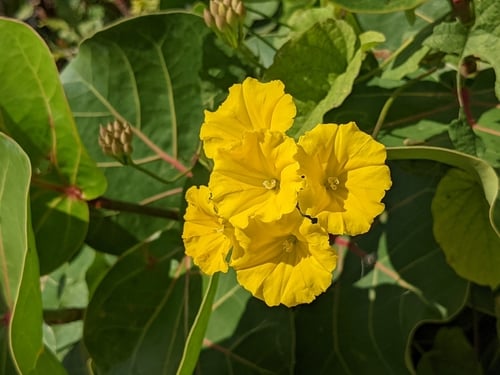
iNaturalist· cc-by-nc
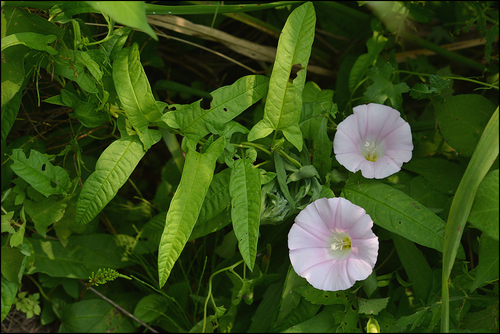
(c) Troos van der Merwe, some rights reserved (CC BY-NC), uploaded by Troos van der Merwe
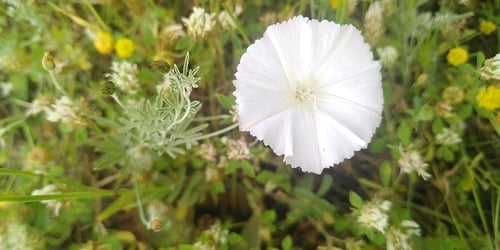
iNaturalist· cc-by
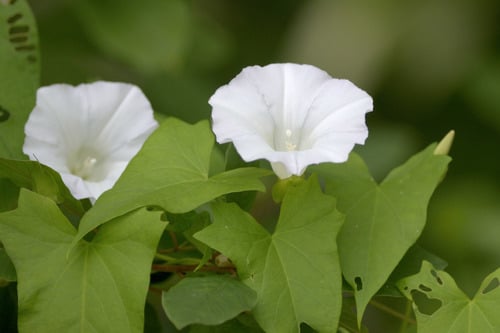
(c) elawrey, some rights reserved (CC BY), uploaded by elawrey
iNaturalist· cc-by-nc
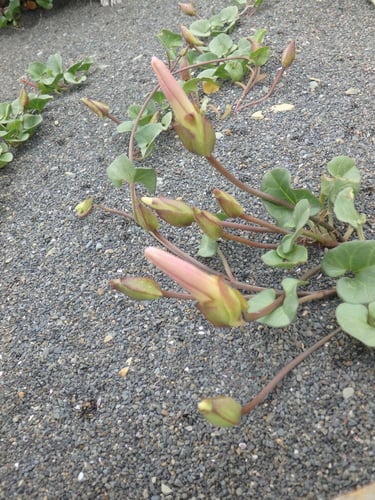
(c) Mike Wood, some rights reserved (CC BY-NC), uploaded by Mike Wood
Summary
Source: WikipediaArgyreia nervosa is a perennial climbing vine native to the Indian subcontinent and introduced to numerous areas worldwide, including Hawaii, Africa, and the Caribbean. Though it can be invasive, it is often prized for its aesthetic and medicinal value. Common names include elephant creeper, woolly morning glory and Hawaiian baby woodrose. Its seeds are known for their powerful entheogenic properties, greater or similar to those of Ipomoea species, with users reporting significant psychedelic and spiritual experiences. The two botanical varieties are Argyreia nervosa var. nervosa described here, and Argyreia nervosa var. speciosa, the roots of which are used in Ayurvedic medicine. Argyreia nervosa contains various ergoline alkaloids such as ergine (LSA). A study reported stereoisomers of ergine to be found in the seeds at a concentration of 0.325% of dry weight. Two modern studies from a team of researchers also revealed lysergic acid, methylergometrine (syn. lysergic acid butanolamide), methysergide, lysergylalanine, and suspected, unidentifed ergopeptines. A study of the related Ipomoea tricolor showed that ergoline concentrations in the leaves are 12-fold lower than that of the seeds.
Description
A twining vine. It keeps growing from year to year. It can grow 14 m or more long. The stems are covered with woolly white hairs. The leaves are broad and heart shaped. They are 30 cm wide. The underside of the leaves has soft silvery hairs. The flowers are purple and trumpet shaped. They flare out and are pink. The throat is darker and they have white felty hairs. They have large, papery bracts around them. The fruit is a brown capsule. The flowers are pollinated by hawkmoths at night.
Edible Uses
Young leaves are eaten as a vegetable, coated in wheat flour, steamed, chopped and fried; harvested leaves store for 3-4 days. The pods are scraped, boiled with water changes, and used as a vegetable or in chutneys. Ripe fruits are eaten raw.
Traditional Uses
The young leaves are eaten as a vegetable. The harvested leaves can be stored for 3-4 days. The leaves are covered in wheat flour, steamed, chopped and then fried. Caution: The seeds are probably poisonous. They have been recorded as being eaten in India. The pods are scraped and boiled and the water changed and used as a vegetable or in chutneys. The ripe fruit are recorded as being eaten raw.
Medicinal Uses
While he does not claim there to be any evidence for the use of the seeds of A. nervosa as a traditional entheogen in its native India, Christian Rätsch does describe some interesting traditional uses of the root of the plant in Ayurveda somewhat suggestive of effects upon the CNS: The root is regarded as a tonic for the nerves and brain and is ingested as a rejuvenation tonic and aphrodisiac to increase intelligence. Other traditional uses are in the treatment of gonorrhea, strangury, chronic ulcers, diabetes, anemia, and cerebral disorders. The plant is also used as appetizer, brain tonic, cardiotonic, and aphrodisiac. It possesses anti-inflammatory, immunomodulatory, antibacterial, antiviral, and antifungal activities. Claims that alternative medicines including Ayuverdic possess proven medical qualities, such as having widespread beneficial effects such as antibacterial, antiviral and antifungal activities are not claims that satisfy the scientific requirement of medical claims. Further, since the plant is partially toxic even if there were medical benefit, which is not established, this would have to be weighed against the potential poisoning impact of the substance.
Known Hazards
The seeds are probably poisonous, though they have been recorded as eaten in India.
Distribution
A tropical plant. It grows in the lowlands and up to 800 m above sea level. It needs moderate moisture and an average, well-drained soil. It can grow in full sun or light shade. It occurs in rainforest in Queensland between 30-300 m altitude. It suits humid locations.
Where It Grows
Africa, Antilles, Asia, Australia, Bangladesh, Burkina Faso, Dominican Republic, East Africa, Haiti, Hawaii, Himalayas, India*, Indochina, Indonesia, Malaysia, Mauritius, Mozambique, Myanmar, Nepal, Northeastern India, Pacific, Philippines, Puerto Rico, SE Asia, Thailand, USA, Virgin Islands, West Africa, West Indies,
Cultivation
Plants can be grown from seeds or cuttings.
Propagation
Seed - Softwood cuttings.
Notes
There are 90 Argyreia species.
Synonyms
Also Known As
Bai-la-baht, Bai-rabaat, Baswrael, Biangham, Bichtarak, Bistarak, Brudhajarak, Chandrapada, Hajo-seda, Hawaiian baby woodrose, Kaoasang, Kazun-gyi, Kedo ara, Liana gajah, Marikkuni, Panjo, Phak-rabaat, Samander-ka-pat, Samudra phul, Samudra soka, Samudrapala, Samupadra-pacha, Samudrasok, Sedang-dahon, Somdur soup, Uisul, Widhara
References (26)
- Ambasta S.P. (Ed.), 2000, The Useful Plants of India. CSIR India. p 51
- Baro, D., Baruah, S. and Borthukar, S. K. 2015, Documentation on wild vegetables of Baksa district, BTAD (Assam). Scholars Research Library. Archives of Applied Science Research, 2015, 7 (9):19-27 (Also as Argyreia speciosa)
- Chauhan, S. H., et al, 2018, Consumption patterns of wild edibles by the Vasavas: a case study from Gujarat, India. Journal of Ethnobiology and Ethnomedicine (2018) 14:57
- Cooper, W. and Cooper, W., 2004, Fruits of the Australian Tropical Rainforest. Nokomis Editions, Victoria, Australia. p 132
- Dey, A. & Mukhererjee, A., 2015, Living and Survival Amidst Hunger: Wild Edible Botanicals as a Prime Forest Productivity in the Rural Purulia District, West Bengal, India from Colonial to Present. Research Journal of Forestry 9(3): 71-86 (As Argyreia speciosa)
Show all 26 references Hide references
- Dutta, U., 2012, Wild Vegetables collected by the local communities from the Churang reserve of BTD, Assam. International Journal of Science and Advanced Technology. Vol. 2(4) p 119
- Engel, D.H., & Phummai, S., 2000, A Field Guide to Tropical Plants of Asia. Timber Press. p 203
- Gangte, H. E., et al, 2013, Wild Edible Plants used by the Zou Tribe in Manipur, India. International Journal of Scientific and Research Publications, Volume 3, Issue 5
- Guite, C., 2016, Study of wild edible plants associated with the Paite Tribe of Manipur, India. International Journal of Current Research. Vol. 8, Issue 11, pp. 40927-40932
- Joseph, M. A. & Antony, V. T., 2014, Wild edible Convolvulacean members used by the ULLADA tribes of ALEPPEY DISTRICT, KERALA. Journal of Science Vol. 4 No. 7 p 425-427
- Hortus maurit. 224. 1837
- Llamas, K.A., 2003, Tropical Flowering Plants. Timber Press. p 177
- McMakin, P.D., 2000, Flowering Plants of Thailand. A Field Guide. White Lotus. p 15
- Misra, S., 2020, Survey of edible plants for human consumption in south Odisha, India. Journal of Emerging Technologies and Innovative Research (JETIR) Vol. 7, Issue 12 p 278
- Murtem, G. & Chaudhrey, P., 2016, An ethnobotanical note on wild edible plants of Upper Eastern Himalaya, India. Brazilian Journal of Biological Sciences, 2016, v. 3, no. 5, p. 63-81
- Narzary, H., et al, 2013, Wild Edible Vegetables Consumed by Bodo tribe of Kokrajhar District (Assam), North-East India. Archives of Applied Science Research, 5(5): 182-190 (As Argyreia speciosa)
- Patiri, B. & Borah, A., 2007, Wild Edible Plants of Assam. Geethaki Publishers. p 85
- Plants of Haiti Smithsonian Institute http://botany.si.edu/antilles/West Indies
- Prafulla, S., 2017, Wild Food Diversity of Nawegaon-Nagzira Tiger Reserve in Gondia-Bhandara district of Maharashtra, India. Int. J. of Life Sciences, 2017, Vol. 5 (4): 620-626
- Sawian, J. T., et al, 2007, Wild edible plants of Meghalaya, North-east India. Natural Product Radiance Vol. 6(5): p 413
- Setiya, A. V., et al, 2016, Exploration and documentation of some wild edible plants used by the aboriginals from Gadchiroli District (M.S.) India. International Advanced Research Journal in Science, Engineering and Technology. 3(7)
- Shah, G.L., 1984, Some economically important plant of Salsette Island near Bombay. J. Econ. Tax. Bot. Vol. 5 No. 4 pp 753-765
- Staples, G.W. and Herbst, D.R., 2005, A tropical Garden Flora. Bishop Museum Press, Honolulu, Hawaii. p 244
- Singh, H.B., Arora R.K.,1978, Wild edible Plants of India. Indian Council of Agricultural Research, New Delhi. p17
- Sukarya, D. G., (Ed.) 2013, 3,500 Plant Species of the Botanic Gardens of Indonesia. LIPI p 897
- Teron, R. & Borthakur, S. K., 2016, Edible Medicines: An Exploration of Medicinal Plants in Dietary Practices of Karbi Tribal Population of Assam, Northeast India. In Mondal, N. & Sen, J.(Ed.) Nutrition and Health among tribal populations of India. p 150