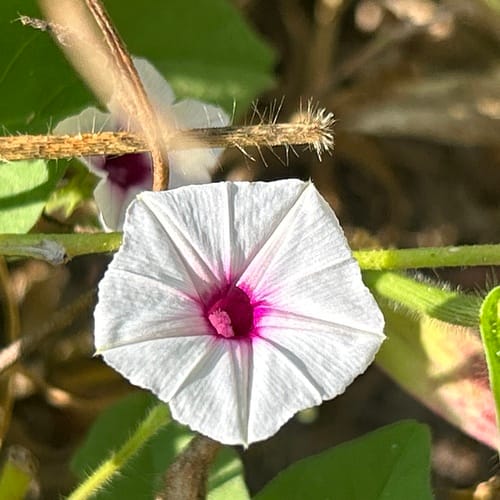
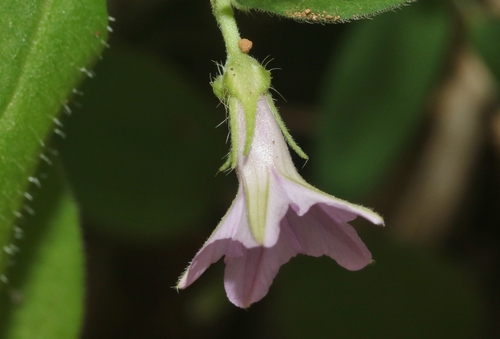
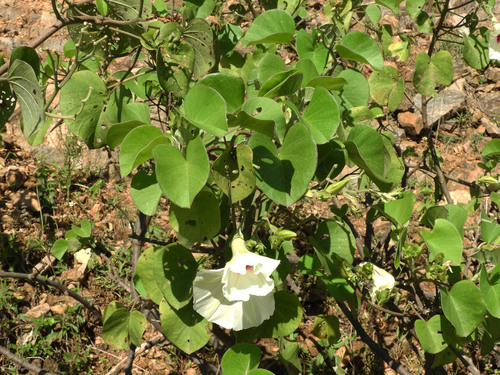
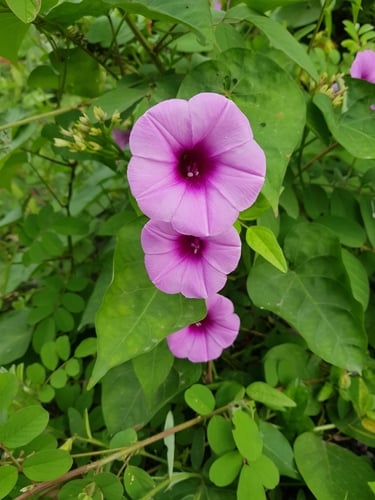
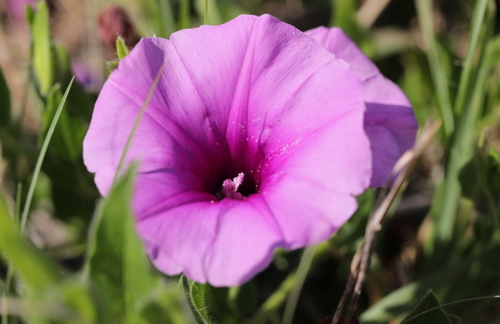
Calystegia subvolubilis
Don.
iNaturalist· cc-by-nc
(c) Aleksandr Ebel, some rights reserved (CC BY-NC), uploaded by Aleksandr Ebel
iNaturalist· cc-by-nc
(c) hakkahamushi, some rights reserved (CC BY-NC)
iNaturalist· cc-by-nc
(c) Charles, some rights reserved (CC BY-NC)
Summary
A perennial climbing vine reaching 3 meters in height. It flowers from July to September with hermaphrodite flowers pollinated by bees, moths, and butterflies. Hardy to UK zone 4. Grows in light sandy, medium loamy, and heavy clay soils across a range of pH levels from mildly acidic to mildly alkaline. Requires full sun and prefers consistently moist soil.
Description
A perennial climbing vine reaching 3 meters in height. It flowers from July to September with hermaphrodite flowers pollinated by bees, moths, and butterflies. Hardy to UK zone 4. Grows in light sandy, medium loamy, and heavy clay soils across a range of pH levels from mildly acidic to mildly alkaline. Requires full sun and prefers consistently moist soil.
Edible Uses
Edible Parts: Leaves Root Shoots Edible Uses: Root - cooked. Some caution is advised, see the notes above on toxicity. Young shoots - cooked. Some caution is advised, see the notes above on toxicity.
Medicinal Uses
None known
Known Hazards
Although no reports of toxicity have been seen for this species, at least some, if not all members of this genus are purgative, some caution is advised.
Distribution
It is a tropical plant.
Where It Grows
Asia, Japan, Mongolia,
Cultivation
Easily grown in ordinary garden soil in a sunny position, but plants are apt to become invasive. Nearly all taxa in Calystegia intergrade geographically into neighboring taxa with the exception of the widespread coastal species, C. soldanella (Linnaeus) R. Brown. It is impossible to draw clearly defined specific limits, and intermediate forms are always found where two taxa approximate geographically.
Propagation
Seed - sow spring in a cold frame in a free draining compost and only just cover. The seed usually germinates in 1 - 3 months at 15°c. When they are large enough to handle, prick the seedlings out into individual pots and grow them on in a cold frame for at least their first winter. Plant them out into their permanent positions in late spring or early summer, after the last expected frosts. Division in early spring whilst dormant.
Other Uses
None known Special Uses
Notes
There are 25 Calystegia species.
References (1)
- Plants for a Future database, The Field, Penpol, Lostwithiel, Cornwall, PL22 0NG, UK. http://www.scs.leeds.ac.uk/pfaf/