Camonea umbellata
(L.) A. R. Simoes & Staples
iNaturalist· cc-by-nc
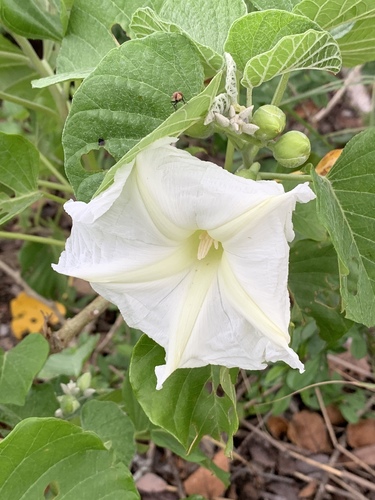
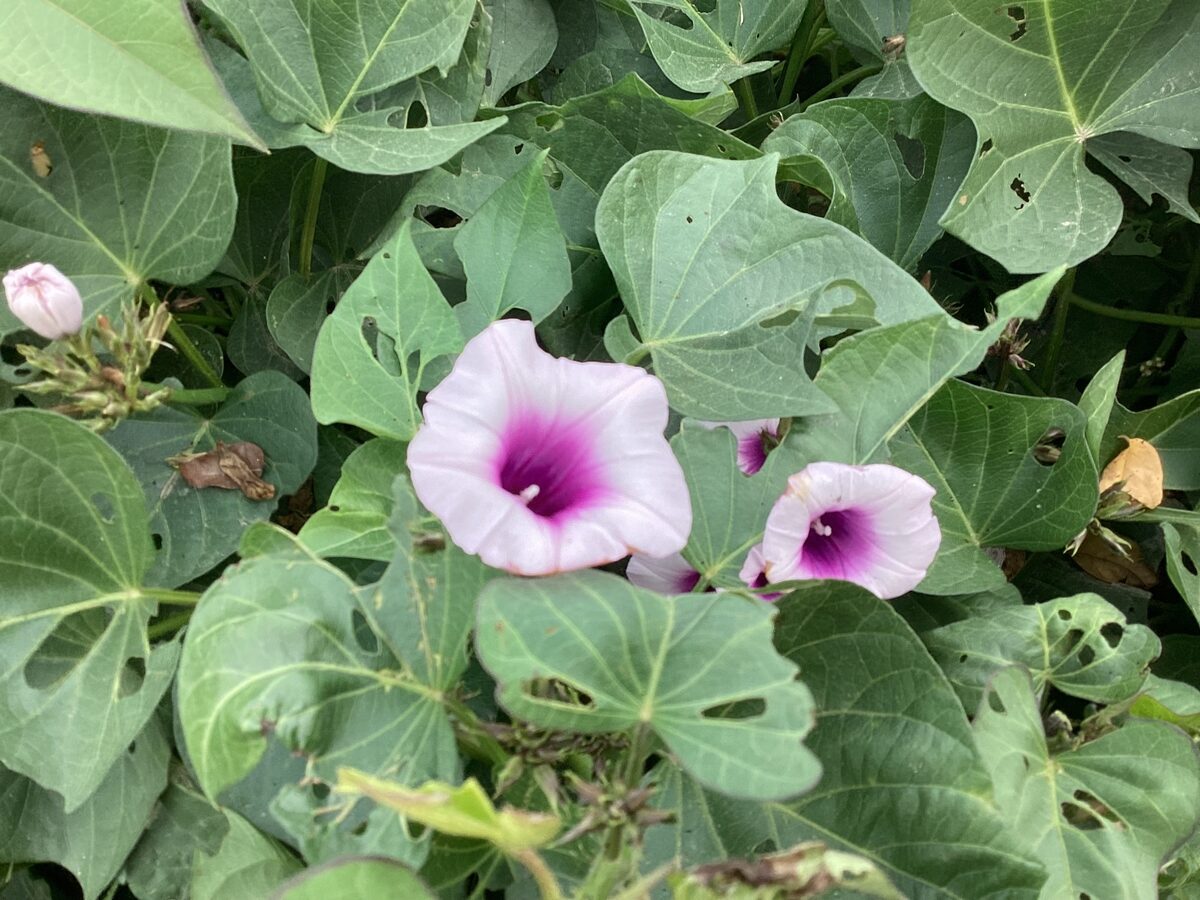
(c) Claire O'Neill, some rights reserved (CC BY-NC), uploaded by Claire O'Neill
iNaturalist· cc-by-nc
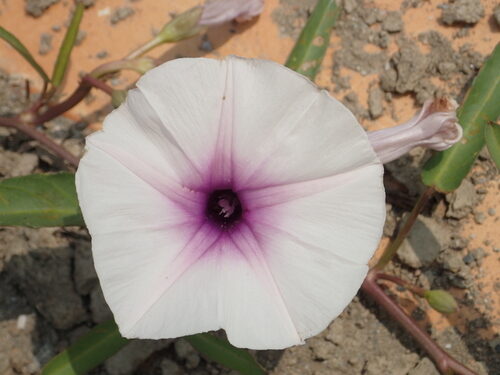
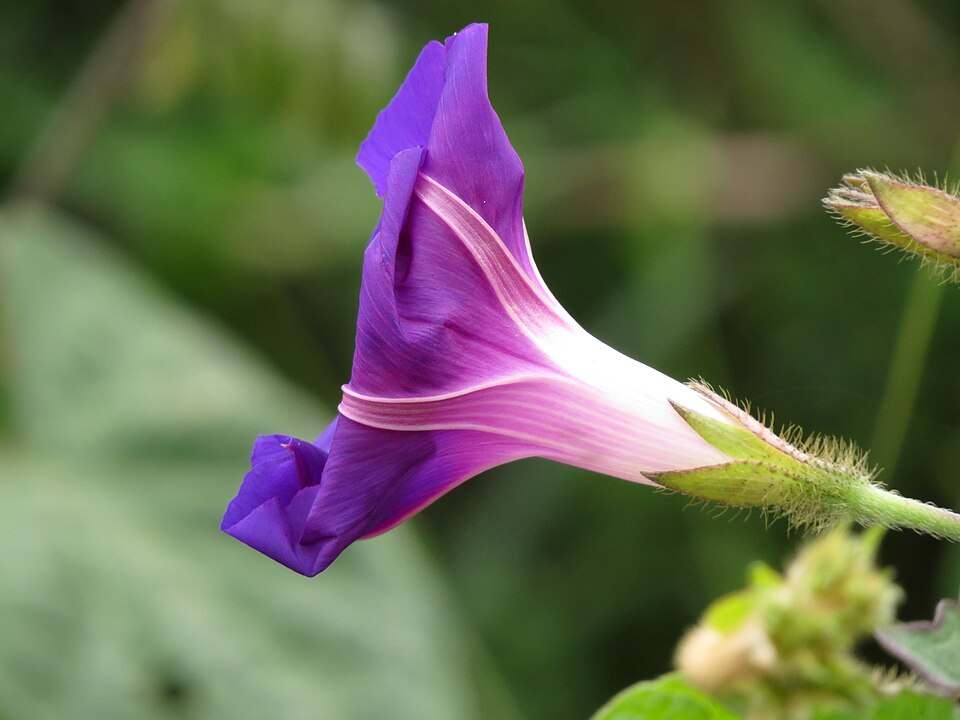
(c) Raúl Álvarez Mora, some rights reserved (CC BY-NC), uploaded by Raúl Álvarez Mora
iNaturalist· cc-by-nc
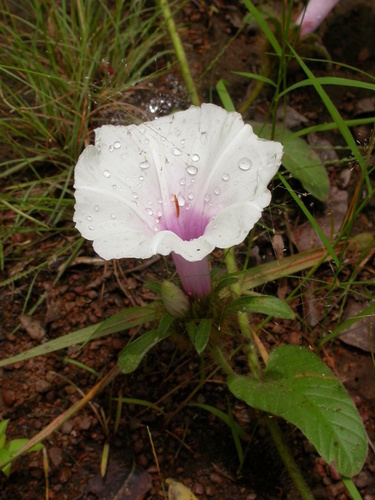
(c) Susan J. Hewitt, some rights reserved (CC BY-NC), uploaded by Susan J. Hewitt
Summary
Source: WikipediaCamonea umbellata, commonly known as hogvine, yellow merremia, and yellow wood rose, is a thin vine growing to a maximum thickness of 2 cm (0.79 in). It has many uses in Indian traditional medicines. The flowers attract bees, butterflies and birds.
Description
A slender twining plant. It is a woody vine. It can be 5 m long. It forms roots at the nodes. The stems are slender and cylinder shaped. The leavesThe leaves are oval and hairy on both surfaces. The flowers are in groups in the axils of the leaves. They are white with a cream colour. The fruit is a round capsule. It is 1 cm long and has 4 valves.
Edible Uses
The young leaves are eaten as a potherb and can be stored for 3–4 days after harvest. The flowers are also edible.
Traditional Uses
The young leaves are eaten as a potherb. The harvested leaves can be stored for 3-4 days.
This uses section is brief — help expand it
Distribution
It is a tropical plant. It grows in swampy places and near streams. It is also on sandy sites near beaches. This subspecies occurs in West Africa. In Argentina it grows below 500 m above sea level. In Colombia it grows up to 2,000 m above sea level.
Where It Grows
Africa, American Samoa, Argentina, Asia, Australia, Belize, Bolivia, Brazil, Burkina Faso, Cameroon, Central Africa, Central America, Colombia, Comoros, Cook Islands, Costa Rica, Côte d'Ivoire, Cuba, Dominican Republic, Ecuador, El Salvador, Fiji, French Guiana, Gambia, Ghana, Guatemala, Guinea, Guinée, Guyana, Haiti, Hawaii, Himalayas, Honduras, India, Indochina, Indonesia, Ivory Coast, Jamaica, Laos, Liberia, Mali, Mauritius, Mexico, Myanmar, New Caledonia, Nicaragua, Nigeria, North America, Northeastern India, Pacific, Panama, Paraguay, Peru, Puerto Rico, Reunion, Rotuma, Sao Tome and Principe, SE Asia, Sierra Leone, South America*, Sri Lanka, Suriname, Tanzania, Trinidad-Tobago, USA, Venezuela, Vietnam, West Africa, West Indies,
Synonyms
Also Known As
Bongki irpik, Goria lota, Guna bendung, Kalmau, Kolia lota, Thianpa, Toklangsot, Turnaisa
References (10)
- Angami, A., et al, 2006, Status and potential of wild edible plants of Arunachal Pradesh. Indian Journal of Traditional Knowledge 5(4) October 2006, pp 541-550 (As Ipomoea cymosa)
- Baro, D., Baruah, S. and Borthukar, S. K. 2015, Documentation on wild vegetables of Baksa district, BTAD (Assam). Scholars Research Library. Archives of Applied Science Research, 2015, 7 (9):19-27 (As Merremia umbellata)
- Burkill, H. M., 1985, The useful plants of west tropical Africa, Vol. 1. Kew. (As Merremia umbellata)
- Dutta, U., 2012, Wild Vegetables collected by the local communities from the Churang reserve of BTD, Assam. International Journal of Science and Advanced Technology. Vol. 2(4) p 122 (As Merremia umbellata)
- Kar, A., et al, 2013, Wild Edible Plant Resources used by the Mizos of Mizoram, India. Kathmandu University Journal of Science, Engineering and Technology. Vol. 9, No. 1, July, 2013, 106-126 (As Merremia umbellata)
Show all 10 references Hide references
- Kew Plants of the World Online
- Patiri, B. & Borah, A., 2007, Wild Edible Plants of Assam. Geethaki Publishers. p 88 (As Merremia umbellata)
- Sarma, H., et al, 2010, Updated Estimates of Wild Edible and Threatened Plants of Assam: A Meta-analysis. International Journal of Botany 6(4): 414-423 (As Merremia umbellata)
- Teron, R. & Borthakur, S. K., 2016, Edible Medicines: An Exploration of Medicinal Plants in Dietary Practices of Karbi Tribal Population of Assam, Northeast India. In Mondal, N. & Sen, J.(Ed.) Nutrition and Health among tribal populations of India. p 150 (As Ipomoea cymosa)
- World Checklist of Useful Plant Species 2020. Royal Botanic Gardens, Kew