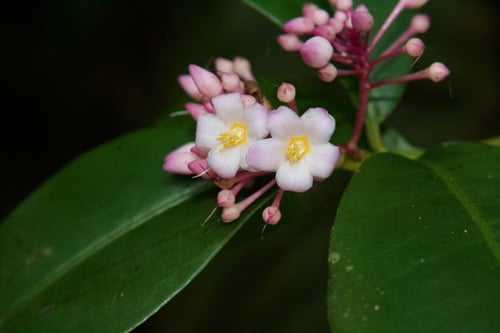
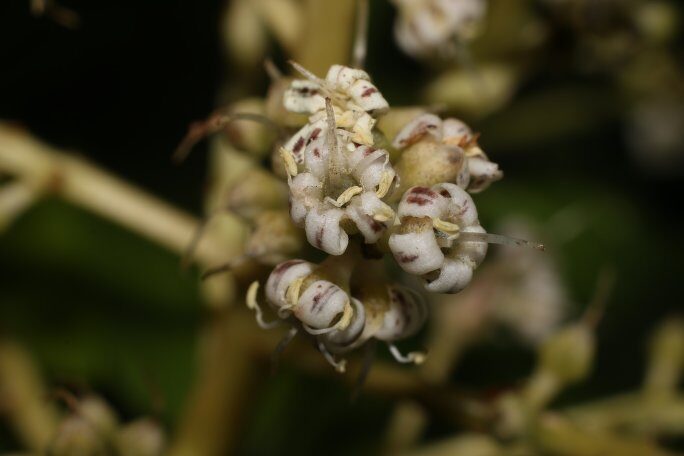
Ardisia polycephala
Wall. ex A. DC.
Spiceberry shrub
wikimedia· cc-by-sa
Wikimedia Commons - Kurt Stüber [1]
wikimedia· cc-by-sa
Wikimedia Commons - Nadiatalent
Description
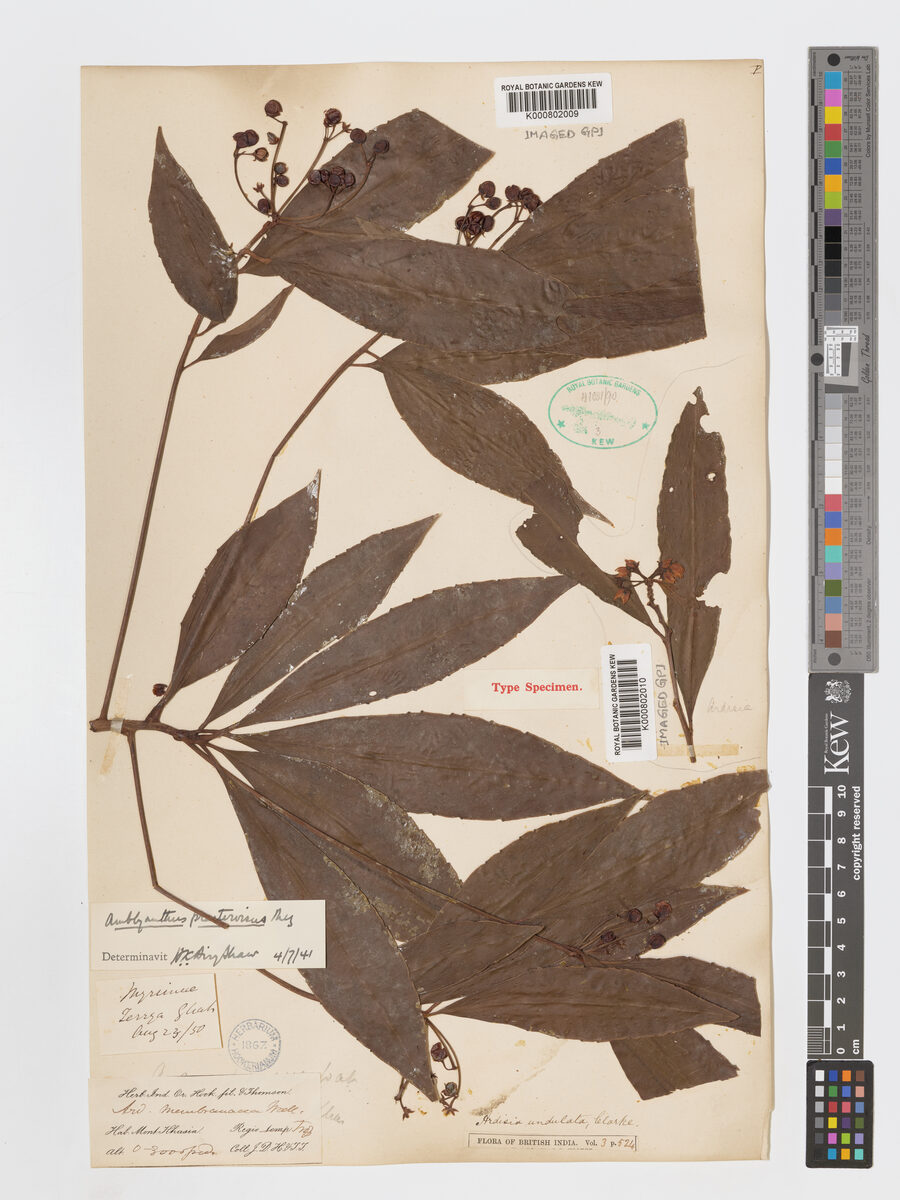
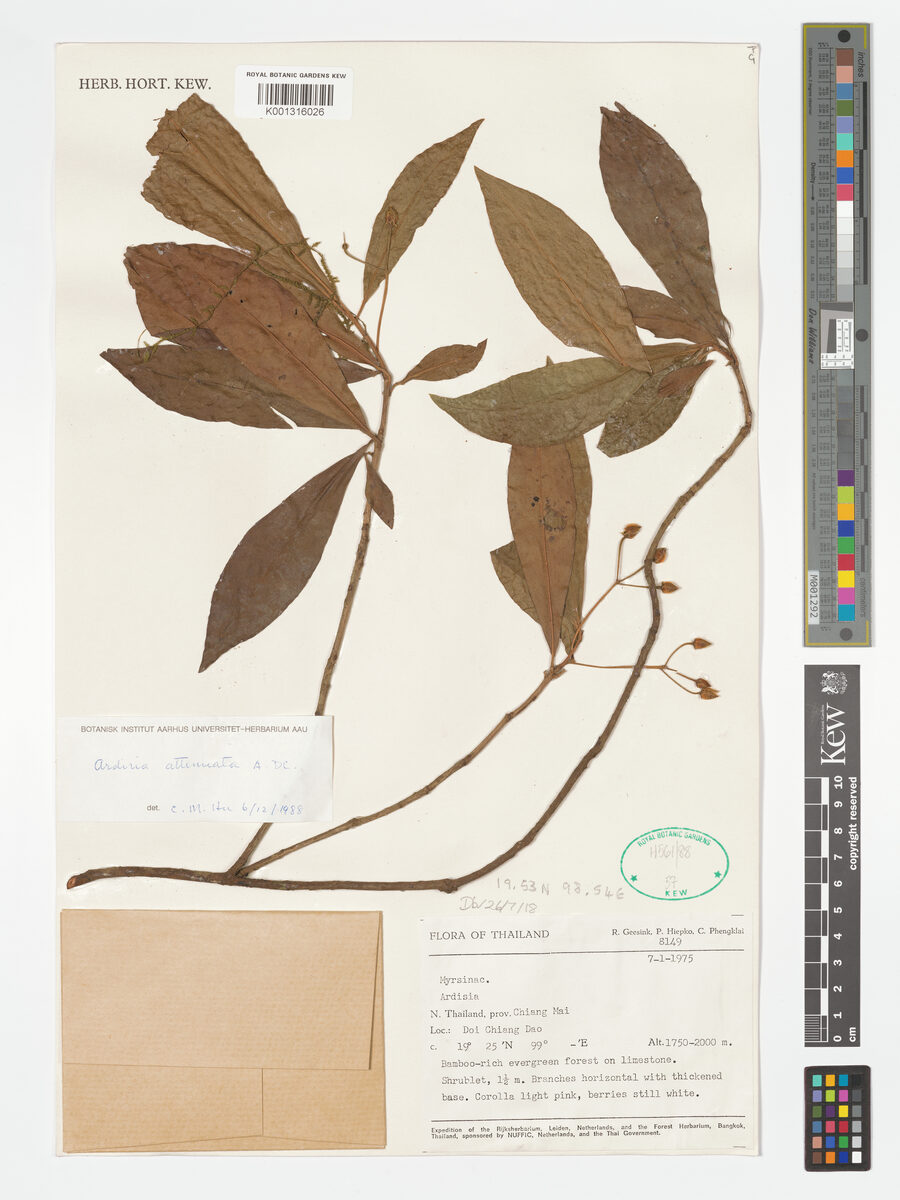
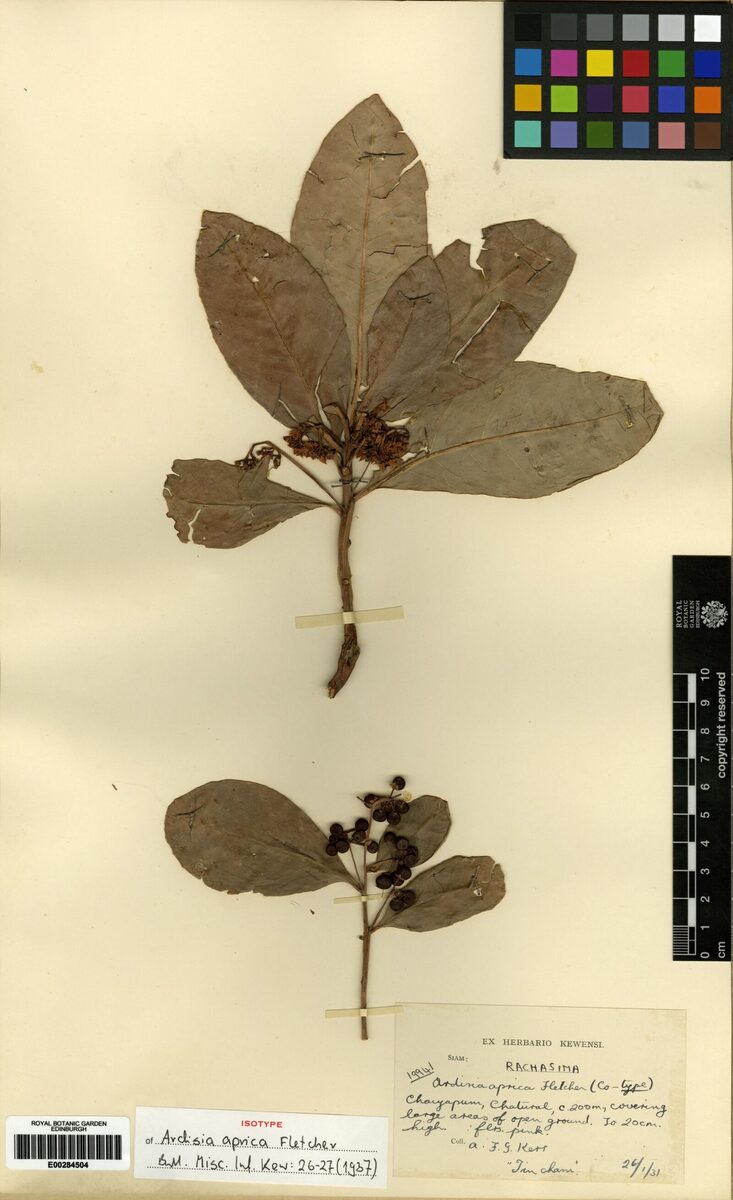
A small tree. It grows 5 m tall. The bark is brownish-grey and warty. The leaves are alternate and sword shaped. The flowers are in groups at the end of the plant. They are pink and star shaped. The fruit are round berries. They are 7 mm across. They are fleshy and red to bark purple or black. There is one seed.
Edible Uses
Young plants are eaten as a vegetable. The ripe fruit are eaten raw.
Traditional Uses
Young plants are eaten as a vegetable. The ripe fruit are eaten raw.
This uses section is brief — help expand it
Distribution
A tropical plant. It grows along riverbanks. Adelaide Botanical Gardens.
Where It Grows
Asia, Australia, China, Himalayas, India, Indochina, Indonesia, Laos, Myanmar, Northeastern India, SE Asia, Slovenia,
Cultivation
Plants can be grown from seeds or cuttings.
Notes
There are about 250-300 Ardisia species. They are mainly in the tropics. Also put in the family Myrsinaceae.
Also Known As
Dieng-soh-sying, Lempeni kelereng, Thaidi bu
References (10)
- Dobriyal, M. J. R. & Dobriyal, R., 2014, Non Wood Forest Produce an Option for Ethnic Food and Nutritional Security in India. Int. J. of Usuf. Mngt. 15(1):17-37
- Sawian, J. T., et al, 2007, Wild edible plants of Meghalaya, North-east India. Natural Product Radiance Vol. 6(5): p 413
- Patiri, B. & Borah, A., 2007, Wild Edible Plants of Assam. Geethaki Publishers. p 75
- Sarma, H., et al, 2010, Updated Estimates of Wild Edible and Threatened Plants of Assam: A Meta-analysis. International Journal of Botany 6(4): 414-423
- Sawian, J. T., et al, 2007, Wild edible plants of Meghalaya, North-east India. Natural Product Radiance Vol. 6(5): p 413
Show all 10 references Hide references
- Singh, H.B., Arora R.K.,1978, Wild edible Plants of India. Indian Council of Agricultural Research, New Delhi. p 50
- Singh, V. B., et al, (Ed.) Horticulture for Sustainable Income and Environmental Protection. Vol. 1 p 214
- Sukarya, D. G., (Ed.) 2013, 3,500 Plant Species of the Botanic Gardens of Indonesia. LIPI p 583
- Trans. Linn. Soc. London 17:118. 1834
- Wild edible plants of Himachal Pradesh