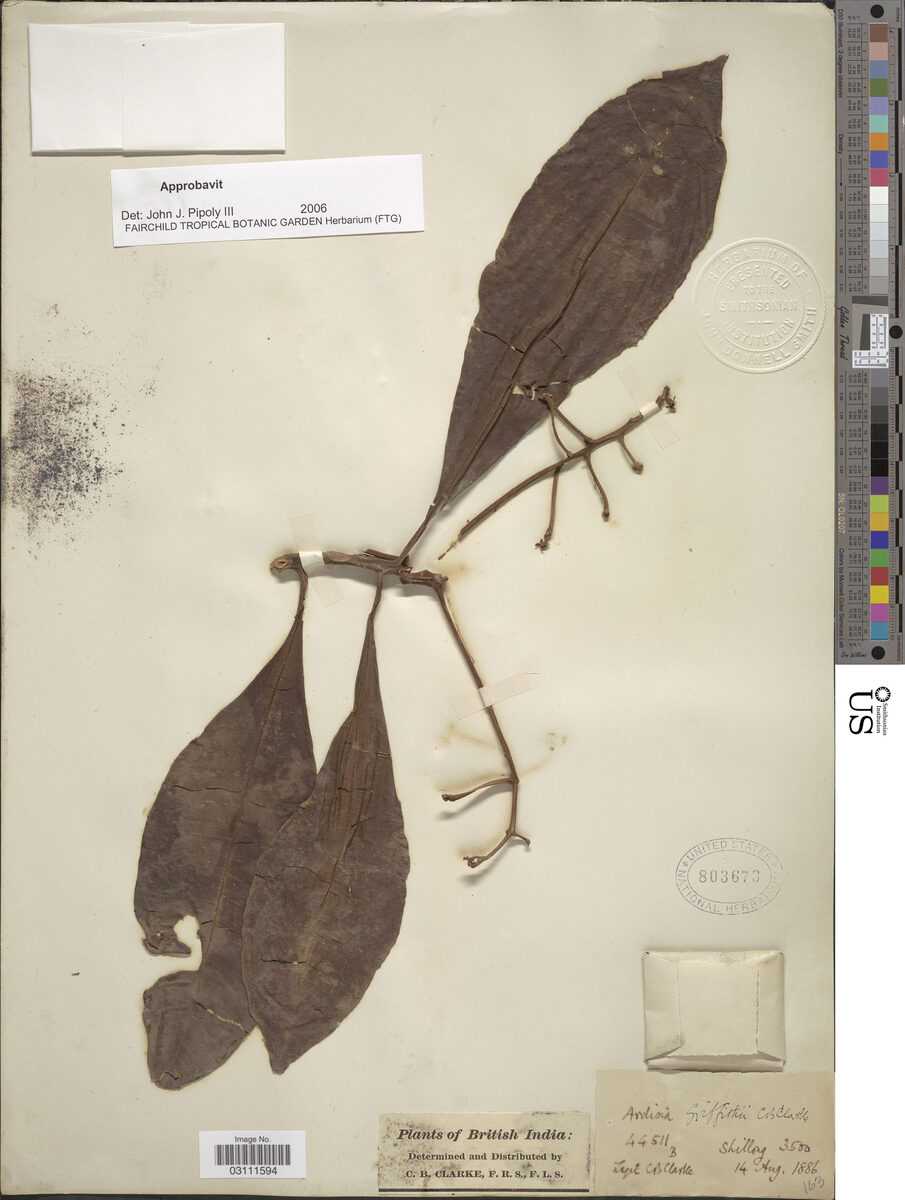
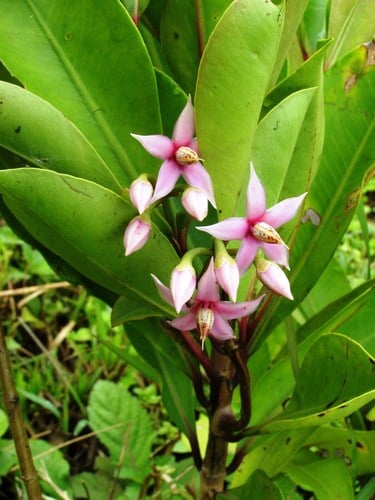
Ardisia escallonioides
Schiede & Deppe ex Cham. & Schltdl.
Island marlberry
iNaturalist· cc-by-nc
(c) Joe MDO, some rights reserved (CC BY-NC), uploaded by Joe MDO
iNaturalist· cc-by-nc-sa
(c) earl woolsey, some rights reserved (CC BY-NC-SA), uploaded by earl woolsey
Summary
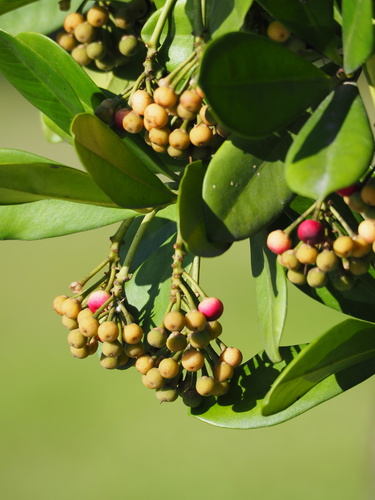
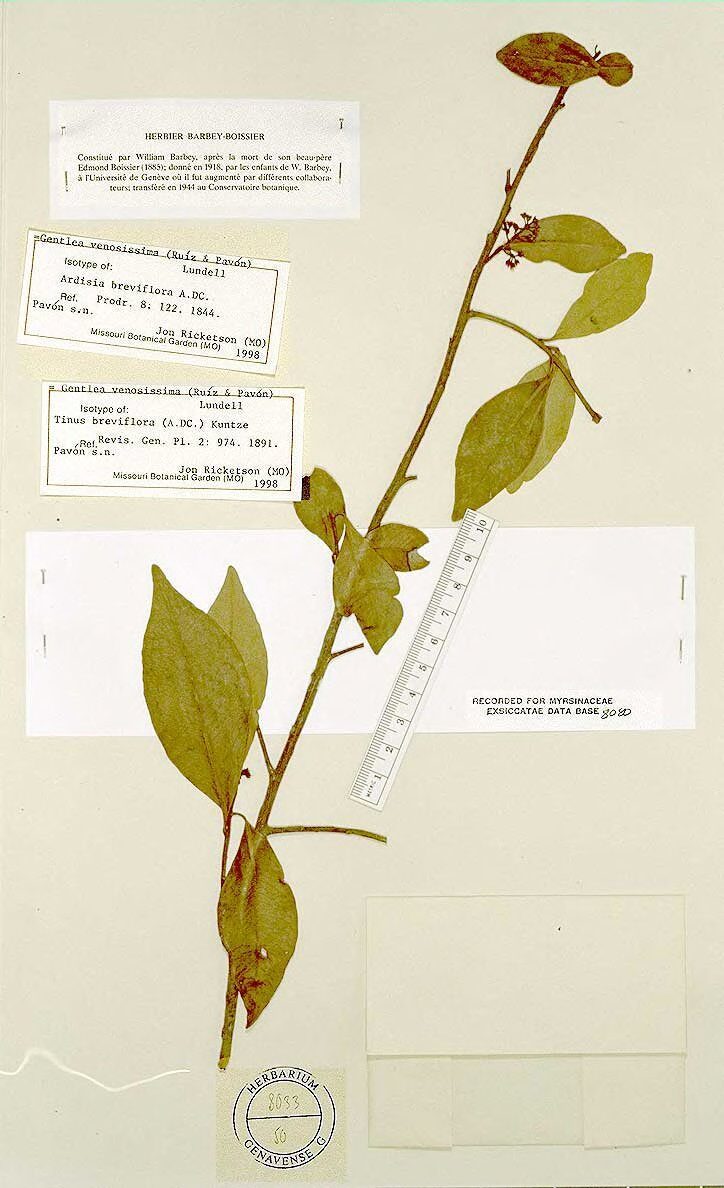
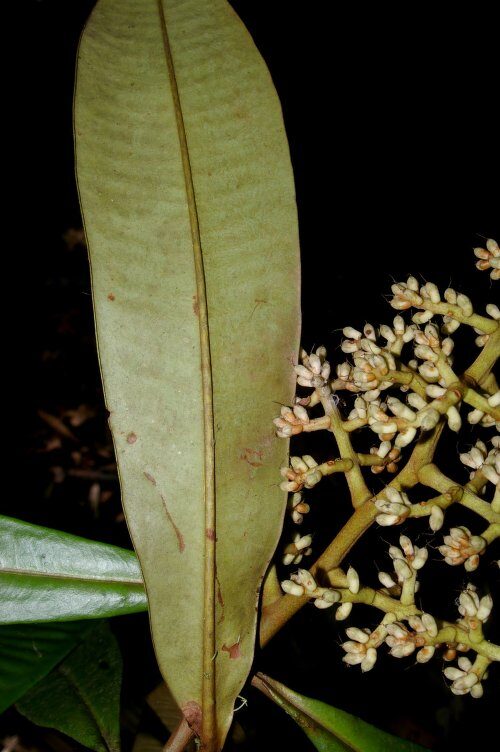
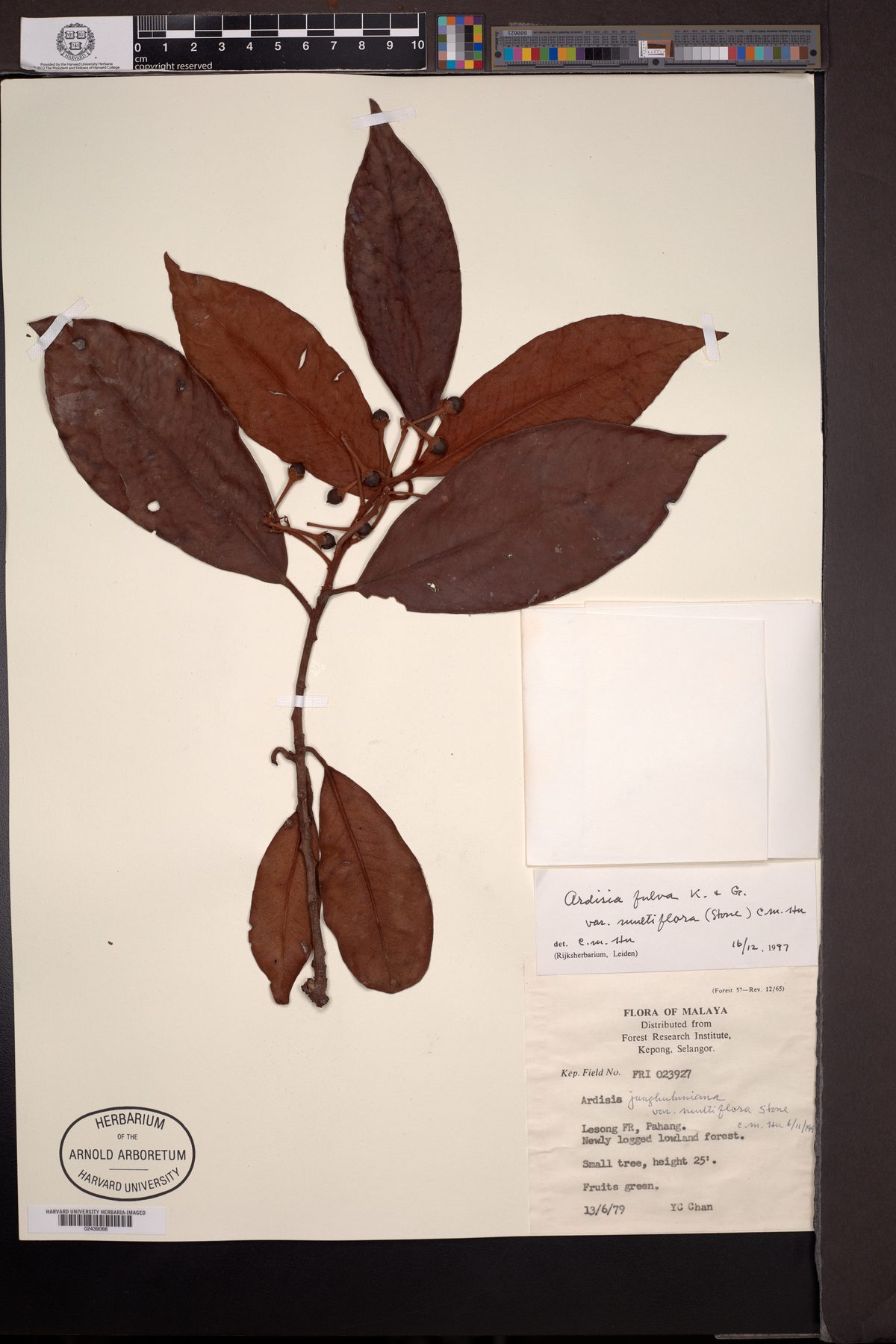
Source: WikipediaArdisia escallonioides, the Island marlberry, is a plant species native to the West Indies and neighboring areas. It has been reported from Barbados, Bermuda, the Dominican Republic, Cuba, Mexico, Belize, Guatemala and Florida. Ardisia escallonioides is a shrub or tree up to 15 m (50 feet) tall. It has elliptic leaves up to 17 cm (7 inches) long. Flowers are borne in a panicle of up to 20 flowers. Each flower is white to pink, up to 7 mm (0.3 inches) across. Fruits are fleshy drupes up to 7 mm (0.3 inches) across, red at first then turning black.
Description
A shrub or tree. It keeps growing from year to year. The fruit are black when fully ripe and are edible. They are about 1 cm across.
This description is brief — help expand it
Edible Uses
Fruits of A. escallonioides are reported to be edible, but some consider the taste to be unpleasant.
Distribution
It is a tropical plant.
Where It Grows
Bahamas, Belize, Central America, Cuba, Dominican Republic, Guatemala, Haiti, Hispaniola, Honduras, Mexico, North America, USA, West Indies,
Notes
Also put in the family Myrsinaceae.
Synonyms
Also Known As
Capulincillo, Capulin sabana, Matan'kiwi, Plomoche, Tanche'
References (6)
- Cruz, I. M., et al, 2015, Edible fruits and seeds in the State of Mexico. Revista Mexicana de Ciencias Agricolas. Vol. 6. Num. 2 pp 331-346
- Grandtner, M. M., 2008, World Dictionary of Trees. Wood and Forest Science Department. Laval University, Quebec, Qc Canada. (Internet database http://www.WDT.QC.ca)
- http://www.sms.si.edu/irlspec/Ardisia_escallon.htm
- Kermath, B. M., et al, 2014, Food Plants in the Americas: A survey of the domesticated, cultivated and wild plants used for Human food in North, Central and South America and the Caribbean. On line draft. p 85
- Piedra-Malagón, E. M., et al, 2022, Edible native plants of the Gulf of Mexico Province. Biodiversity Data Journal 10: e80565 p 28
Show all 6 references Hide references
- Segura, S., et al, 2018, The edible fruit species in Mexico. Genet Resour Crop Evol (2018) 65:1767–1793