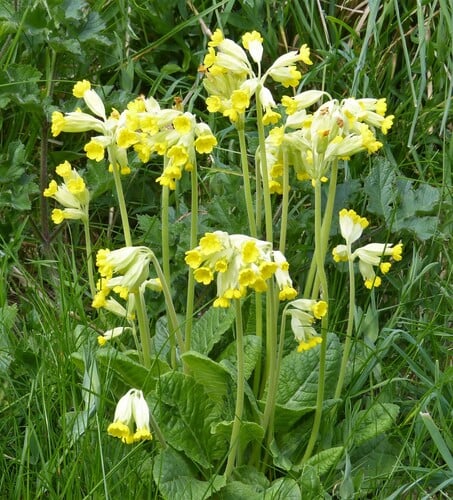
Ardisia crispa
(Thunb.) A. DC.
Coral Ardisia, Deer-eye coralberry
iNaturalist· cc-by-nc
(c) lecanorchis, some rights reserved (CC BY-NC)
iNaturalist· cc-by-nc
(c) 山羌, some rights reserved (CC BY-NC), uploaded by 山羌
iNaturalist· cc-by-nc
(c) Gordon Chen, some rights reserved (CC BY-NC), uploaded by Gordon Chen
Summary
Source: WikipediaArdisia crispa, the Japanese holly, is a species of flowering plant in the family Primulaceae. It is found in the eastern Himalayas, Assam, southern China, Indochina, Taiwan, Korea, the Ryukyu Islands, and Japan, and has been introduced to Queensland, Australia, and the Windward Islands in the Caribbean. An evergreen perennial shrub reaching at most 1.5 m (5 ft), it is often sold as an ornamental for its dark green leaves and long‑lasting red berries, much like Ardisia crenata, the Christmas berry or coralberry.
Description
An erect shrub. It has leaves arranged in a spiral. It grows 60-150 cm high. It has creeping rhizomes or underground stems. The stems have small hairs. The leaf stalk is 5-8 mm long. The leaves are narrow and slightly toothed. They are 7-25 cm long by 1-5.8 cm wide. There are 8 side veins each side of the midrib. The flowers are pink and waxy. The petals overlap. The flowers occur in drooping heads with the oldest at the outside. These are in the axils of leaves on special curved side branches and near the top of the plant. The fruit are bright red berries. They are 5-6 mm across. They are one seeded.
Edible Uses
Edible Parts: Leaves Edible Uses: Leaves - raw. Used in salads.
Traditional Uses
The bright red berries are eaten. The leaves are eaten in salads.
This uses section is brief — help expand it
Medicinal Uses
Antidote Diuretic Pectoral The root is antidotal and diuretic. An infusion is pectoral. The plant is crushed and applied to scurf, it is also applied to the ears in the treatment of earache.
Distribution
It is a temperate and subtropical plant. It needs to be in frost free places. In China it grows in mixed and broad leafed forests and damp places between 100-2500 m altitude. It suits hardiness zones 7-11.
Where It Grows
Asia, Australia, China, Fiji, Himalayas, India, Indochina, Indonesia, Japan, Korea, Laos, Malaysia, Myanmar, Northeastern India, Pacific, SE Asia, Sikkim, Taiwan, Thailand, Vietnam,
Cultivation
It can be grown from seed or cuttings.
Propagation
Seed - best harvested when it is ripe in the winter and sown immediately in a greenhouse. Sow stored seed as early in the year as possible. When large enough to handle, prick the seedlings out into individual pots and grow them on in a shady part of the greenhouse for at least their first winter. Plant out into their permanent positions in late spring or early summer, once the plants are 20cm or more tall. Cuttings of half-ripe wood in summer. Grow on in cool, shaded humid conditions until well rooted.
Other Uses
None known Special Uses
Notes
There are about 250-300 Ardisia species. They are mainly in the tropics. The roots are used in medicine. Also put in the family Myrsinaceae.
Synonyms
Also Known As
A hundred ounces of gold, Bai liang jin, Cham, Chausa, Comnguoi nhan, Jum-kong, Lempeni mata pelanduk, Mata ayam
References (24)
- Ambasta S.P. (Ed.), 2000, The Useful Plants of India. CSIR India. p 50
- Bircher, A. G. & Bircher, W. H., 2000, Encyclopedia of Fruit Trees and Edible Flowering Plants in Egypt and the Subtropics. AUC Press. p 39
- Bodkin, F., 1991, Encyclopedia Botanica. Cornstalk publishing, p 97
- Brickell, C. (Ed.), 1999, The Royal Horticultural Society A-Z Encyclopedia of Garden Plants. Convent Garden Books. p 133
- Burkill, I.H., 1966, A Dictionary of the Economic Products of the Malay Peninsula. Ministry of Agriculture and Cooperatives, Kuala Lumpur, Malaysia. Vol 1 (A-H) p 219
Show all 24 references Hide references
- Chen Jie, Pipoly 3, J.J., Myrsinaceae. Flora of China.
- Etherington, K., & Imwold, D., (Eds), 2001, Botanica's Trees & Shrubs. The illustrated A-Z of over 8500 trees and shrubs. Random House, Australia. p 103
- Hibbert, M., 2002, The Aussie Plant Finder 2002, Florilegium. p 32
- Kuo, W. H. J., (Ed.) Taiwan's Ethnobotanical Database (1900-2000), http://tk.agron.ntu.edu.tw/ethnobot/DB1.htm
- Lamberton, K (Ed.), 2004, The Australian gardening encyclodepia. Murdoch Books, NSW Australia. p 175
- Lord, E.E., & Willis, J.H., 1999, Shrubs and Trees for Australian gardens. Lothian. p 205
- MARDI Malaysia
- Martin, F.W. & Ruberte, R.M., 1979, Edible Leaves of the Tropics. Antillian College Press, Mayaguez, Puerto Rico. p 206
- McMakin, P.D., 2000, Flowering Plants of Thailand. A Field Guide. White Lotus. p 56
- Milow, P., et al, 2013, Malaysian species of plants with edible fruits or seeds and their evaluation. International Journal of Fruit Science. 14:1, 1-27
- Nurfadilah, S., et al, 2017, Species richness, conservation status, and potential uses of plants in Segara Anakan Area of Sempu Island, East Java, Indonesia. BIODIVERSITAS. Volume 18, Number 4
- Pham-Hoang Ho, 1999, An Illustrated Flora of Vietnam. Nha Xuat Ban Tre. p 687
- Plants for a Future database, The Field, Penpol, Lostwithiel, Cornwall, PL22 0NG, UK. http://www.scs.leeds.ac.uk/pfaf/
- Singh, H.B., Arora R.K.,1978, Wild edible Plants of India. Indian Council of Agricultural Research, New Delhi. p17
- Smith, A.C., 1981, Flora Vitiensis Nova, Lawaii, Kuai, Hawaii, Volume 2 p 792
- Sundriyal, M., et al, 1998, Wild edibles and other useful plants from the Sikkim Himalaya, India. Oecologia Montana 7:43-54
- Sundriyal, M., et al, 2004, Dietary Use of Wild Plant Resources in the Sikkim Himalaya, India. Economic Botany 58(4) pp 626-638
- Trans. Linn. Soc. London 17:124. 1834
- Valder, P., 1999, The Garden Plants of China. Florilegium. p 265