Asparagus africanus
Lam.
Wild asparagus, Bush asparagus
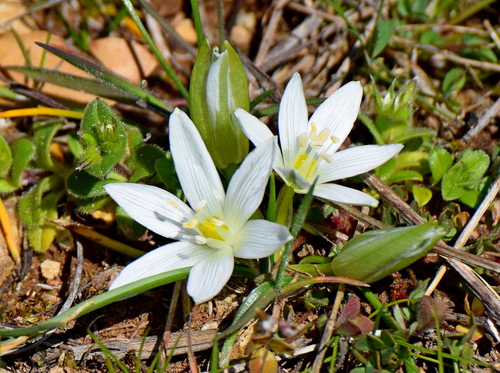
iNaturalist· cc-by-nc
(c) Gail Bowers-Winters, some rights reserved (CC BY-NC), uploaded by Gail Bowers-Winters
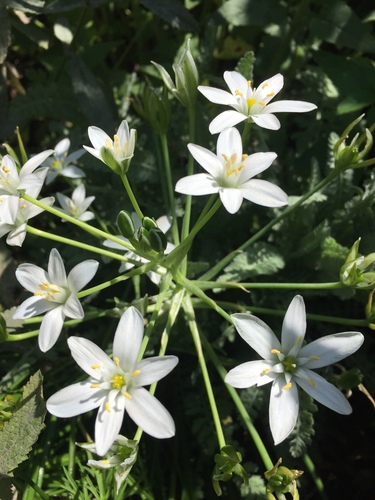
iNaturalist· cc-by-nc
(c) davemet, some rights reserved (CC BY-NC)
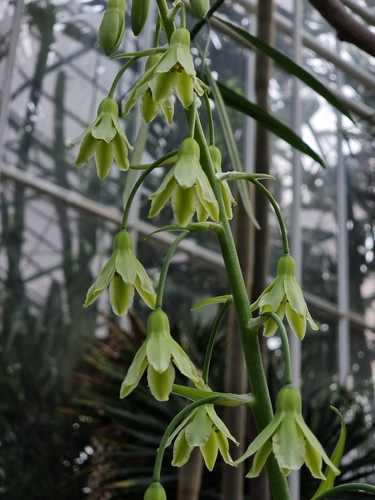
iNaturalist· cc-by-nc
(c) Petra Broddle, some rights reserved (CC BY-NC), uploaded by Petra Broddle
Summary
Source: WikipediaAsparagus africanus, also known as African asparagus, bush asparagus, wild asparagus, climbing asparagus fern, ornamental asparagus and sparrow grass, is an African species of plant that is found in a variety of habitats. It has multiple medicinal properties and is used to treat various ailments.
Description
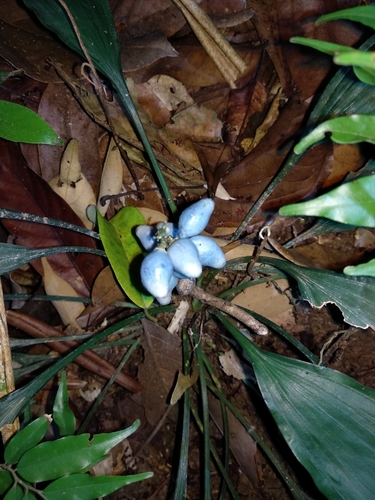
An erect shrub. It can be a scrambler or climbing. It grows 1.7 m high. It has wiry spiny branches. It grows each year from a woody base. The leaves are reduced to very small scales. There are clusters or leaf-like needles in the axils of leaves. The flowers are white or greenish-white. They are borne in the axils. The fruit are small red berries. They turn black when old.
Edible Uses
The young shoot tips are eaten after being dug out and peeled. The fleshy root tubers are eaten after extended cooking. The fruit are sucked and are nutritious.
Traditional Uses
The young shoot tips are eaten. They are dug out, peeled and chewed. The fleshy root tubers can be eaten after extended cooking. The fruit are sucked.
Medicinal Uses
The new shoots are harvested and eaten as a vegetable. They are seen as being a good source of fiber and various vitamins. The roots are also boiled and eaten. The fruit are mainly only eaten during times of famine. The stems and underground components of the plants are used to treat a wide variety of conditions in a variety of cultures. Research has found that they improve the functioning of the immune system in laboratory animals, providing insight as to why this plant is so widely utilised. It is, for example, seen as a valuable medicinal plant by people living in Ethiopia. The Zay people of Ethiopia use the cladodes on their skin to treat skin lesions. They also feed equines the roots and cladodes to treat geregelcha, a disease in which mucus continuously comes out of the nose of the animal. The root tubers mixed with milk are used after birth to help expel the afterbirth. It is also used as a form of birth control by rural women in Uganda. In South Africa, it is used to treat headaches, STIs, stomach aches, sore throats and malaria, amongst other conditions. Compounds found in the roots have been found to be an effective anti-parasitic and anti-protozoan, including against Plasmodium falciparum, the most deadly form of malaria in humans. Methanolic extracts from the roots have also been found to have pain relief and anti-inflammatory properties.
Known Hazards
The roots and branchlets are ingredients of arrow-poison.
Distribution
It is a tropical plant. It grows in the moist sand of bush savannah in West Africa. In Tanzania it grows up to 2,500 m above sea level in areas with 1,000-1,700 mm rainfall. It becomes common after burning.
Where It Grows
Africa, Australia, Botswana, Burkina Faso, Central Africa, Congo, East Africa, Egypt, Ethiopia, Gambia, Ghana, Malawi, Middle East, Mozambique, Nigeria, North Africa, Senegal, Somalia, South Africa, Southern Africa, Saudi Arabia, Sudan, Tanzania, Uganda, West Africa, Zambia, Zimbabwe,
Cultivation
Plants can be grown by seeds or root suckers.
Propagation
Seed - best sown as soon as it is ripe. Pre-soak stored seed for 12 hours in warm water and then sow in containers in a lightly shaded position. It usually germinates in 3 - 6 weeks at 25°c. Prick out the seedlings into individual pots when they are large enough to handle and grow them on in a sunny position until ready to plant out. Division as the plant comes into growth.
Other Uses
The leaves are used in ointments by native women to stimulate the growth of hair. The wiry stems are used for preparing traps and snares for small animals, and for making cord. The woody stem parts are used for making pencils
Production
Shoots are collected during the rainy season.
Other Information
They are eaten especially by children and herdsmen.
Notes
There are between 160-300 Asparagus species. The fruit are nutritious.
Synonyms
Also Known As
Argeeg, Baraare, Hide sere, Hingarta, Hinkarta, Kasesanhanga, Kalipembeze, Kasolanhanga, Lagwar, Lukungwisa, Mwinika nguu, Seriti, Tshobatshobane
References (22)
- Addis, G., Asfaw, Z & Woldu, Z., 2013, Ethnobotany of Wild and Semi-wild Edible Plants of Konso Ethnic Community, South Ethiopia. Ethnobotany Research and Applications. 11:121-141
- Bahru, T., et al, 2013, Wild Edible Plants: Sustainable Use and Management by Indigenous Communities in and the Buffer Area of Awah National Park, Ethiopia. Ethiop. J. Sci., 36(2): 93-108
- Bircher, A. G. & Bircher, W. H., 2000, Encyclopedia of Fruit Trees and Edible Flowering Plants in Egypt and the Subtropics. AUC Press. p 45
- Burkill, H. M., 1985, The useful plants of west tropical Africa, Vol. 3. Kew.
- Dalziel, J. M., 1937, The Useful plants of west tropical Africa. Crown Agents for the Colonies London.
Show all 22 references Hide references
- Encycl. 1:295. 1783
- Fowler, D. G., 2007, Zambian Plants: Their Vernacular Names and Uses. Kew. p 65
- Fox, F. W. & Young, M. E. N., 1982, Food from the Veld. Delta Books. p 249
- Gallagher, D. E., 2010, Farming beyond the escarpment: Society, Environment, and Mobility in Precolonial Southeastern Burkina Faso. PhD University of Michigan.
- Jardin, C., 1970, List of Foods Used In Africa, FAO Nutrition Information Document Series No 2.p 56
- Lulekal, E., et al, 2011, Wild edible plants in Ethiopia: a review on their potential to combat food insecurity. Afrika Focus - Vol. 24, No 2. pp 71-121
- Martin, F.W. & Ruberte, R.M., 1979, Edible Leaves of the Tropics. Antillian College Press, Mayaguez, Puerto Rico. p 202
- Mpasiwakomu, R. A., 2017, The Diversity and Utilization of Wild Edible and Medicinal Plant Species found in Uvinza Miombo Woodlands, Tanzania. M. Sc. thesis University of Tanzania.
- Oryema, C., et al, 2013, Edible wild fruit species of Gulu District, Uganda. International Journal of Biology and Biological Sciences Vol 2(4) pp 068-082
- Peters, C. R., O'Brien, E. M., and Drummond, R.B., 1992, Edible Wild plants of Sub-saharan Africa. Kew. p 13 (As Protasparagus africanus)
- Roodt, V., 1998, Common Wild Flowers of the Okavango Delta. Medicinal Uses and Nutritional value. The Shell Field Guide Series: Part 2. Shell Botswana. p 36
- Ruffo, C. K., Birnie, A. & Tengnas, B., 2002, Edible Wild Plants of Tanzania. RELMA p 142
- USDA, ARS, National Genetic Resources Program. Germplasm Resources Information Network - (GRIN). [Online Database] National Germplasm Resources Laboratory, Beltsville, Maryland. Available: www.ars-grin.gov/cgi-bin/npgs/html/econ.pl (10 April 2000)
- van Wyk, Be., & Gericke, N., 2007, People's plants. A Guide to Useful Plants of Southern Africa. Briza. p 68
- Welcome, A. K. & Van Wyk, B.-E., 2019, An inventory and analysis of the food plants of southern Africa. South African Journal of Botany 122 (2019) 136–179
- Wiersema, J. H. & Leon, B., 2013, World Economic Plants. A Standard Reference CRC Press. 2nd Ed. p 76
- World Checklist of Useful Plant Species 2020. Royal Botanic Gardens, Kew