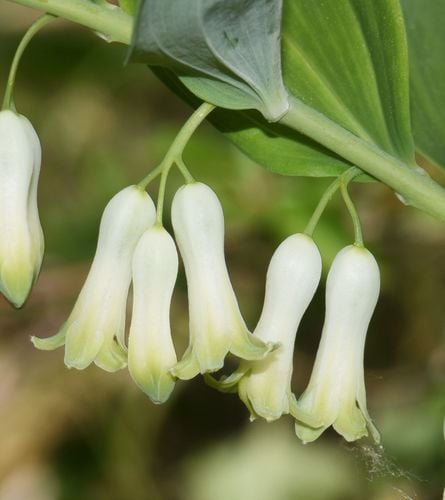
Arthropodium fimbriatum
R. Br.
Nodding Chocolate lily
iNaturalist· cc-by-nc
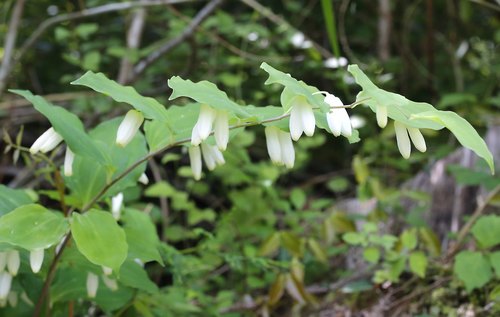
(c) martinkopp, some rights reserved (CC BY-NC)
iNaturalist· cc-by-nc
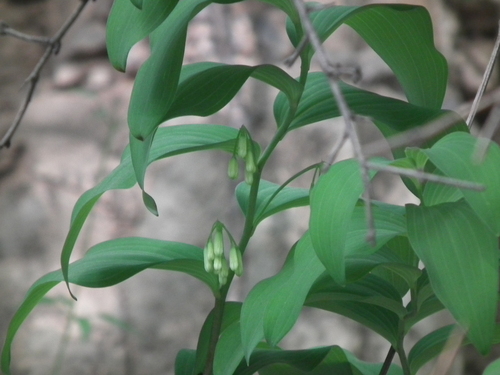
(c) Chris Jonkers, some rights reserved (CC BY-NC), uploaded by Chris Jonkers
iNaturalist· cc-by-nc-sa
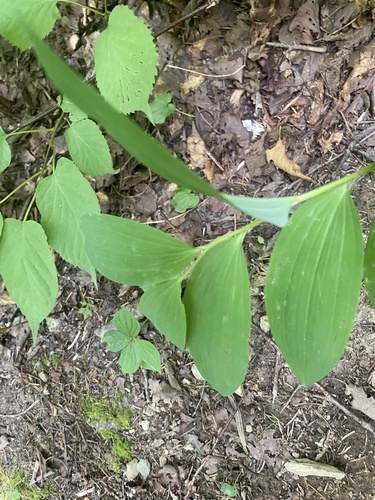
(c) Reiner Richter, some rights reserved (CC BY-NC-SA), uploaded by Reiner Richter
Description
An erect herb. It has a tuber and keeps growing from year to year. It grows to 1 m high. The leaves are grass-like. They are 40 cm long and 12 mm wide. They occur in tufts of 2-12 leaves. The flowers are nodding blue or violet. They are about 3 cm across. They have 6 spreading segments. Flowers occur in groups of 2-4 along un-branched flowering stems. The fruit is a rounded capsule 8 mm across.
Edible Uses
The tuber and root are edible.
Distribution
It is a warm temperate plant. It occurs in grassland, woodland and open forest. It can grow on a variety of soils.
Where It Grows
Australia*,
Notes
There are 12 Arthropodium species. Also put in the family Laxmanniaceae.
Synonyms
References (7)
- Bodkin, F., 1991, Encyclopedia Botanica. Cornstalk publishing, p 339
- Dashorst, G.R.M., and Jessop, J.P., 1998, Plants of the Adelaide Plains & Hills. Botanic Gardens of Adelaide and State Herbarium. p 158
- Elliot, W.R., & Jones, D.L., 1984, Encyclopedia of Australian Plants suitable for cultivation. Vol 3. Lothian. p 265
- Grieg, D., 2002, A photographic guide to Wildflowers of South-eastern Australia. New Holland. p 10
- Low, T., 1991, Wild Food Plants of Australia. Australian Nature FieldGuide, Angus & Robertson. p 105
Show all 7 references Hide references
- Low, T., 1992, Bush Tucker. Australia’s Wild Food Harvest. Angus & Robertson. p 112
- Plants for a Future database, The Field, Penpol, Lostwithiel, Cornwall, PL22 0NG, UK. http://www.scs.leeds.ac.uk/pfaf/