Palaquium amboinense
Burck
Gutta-percha tree
gbif· cc0
Royal Botanic Garden Edinburgh
gbif· cc0
Royal Botanic Garden Edinburgh
gbif· cc-by
Royal Botanic Gardens, Kew
Description
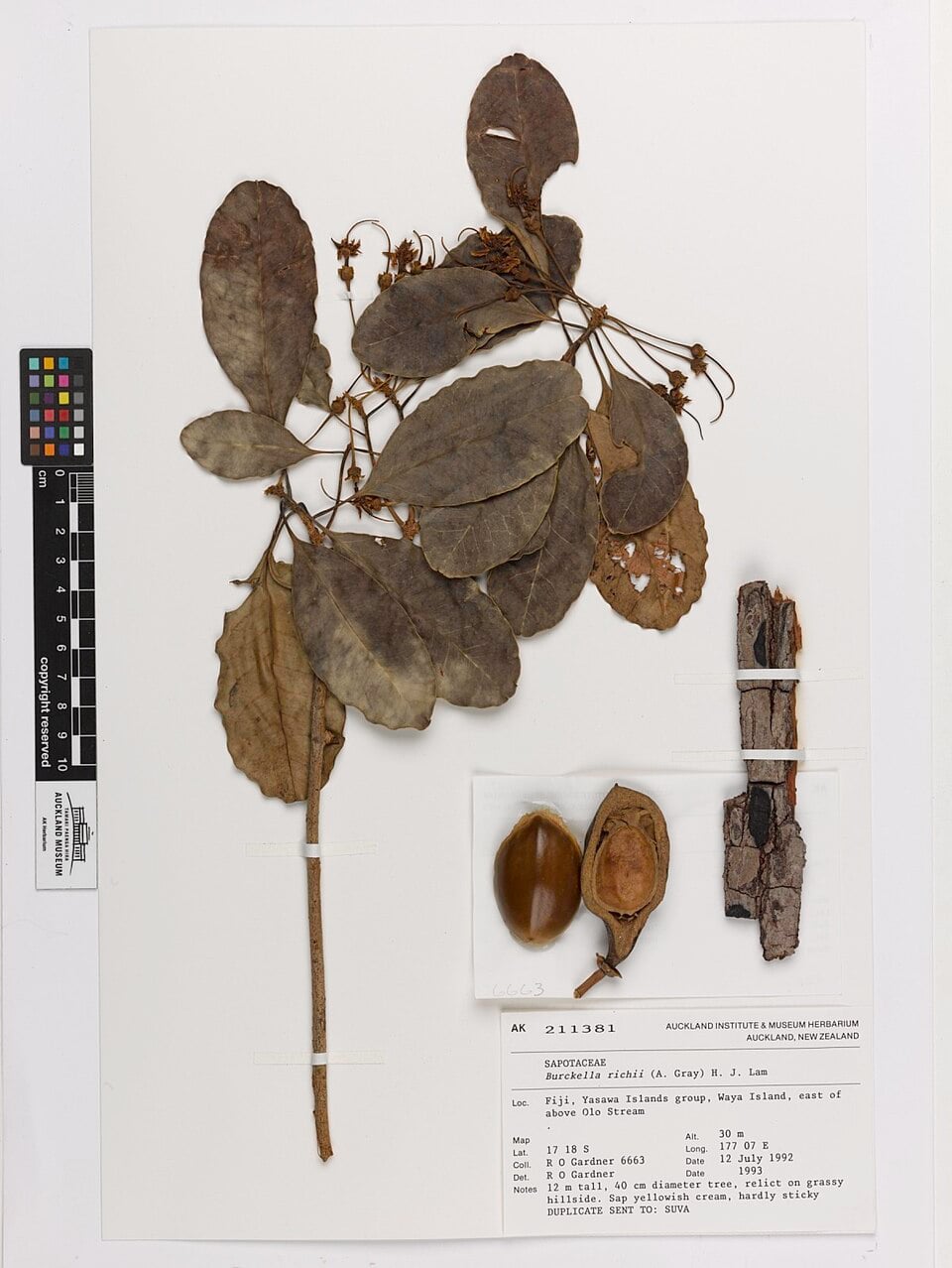
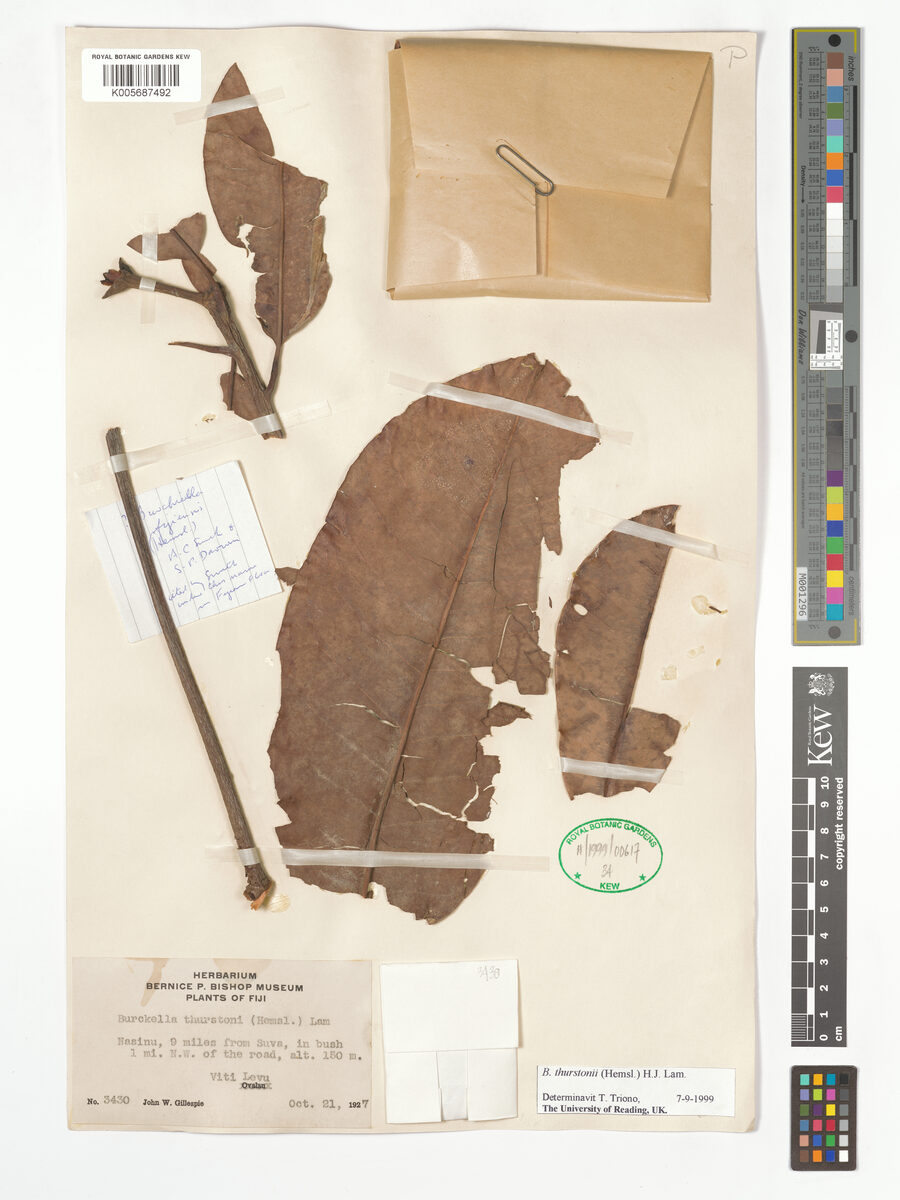
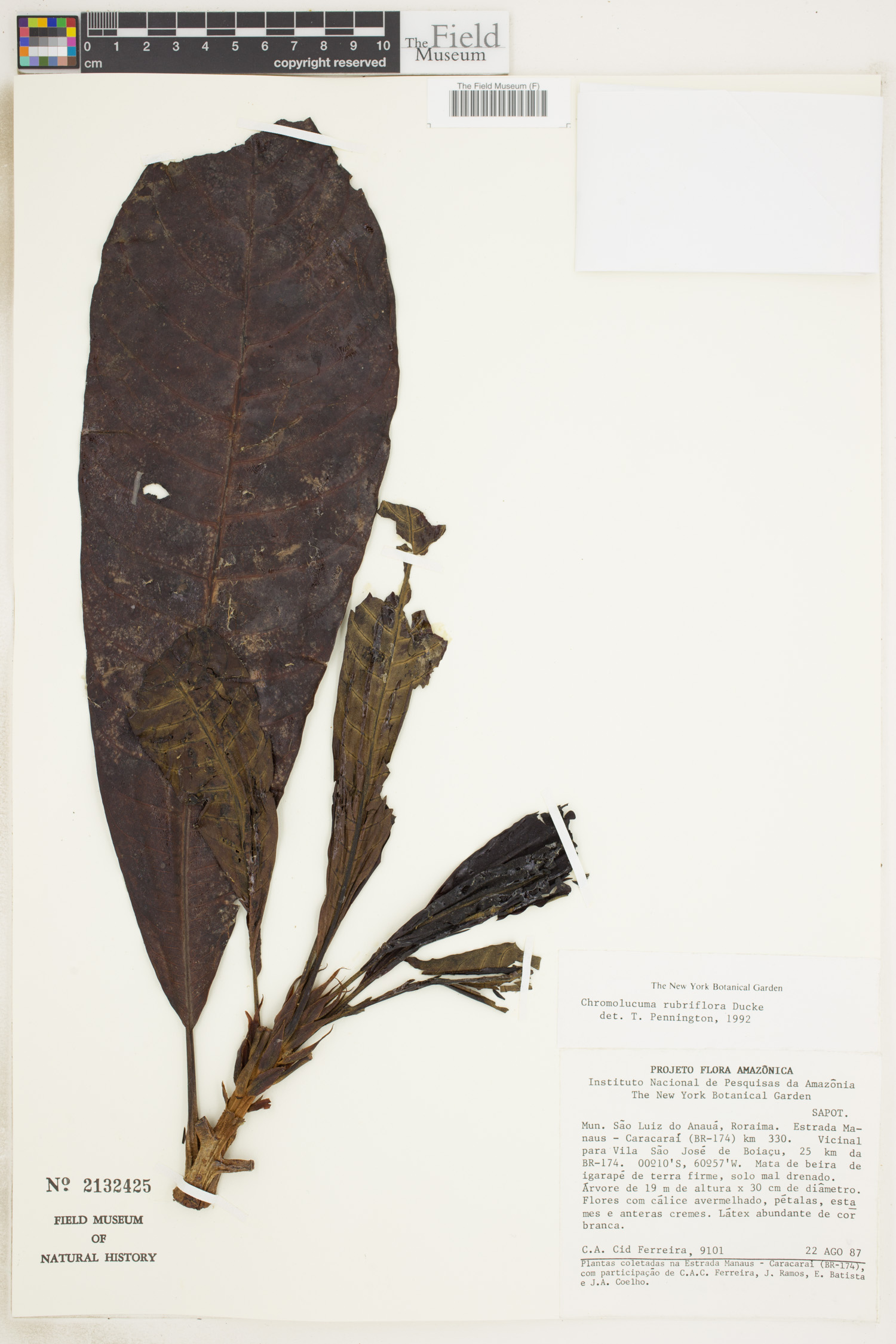
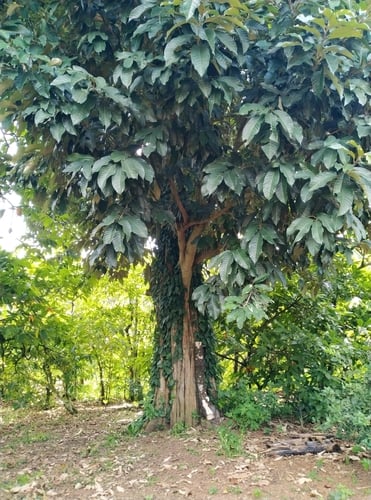
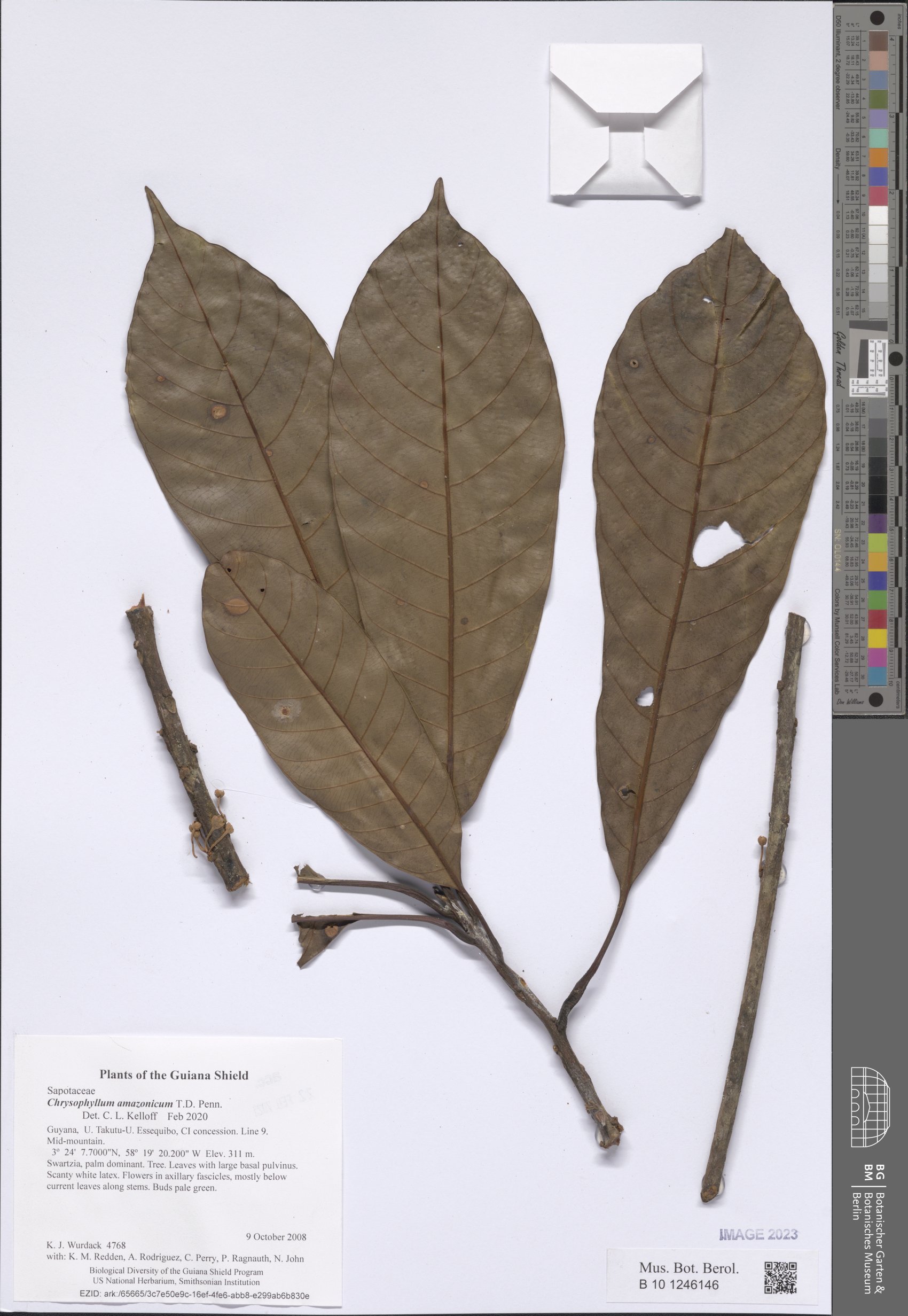
A large tree. It grows 40 m tall. The trunk can be 60 cm across. The bark is reddish-brown and rough. It has white milky sap. The leaves are simple and arranged in spirals. They are 7-16 cm long by 3-6 cm wide. They are more pale underneath. The flowering shoots are in the axils of leaves. There are 1-6 flowers in a group and they are 4-6 mm long and can be white, yellow or pale green. The fruit is a fleshy berry. It occurs singly and is 4-5 cmlong. It is red to brown. There is one seed in a fruit and it is 1-10 mm across.
Edible Uses
The seeds are edible.
Distribution
A tropical plant. It grows in lowland forests and up to 900 m above sea level.
Where It Grows
Asia, Indonesia*, Papua New Guinea, PNG, SE Asia,
Cultivation
Plants can be grown by seeds.
Other Uses
A fatty oil obtained from the seeds is used for illumination. The wood is used for furniture and structural work.
Notes
There are about 120 Palaquium species. They occur in Asia and the Pacific.
Synonyms
Also Known As
Pohon getah perca
References (6)
- Ann. Jard. Bot. Buitenzorg 5:37. 1886
- Menninger, E.A., 1977, Edible Nuts of the World. Horticultural Books. Florida p 32 (As Palaquium javense)
- Sukarya, D. G., (Ed.) 2013, 3,500 Plant Species of the Botanic Gardens of Indonesia. LIPI p 427
- Triono, T., et al, 2007, A phylogeny of Pouteria (Sapotaceae) from Malesia and Australasia. Australian. Systematic Botany. 20:107-118
- Wickens, G.E., 1995, Edible Nuts. FAO Non-wood forest products. FAO, Rome. p152
Show all 6 references Hide references
- World Checklist of Useful Plant Species 2020. Royal Botanic Gardens, Kew