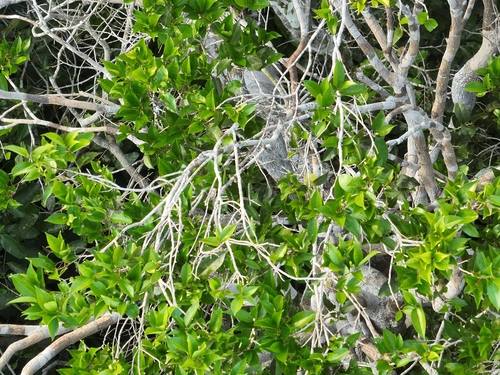
Pouteria adolfi-friederici subsp. australis
(J. H. Hemsl.) L. Gaut.
iNaturalist· cc-by
(c) Carrie Seltzer, some rights reserved (CC BY)
iNaturalist· cc-by
(c) Carrie Seltzer, some rights reserved (CC BY)
iNaturalist· cc-by-nc
(c) Mitiku Muanenda, some rights reserved (CC BY-NC)
Description
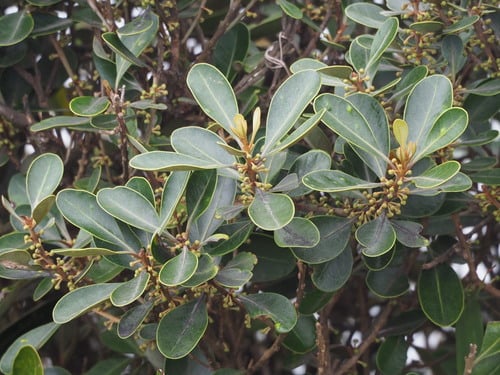
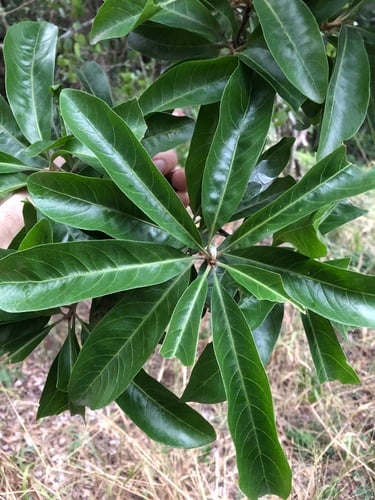
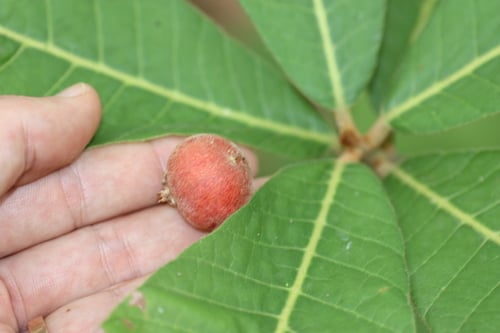
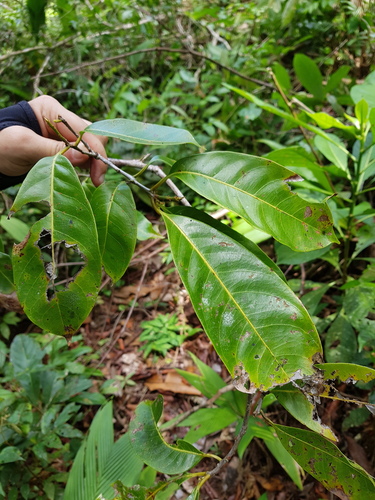
A tall tree. It grows 50 m tall. The trunk is clear and straight for about 16 m. The crown is small and dense. Mature trees can have buttresses at the base. The bark is pale grey and smooth. There are golden-brown hairs on shoots and flowers. The leaves are large and stiff. They are 22 cm long by 8 cm wide. They are dark green above and have pale orange hairs underneath. There are 10-20 pairs of veins. The flowers are cream to green coloured. They are very small and in clusters beside the leaves. The fruit are hard and green. They are narrow and 4 cm long. There is one shiny brown seed. It is 3 cm long.
Edible Uses
Ripe fruit are eaten raw. The seeds are pounded, boiled, and filtered; the oil that floats to the surface is skimmed off and used for cooking.
Traditional Uses
Ripe fruit are sweet and eaten raw. The seeds are pounded, boiled and the liquid filtered off. The oil floats to the top and is skimmed off and used for cooking.
Distribution
It is a tropical plant. It grows in upland rainforest. It suits humid locations. In Tanzania it grows between 1,430-2,500 m above sea level.
Where It Grows
Africa, Central Africa, Congo, East Africa, Ethiopia, Kenya, Rwanda, Sudan, Tanzania,
Cultivation
Plants can be grown from seed.
Production
In Tanzania fruit are collected from January to June.
Synonyms
Also Known As
Kuti, Mkuti, Mwale, Mwengele
References (1)
- Ruffo, C. K., Birnie, A. & Tengnas, B., 2002, Edible Wild Plants of Tanzania. RELMA p 540