Planchonella obovata
(R. Br.) Baehni
Northern Yellow Boxwood, Black Ash, Yellow Teak
iNaturalist· cc0
no rights reserved, uploaded by 葉子
iNaturalist· cc-by-nc
(c) kerrycoleman, some rights reserved (CC BY-NC), uploaded by kerrycoleman
iNaturalist· cc-by-nc
(c) 陳育賢, some rights reserved (CC BY-NC), uploaded by 陳育賢
Summary
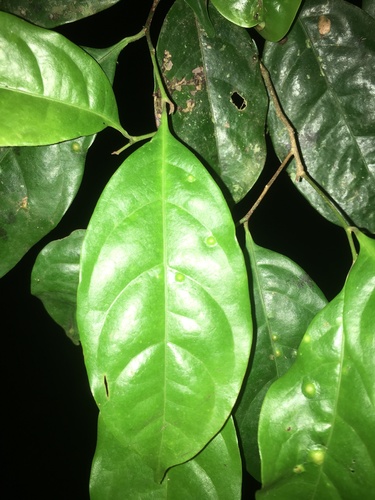
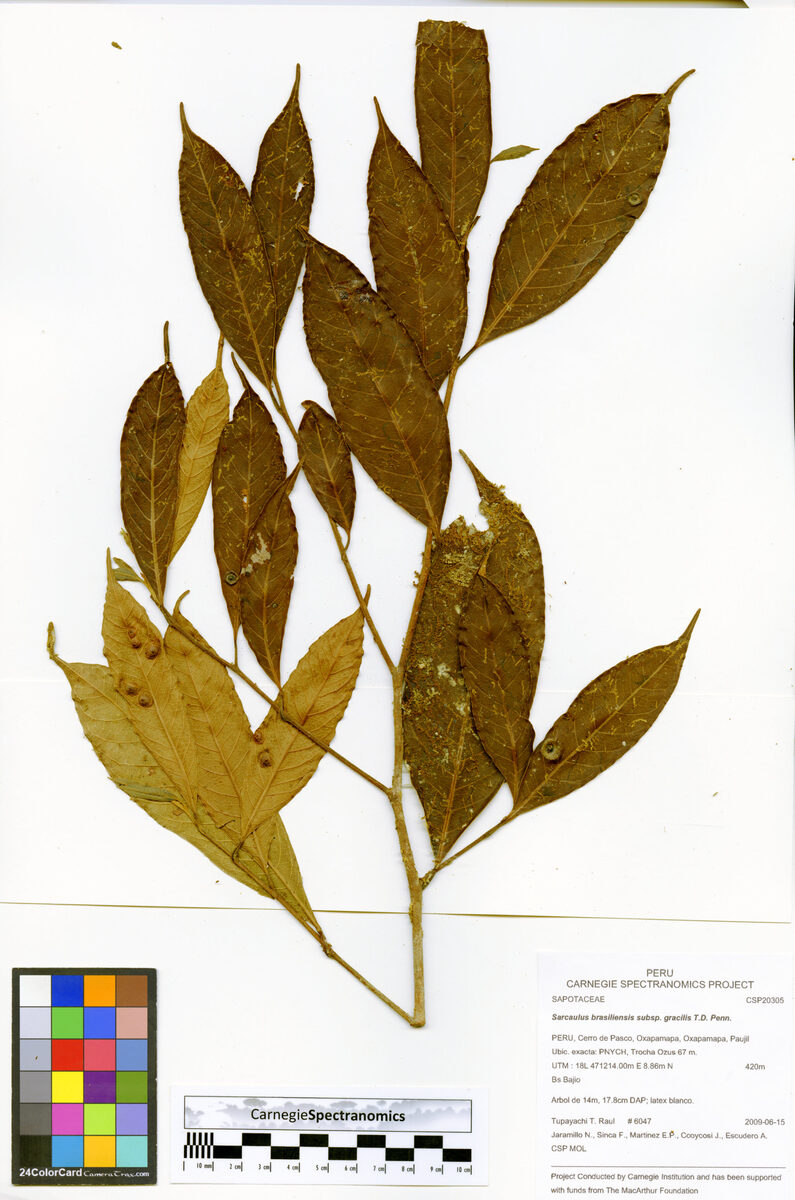
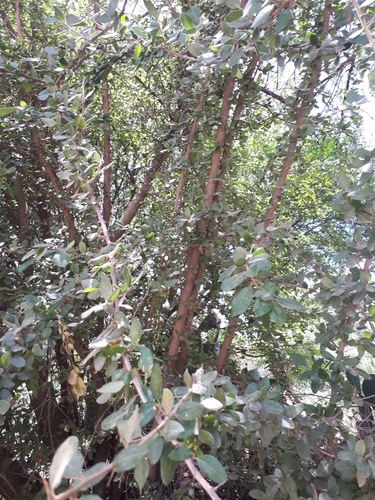
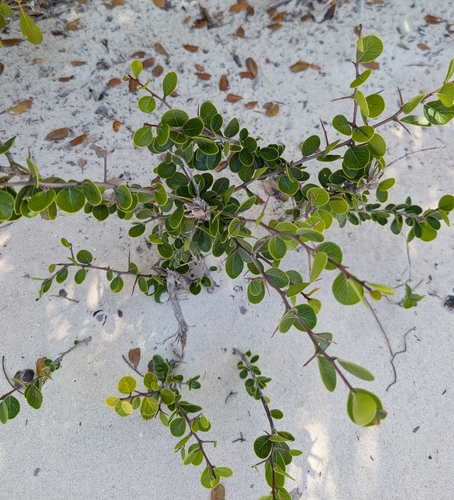
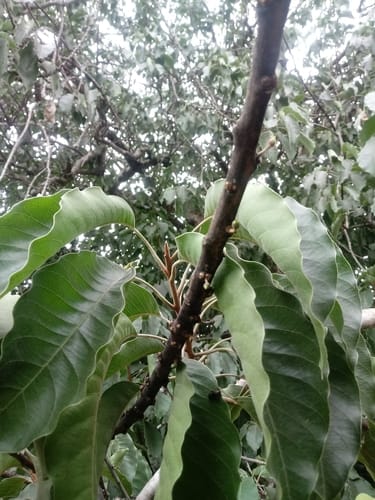
Source: WikipediaPlanchonella obovata is a species of tree in the family Sapotaceae. The common name in Australia is the northern yellow boxwood. It occurs in many parts of south-east Asia, Micronesia, and on islands of the Indian Ocean, and has local common names there. Planchonella obovata grows as a bushy-crowned tree reaching a maximum height of 10 to 20 metres (33 to 66 ft). The leaves hairy when young, with upper surfaces becoming smooth and shiny. They are roughly oval- to spear-shaped and measure 6–24 cm (2.5–9.5 in) long, and 1.5–15 cm (0.59–5.91 in) wide. Appearing from August to October, the tiny greenish-white flowers grow in clusters. Flowering is followed by round red or blue berries 1–1.5 cm (0.39–0.59 in) in diameter. Each berry contains one to five seeds which are yellow when ripe. The tree was first described as Sersalisia obovata by Robert Brown in his 1810 work Prodromus Florae Novae Hollandiae. before being moved to its current binomial name Jean Baptiste Louis Pierre in 1890. It is also known by the synonym Pouteria obovata. The specific epithet obovata refers to the reverse ovate shape of the leaf. A genetic analysis of material found that material from Papua New Guinea was isolated and was a sister to a group comprising material from Australia and Indonesia. Indumentum was present on the leaf surface of the Australian and Indonesian samples, and absent in material from Papua New Guinea. It can be grown in conditions with good drainage with sunny aspect, and can be propagated by seed. The wood is used for turning and cabinet-making.
Description
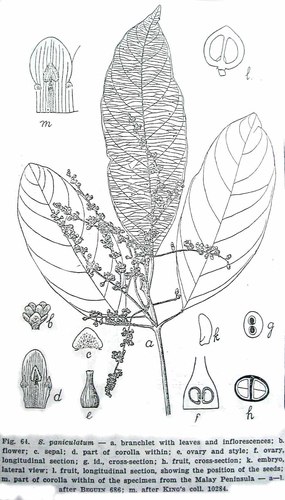
Shrubs or trees which can be up to 40 m tall. The trunk is 50 cm across. The trunk is crooked. It has buttresses. The bark is brown. The small branches are angular. They have rust coloured hairs when young. The leaves are scattered along the twigs. The leaf stalk is 0.5-5 cm long. The leaf blade is oval to sword shaped and 6-24 cm long by 1.5-15 cm wide. They are membranous, papery, or leathery. There are 5-13 pairs of secondary veins. The leaves are rust coloured and hairy on one side and smooth and shiny on the other. Several flowers (1-20) occur on clusters in the axils of leaves. They can be female or of both sexes. The flower petals are 2-3 mm long. They are white to greenish. The fruit are white, yellow, red or blue when fresh. They are round to oval and about 1.5 cm across. It is smooth and with yellow sweet flesh. There are 1-5 seeds inside. The seeds are long and 8-12 mm long by 2-3.5 mm across. They are yellow with a narrow scar.
Edible Uses
The fruit is eaten fresh and also made into a drink. The fruit are dried and ground into a powder and stirred into milk. The kernel and nuts are edible portions.
Traditional Uses
The fruit is eaten fresh. It is also made into a drink. The fruit are dried and ground into a powder and stirred into milk.
This uses section is brief — help expand it
Medicinal Uses
The leaves are used for medicine.
Distribution
A tropical plant. They grow in thickets at low elevations. It occurs in wet tropical forests. It can grow in cooler conditions. It can grow in poor soil conditions. It grows on rocky and sandy coasts on the landward side of mangroves. In Indonesia it can grow in lowland forest up to 400 m altitude. In the Andes it grows from sea level to 2,700 m altitude.
Where It Grows
Andamans, Andes, Asia, Australia, Cambodia, Chile, China, East Timor, Ecuador, India, Indochina, Indonesia, Japan (Bonin and Ryukyu Islands), Laos, Malaysia, Mariana Islands, Micronesia, Myanmar, New Guinea, Pacific, Pakistan, Palau, Papua New Guinea, PNG, Peru, Philippines, SE Asia, Solomon Islands, South America*, Taiwan, Thailand, Timor-Leste, Vietnam,
Cultivation
Plants are grown from fresh seed.
Other Uses
The pinkish-brown wood is heavy. It is suitable for carving and cabinet making, and also for turned articles; sometimes it is used for house-posts, and for salt-water piling.
Production
Plants can produce in 5 years from seed. Fruit matures in about 180 days.
Other Information
It is a commercial crop in Chile and Peru.
Notes
The leaves are used for medicine. There are about 100 Planchonella species. They are mostly in Asia and the Pacific.
Synonyms
Also Known As
Ara semenka, Ara temenka, Balam timah, Binasi, Chelangel, Chengkek, Choi, Jengkok, Karet panjal, Lala, Lucma, Lucmo, Lucuma, Moc, Nasi-nasi merah, Pangkahbok, Pelawan, Pohon lamber, Pohon nyatoh, Pokok barat laut, Shan lan, Tawak, Tuak-tuak
References (19)
- Ambasta, S.P. (Ed.), 2000, The Useful Plants of India. CSIR India. p 466
- Burkill, I.H., 1966, A Dictionary of the Economic Products of the Malay Peninsula. Ministry of Agriculture and Cooperatives, Kuala Lumpur, Malaysia. Vol 2 (I-Z) p 1796
- Candollea 9:324. 1942 (As Pouteria obovata)
- Cooper, W. and Cooper, W., 2004, Fruits of the Australian Tropical Rainforest. Nokomis Editions, Victoria, Australia. p 510 (As Pouteria obovata)
- Coronel, R.E., 1982, Fruit Collections in the Philippines. IBPGR Newsletter p 10 (As Lucuma obovata)
Show all 19 references Hide references
- Cowie, I, 2006, A Survey of Flora and vegetation of the proposed Jaco-Tutuala-Lore National Park. Timor-Lests (East Timor) www.territorystories.nt/gov.au p 52 (As Pouteria obovata)
- Cribb, A.B. & J.W., 1976, Wild Food in Australia, Fontana. p 75
- Elliot, W.R., & Jones, D.L., 1997, Encyclopedia of Australian Plants suitable for cultivation. Vol 7. Lothian. p 357
- French, B.R., 2010, Food Plants of Solomon Islands. A Compendium. Food Plants International Inc. p 253 (As Pouteria obovata)
- Hedrick, U.P., 1919, (Ed.), Sturtevant's edible plants of the world. p 387
- Flora of China
- Kitalong, A. H., DeMeo, R. A., & Holm, T., 2013, A Field Guide to the Native Trees of Palau. 2nd edition. USDA p136
- Martin, F. W., et al, 1987, Perennial Edible Fruits of the Tropics. USDA Handbook 642 p 61 (As Pouteria obovata)
- Not. Bot. 1: 36. 1890
- Recher, P, 2001, Fruit Spirit Botanical Gardens Plant Index. www.nrg.com.au/~recher/ seedlist.html p 3 (As Pouteria obovata)
- Slik, F., www.asianplant.net (As Pouteria obovata)
- Sukarya, D. G., (Ed.) 2013, 3,500 Plant Species of the Botanic Gardens of Indonesia. LIPI p 457
- Triono, T., et al, 2007, A phylogeny of Pouteria (Sapotaceae) from Malesia and Australasia. Australian. Systematic Botany. 20:107-118 (As Pouteria obovata)
- World Checklist of Useful Plant Species 2020. Royal Botanic Gardens, Kew