Pouteria alnifolia
(Baker) Roberty
iNaturalist· cc-by-nc-sa
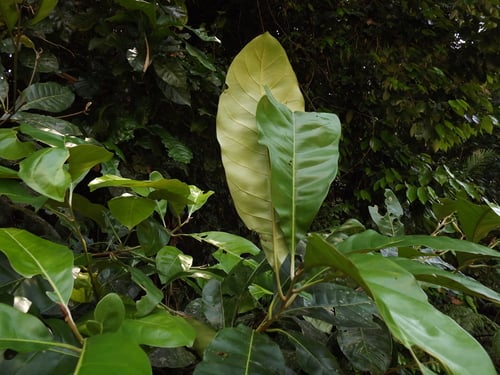
(c) Marco Schmidt, some rights reserved (CC BY-NC-SA), uploaded by Marco Schmidt
iNaturalist· cc-by-nc
(c) Gabriel Michel MONTEIRO, some rights reserved (CC BY-NC), uploaded by Gabriel Michel MONTEIRO
iNaturalist· cc-by-nc
(c) Gabriel Michel MONTEIRO, some rights reserved (CC BY-NC), uploaded by Gabriel Michel MONTEIRO
Description
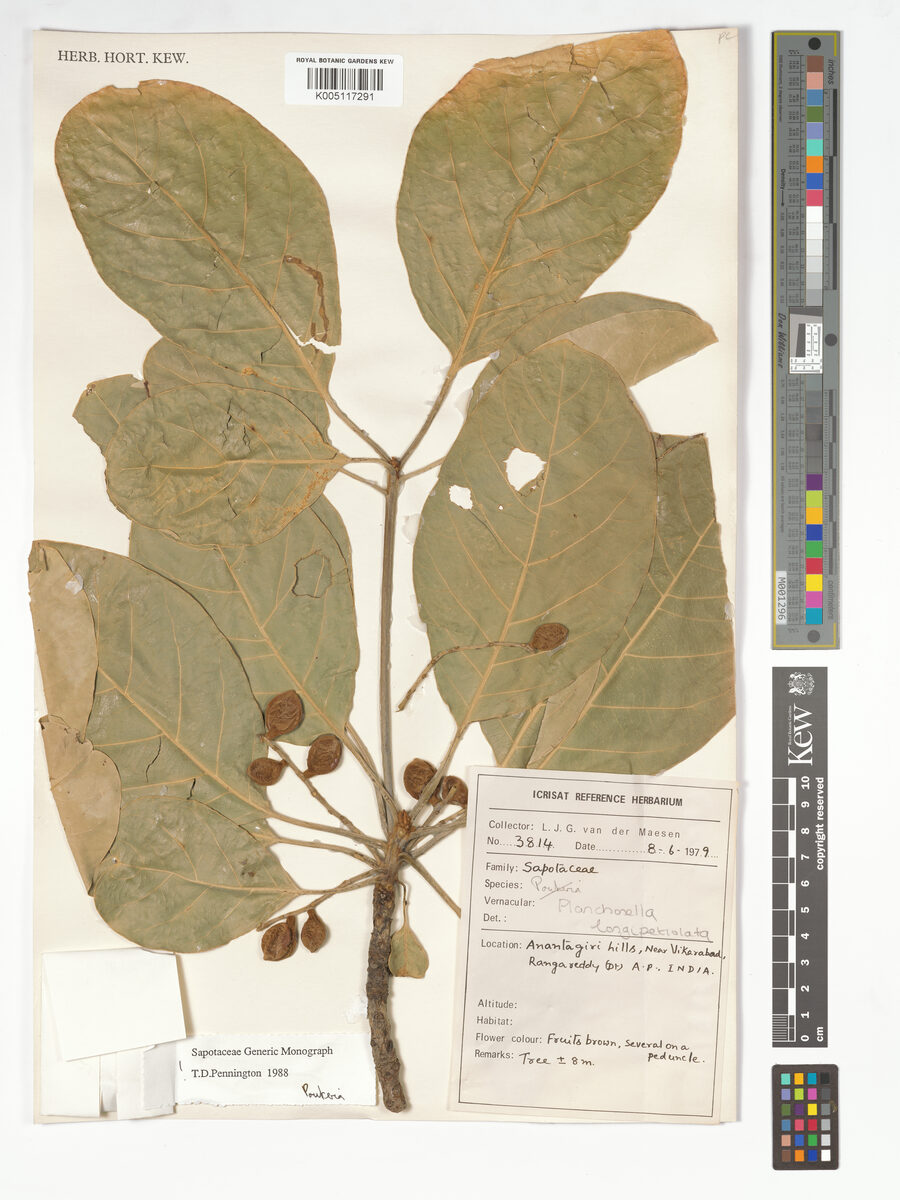
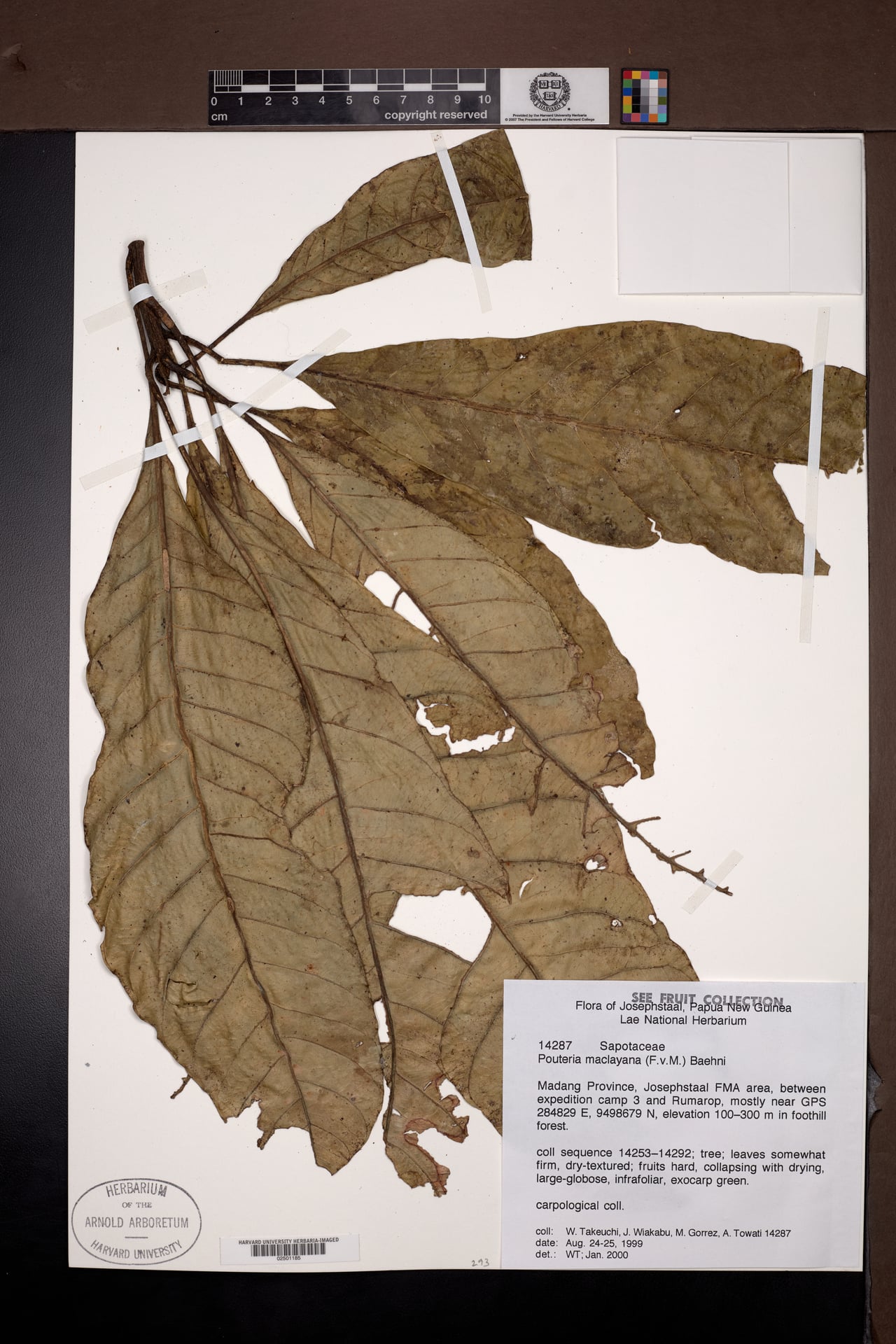
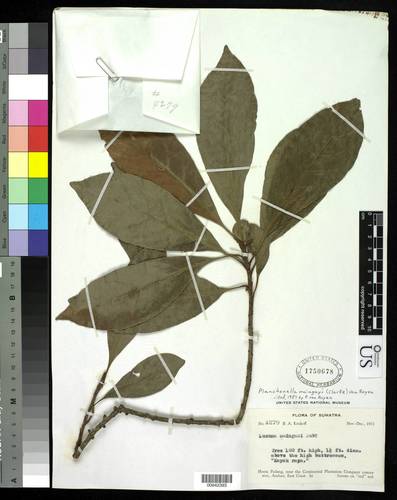
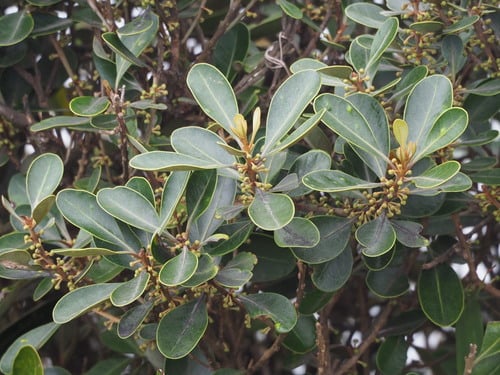
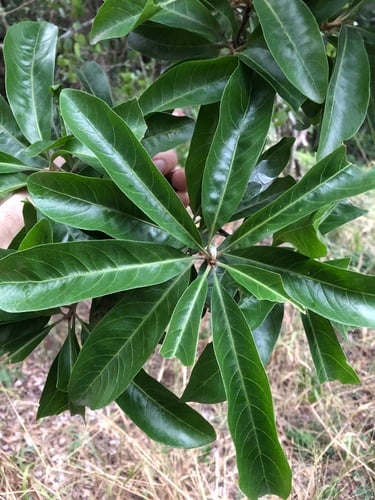
A shrub or medium sized tree. It can grow 25 m high. The trunk is 70 cm across. The trunk can be twisted with flutes and small buttresses. The bark is grey, cracked and scaly. The young branches have reddish-brown hairs. The leaves are in spirals. They are simple and entire. The leaf blade is oval and 12-25 cm long by 7-16 cm wide. The leaves can be slightly hairy underneath and have 15-20 pairs of side veins. The flowers are in groups in the axils of leaves or where leaves have fallen. The fruit are oval berries 1.5-2.5 cm. They turn red when ripe. They have one seed. The seed is narrowly oval and 1.5-2 cm long.
Edible Uses
Fruit - raw. The pulp of ripe fruits has a sweet flavour. The fruit is a red, globose to ellipsoid berry 15 - 25mm long, containing a single seed up to 20mm long. An oil obtained from the seed is used for cooking. The seeds are pounded, boiled, the liquid filtered off and cooled; the oil which floats to the top of the pot is then skimmed off. The leaves are used as food wrappers.
Medicinal Uses
The leaves are applied externally to treat yaws, wounds and conjunctivitis. The pulped bark is administered in embrocations to treat rheumatism and as an enema to treat diarrhoea in children.
Distribution
It is a tropical plant. It grows in dry forest. In Nigeria it is recorded at 220 and 1,360 m above sea level.
Where It Grows
Africa, Benin, Burkina Faso, Cameroon, Central Africa, Central African Republic, CAR, Congo, Côte d'Ivoire, East Africa, Ethiopia, Gambia, Ghana, Guinea, Guinée, Guinea-Bissau, Ivory Coast, Kenya, Liberia, Mozambique, Nigeria, North America, Senegal, Sierra Leone, Southern Africa, Sudan, Tanzania, Togo, USA, West Africa,
Cultivation
The tree can be coppiced.
Other Uses
The heartwood is yellowish white and not clearly demarcated from the sapwood. The wood is fairly hard, durable and resistant to termites. It is used locally for construction, implements, walking sticks and canoes. The wood is used for fuel and to make charcoal. We do not have any more information on the wood of this species. However, we have a general description of the wood for the African members of this genus, which is as follows:- The heartwood is yellowish-white, pale brown, or pinkish-brown, darkening slightly after exposure; it is not clearly demarcated from the sapwood. The texture is medium to coarse; the grain usually straight, sometimes wavy; lustrous; there is a faint cedarlike odour. The wood is perishable, with little resistance to attack by decay fungi and termites, and is also liable to blue stain. It seasons well without degrade. It is generally reported to saw and machine well, but some species are silicious and have a blunting effect on cutters; it is rather difficult to finish; cuts well on rotary lathes or slicers. It is used for purposes such as general carpentry, joinery, veneer and plywood, furniture components. The plant is a pioneer species in its native range. It tolerates fire and regenerates abundantly in regularly burned forest, where it is often more common than in unburned forest. Vegetation communities in which this plant plays an important role are considered an indicator of sites with great potential for growing teak.
Notes
There are about 200 Pouteria species.
Synonyms
Also Known As
Cafore, Lako, Lalauri, Lixa, Mafaleu, Mgombogombo, Mguoguo, Mlale, Mpange, Msambia-ongwe, Mulale, Ngoma, Nguoguo, Nha-da-haco, Nhenheo, Shamangwi, Ukissig
References (11)
- Burkill, H. M., 1985, The useful plants of west tropical Africa, Vol. 5. Kew.
- Dalziel, J. M., 1937, The Useful plants of west tropical Africa. Crown Agents for the Colonies London. (As Malacantha alnifolia)
- Jardin, C., 1970, List of Foods Used In Africa, FAO Nutrition Information Document Series No 2.p 146 (As Malacantha alnifolia)
- Lemmens, R.H.M.J., 2007. Pouteria alnifolia (Baker) Roberty. [Internet] Record from Protabase. Louppe, D., Oteng-Amoako, A.A. & Brink, M. (Editors). PROTA (Plant Resources of Tropical Africa), Wageningen, Netherlands. < http://database.prota.org/search.htm>. Accessed 22 October 200919 October 2009.
- Lovett, J. C. et al, Field Guide to the Moist Forest Trees of Tanzania. p 166
Show all 11 references Hide references
- Mutie, F. M., et al, 2023, Important Medicinal and Food Taxa (Orders and Families) in Kenya, Based on Three Quantitative Approaches. Plants 2023, 12, 1145 (As Malacantha alnifolia)
- Not. bot. 61. 1891 (As Malacantha alnifolia)
- Peters, C. R., O'Brien, E. M., and Drummond, R.B., 1992, Edible Wild plants of Sub-saharan Africa. Kew. p 183 (As Malacantha alnifolia)
- Rollins, C. B., 1987, The Role of the Fruit & Spice Park in Popularization and Dissemination of Tropical Fruit in South Florida. Proc. Fla. State Hort. Soc. 100:323-327
- Ruffo, C. K., Birnie, A. & Tengnas, B., 2002, Edible Wild Plants of Tanzania. RELMA p 540
- World Checklist of Useful Plant Species 2020. Royal Botanic Gardens, Kew