Asparagus acutifolius
L.
Wood asparagus, Spiny asparagus
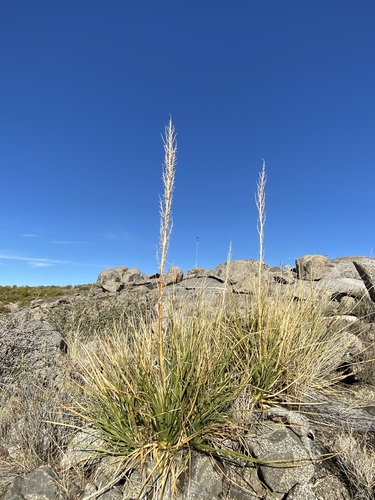
iNaturalist· cc-by-nc
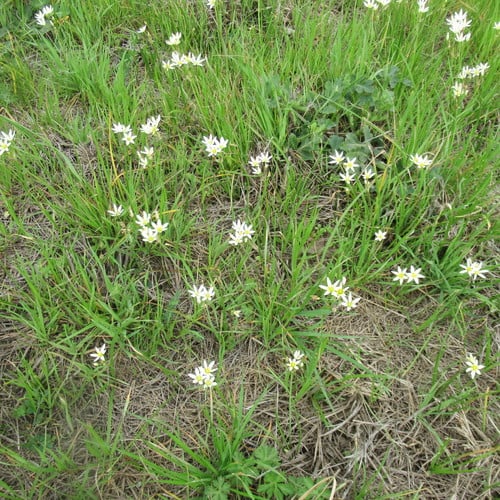
(c) Jens Thalund, some rights reserved (CC BY-NC), uploaded by Jens Thalund
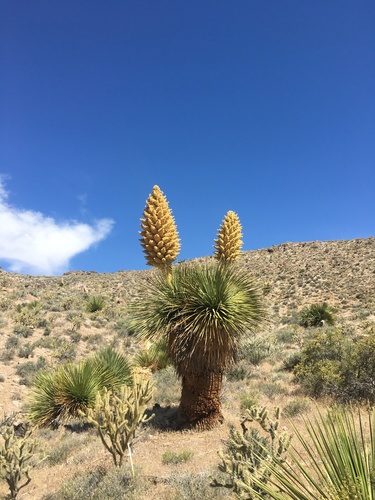
iNaturalist· cc-by-nc
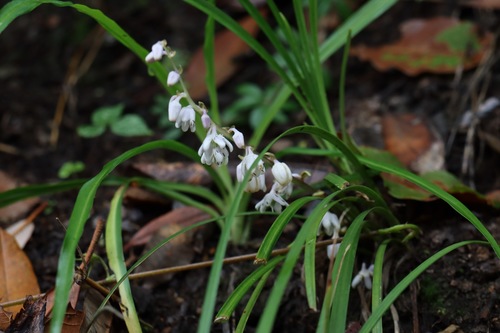
(c) jl__cc, some rights reserved (CC BY-NC), uploaded by jl__cc
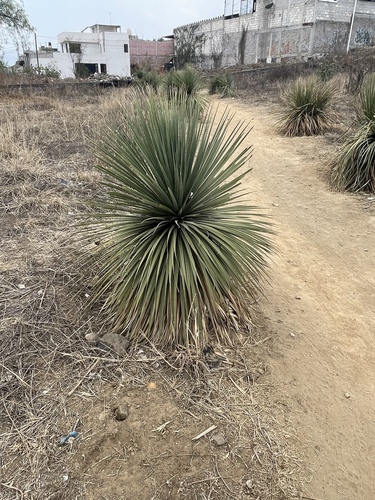
iNaturalist· cc-by-nc
(c) elliegilchrist, some rights reserved (CC BY-NC)
Summary
Source: WikipediaAsparagus acutifolius, common name wild asparagus, is an evergreen perennial plant belonging to the genus Asparagus. The specific epithet, acutifolius is derived from Latin acutus (pointed, acute), and -folius (-leaved), and refers to the characteristic shape of the leaves, a quite common feature in the typical plants of the Mediterranean.
Description
A tall plant. It can be 2 m tall. The stems are woody and have many branches. They are whitish or grey. The flattened green stems occur in clusters of 10-30. They are 2-8 mm long and have spines at their tips. Plants are separately male or female. The flowers are in groups of 2-4. They are 3-4 mm long. They are yellowish green. They have a sweet scent. The flowers are mixed with the leaves. The fruit is a berry which is black when ripe. It is 4.5-7.5 mm across.
Edible Uses
Edible Parts: Shoots Stem Edible Uses: Young shoots - cooked. An asparagus substitute, it is preferred by gourmets for its stronger flavour. Excellent when seasoned with oil and lemon juice. Thin, bitter and often stringy according to another report. Very aromatic. A uniquely bitter aromatic flavour. The new shoots are rather thin and are not produced in abundance. Shoots are collected in the spring along the Croatian coast and islands, eaten in risottos, and fried with scrambled eggs.
Traditional Uses
The young shoots are boiled and eaten as a vegetable. They have a distinctive aromatic flavour. They are also used in omelettes. They are also fried. They can be added to stews.
Medicinal Uses
None known
Distribution
It is a Mediterranean climate plant. It grows in dry rocky habitats.
Where It Grows
Africa, Albania, Australia, Balkans, Bosnia, Croatia, Cyprus, Europe, France, Greece, Italy, Lebanon, Libya, Macedonia, Mediterranean, Middle East, Morocco, North Africa, Portugal, San Marino, Sicily, Slovenia, Spain, Turkey, Türkiye,
Cultivation
An easily grown plant, succeeding in any good garden soil. Prefers a rich sandy loam. Plants tolerate considerable neglect on our Cornish trial grounds. Plants are very tolerant of maritime exposure. This species is not hardy in the colder areas of the country, it tolerates temperatures down to between -5 and -10°c. The young growth in spring, even on mature plants, is frost-tender and so it is best to grow the plants in a position sheltered from the early morning sun. Dioecious. Male and female plants must be grown if seed is required.
Propagation
Seed - pre-soak for 12 hours in warm water and then sow in spring or as soon as the seed is ripe in early autumn in a greenhouse. It usually germinates in 3 - 6 weeks at 25°c. Prick out the seedlings into individual pots when they are large enough to handle and grow them on in a sunny position in the greenhouse for their first winter. Plant them out into their permanent positions in late spring or early summer. Division in early spring as the plant comes into growth.
Other Uses
None known Special Uses
Other Information
It is a commercially cultivated vegetable.
Notes
There are between 160-300 Asparagus species.
Synonyms
Also Known As
Asparagi, Asparago selvatico, Azzouy, Citir, Coban cirasi, Esparrago, Esparragos trigueros, Esparreguera, Gicik, Ispina sorichina, Kuskonmaz, Kuskondurmaz, Ostrolistni beluš, Sekoum, Sparace di rizzogna, Sparacogna, Sparasc', Sparoge, Spar'je, Tilki, Tilkisen, Triguero
References (45)
- Balut, G., 2016, Medicinal and wild food plants of Marmara Island (Balikesir - Turkey). Acta Societatis Botanicorum Poloniae 85 (2): 3501
- Bianchini, F., Corbetta, F., and Pistoia, M., 1975, Fruits of the Earth. Cassell. p 88
- Bircher, A. G. & Bircher, W. H., 2000, Encyclopedia of Fruit Trees and Edible Flowering Plants in Egypt and the Subtropics. AUC Press. p 45
- Biscotti, N. & Pieroni, A., 2015, The hidden Mediterranean diet: wild vegetables traditionally gathered and consumed in the Gargano area, Apulia, SE Italy. Acta Societatis Botanicorum Poloniae 84 (3): 327-338
- Biscotti, N. et al, 2018, The traditional food use of wild vegetables in Apulia (Italy) in the light of Italian ethnobotanical literature. Italian Botanist 5:1-24
Show all 45 references Hide references
- Blamey, M and Grey-Wilson, C., 2005, Wild flowers of the Mediterranean. A & C Black London. p 483
- Bonet, M. A. & Valles, J., 2002, Use of non-crop food vascular plants in Montseny biosphere reserve (Catalonia, Iberian Peninsula). International Journal of Food Sciences and Nutrition (2002) 53, 225–248
- Della, A., et al, 2006, An ethnobotanical survey of wild edible plants of Paphos and Larnaca countryside of Cyprus. J. Ethnobiol. Ethnomed. 2:34
- Dogan, Y., 2012, Traditionally used wild edible greens in the Aegean Region of Turkey. Acta Societatis Botanicorum Poloniae 81(4): 329-342
- Dogan, Y. et al, 2013, Wild Edible Plants sold in the Local Markets of Izmir, Turkey Pak. J. Bot. 45(S1): 177-184
- Dolina, K. & Luczaj, L., 2014, Wild food plants used on the Dubrovnik coast (south-eastern Croatia) Acta Soc Bot Pol 83(3):175–181
- Ertug, F., 2004, Wild Edible Plants of the Bodrum Area. (Mugla, Turkey). Turk. J. Bot. 28 (2004): 161-174
- Ertug, F, Yenen Bitkiler. Resimli Türkiye Florası -I- Flora of Turkey - Ethnobotany supplement
- Facciola, S., 1998, Cornucopia 2: a Source Book of Edible Plants. Kampong Publications, p 32
- Geraci, A., et al, 2018, The wild taxa utilized as vegetables in Sicily (Italy): a traditional component of the Mediterranean diet. Journal of Ethnobiology and Ethnomedicine (2018) 14:14
- Gonzalez, J. A., et al, 2011, The consumption of wild and semi-domesticated edible plants in the Arribes del Duero (Salamanca-Zamora, Spain): an ananalysis of traditional knowledge. Genetic Resources and Crop Evolution 58:991-1006
- Gurdal, B. & Kultur, S., 2014, The edible and miscellaneous useful plants in Marmaris (Southwest Turkey). İstanbul Ecz. Fak. Derg. / J. Fac. Pharm. Istanbul 44(1) 2014 pp.69-78
- Hadjichambis, A. C., et al, 2007, Wild and semi-domesticated food plant consumption in seven circum-Mediterranean areas. International Journal of Food Sciences and Nutrition. 2007, 1-32.
- Hancer, C. K., et al, 2020, Traditional Knowledge of Wild Edible Plants of Biga (Çanakkale), Turkey. Acta Societatis Botanicorum Poloniae / 2020 / Volume 89 / Issue 1 / Article 8914
- Hedrick, U.P., 1919, (Ed.), Sturtevant's edible plants of the world. p 80
- Jardin, C., 1970, List of Foods Used In Africa, FAO Nutrition Information Document Series No 2.p 56
- Kays, S. J., and Dias, J. C. S., 1995, Common Names of Commercially Cultivated Vegetables of the World in 15 languages. Economic Botany, Vol. 49, No. 2, pp. 115-152
- Licata, M., et al, 2016, A survey of wild plant species for food use in Sicily (Italy) – results of a 3-year study in four Regional Parks. Journal of Ethnobiology and Ethnomedicine 12:12
- Luczaj et al, 2013, Wild vegetable mixes sold in the markets of Dalmatia (southern Croatia). Journal of Ethnobiology and Ethnomedicine. 8:2
- Luczaj, L. et al, 2013, Wild food plants used in the villages of the Lake Vrana Nature Park (northern Dalmatia, Croatia). Acta Societatis Botanicorum Poloniae, 82(4): 275-281
- Luczaj, L. et al, 2014, Wild Food Plants of Dalmatia (Croatia). in A. Pieroni, C. L. Quave (eds.), Ethnobotany and Biocultural Diversities in the Balkans, p 138
- Martin, F.W. & Ruberte, R.M., 1979, Edible Leaves of the Tropics. Antillian College Press, Mayaguez, Puerto Rico. p 202
- Mattalia, G., et al, 2012, Traditional uses of wild food and medicinal plants among Brigasc, Kye ́, and Provenc ̧al communities on the Western Italian Alps. Genet Resour Crop Evol. Springer
- Nassif, F., & Tanji, A., 2013, Gathered food plants in Morocco: The long forgotten species in Ethnobotanical Research. Life Science Leaflets 3:17-54
- Nebel, S., Pieroni, A. & Heinrich, M., 2006, Ta cho`rta: Wild edible greens used in the Graecanic area in Calabria, Southern Italy. Appetite 47 (2006) 333–342
- Nimis, P. L., et al, 2015, A guide to the vascular plants of the temporary ponds of Sardinia (Italy) p 116
- Pasta, S., et al, 2020, An Updated Checklist of the Sicilian Native Edible Plants: Preserving the Traditional Ecological Knowledge of Century-Old Agro-Pastoral Landscapes. Frontiers in Plant Science. Volume 11|Article 388
- Pieroni, A., 1999, Gathered wild food plants in the Upper Valley of the Serchio River (Garfagnana), Central Italy. Economic Botany 53(3) pp 327-341
- Pieroni, A., et al, 2005, Food for two seasons: Culinary uses of non-cultivated local vegetables and mushrooms in a south Italian village. International Journal of Food Sciences and Nutrition, 56(4): 245-272
- Rexhepi. B., et al, 2018, Three Ethnic groups, One Territory: Perspectives of an ethnobotanical study from Southwestern Macedonia. UNIVERSI - International Journal of Education, Science, Technology, Innovation, Health and Environment. Vol 4 (1) p 76
- Rivera, C., et al, 2005, The Ethnobotanical Study of Local Mediterranean Food Plants as Medicinal Resources in Southern Spain. Journal of Physiologyand Pharmacology. 56, Suppl. 1, 97-114
- Rivera, D. et al, 2006, Gathered Mediterranean Food Plants - Ethnobotanical Investigations and Historical Development, in Heinrich M, Müller WE, Galli C (eds): Local Mediterranean Food Plants and Nutraceuticals. Forum Nutr. Basel, Karger, 2006, vol 59, pp 18–74
- Salvatore, S., et al, 2005, Antioxidant Characterization of Some Sicilian Edible Wild Greens. Journal of Agricultural and Food Chemistry. 53: 9465-9471
- Sansanelli, S., et al, 2014, Wild food plants traditionall consumed in the area of Bologna (Emilia Romagna region, Italy). Journal of Ethnobiology and Ethnomedicine 10:69
- Signorini, M. A., et al, 2009, Plants and traditional knowledge: An ethnobotanical investigation on Monte Ortobene (Nuoro, Sardinia). Journal or Ethnobiology and Ethnomedicine, 5:6
- Sp. pl. 1:314. 1753
- Tardio, J., et al, 2006, Ethnobotanical review of wild edible plants in Spain. Botanical J. Linnean Soc. 152, 27-71
- Taskin, T. and Bitis, L., 2016, In vitro Antioxidant activity of eight wild edible plants in Bursa Province of Turkey. Farmacia 2016, Vol. 64, 5
- Tbatou, M, et al, 2016, Wild Edible Plants traditionally used in the countryside of El Jadida, Coastal Area in the Center of Morocco. Life Sciences Leaflets 75:28-48
- World Checklist of Useful Plant Species 2020. Royal Botanic Gardens, Kew