Castanopsis argentea
(Blume) A. DC.
Indonesian chestnut tree
iNaturalist· cc-by-nc
(c) Hani Ristiawan, some rights reserved (CC BY-NC)
iNaturalist· cc-by-nc
(c) Hani Ristiawan, some rights reserved (CC BY-NC)
iNaturalist· cc-by-nc
(c) Naufal Urfi Dhiya'ulhaq, some rights reserved (CC BY-NC)
Summary
Source: WikipediaCastanopsis argentea is an evergreen tree native to Indonesia, where it is known as sarangan. It is native to the islands of Java and Sumatra.
Description
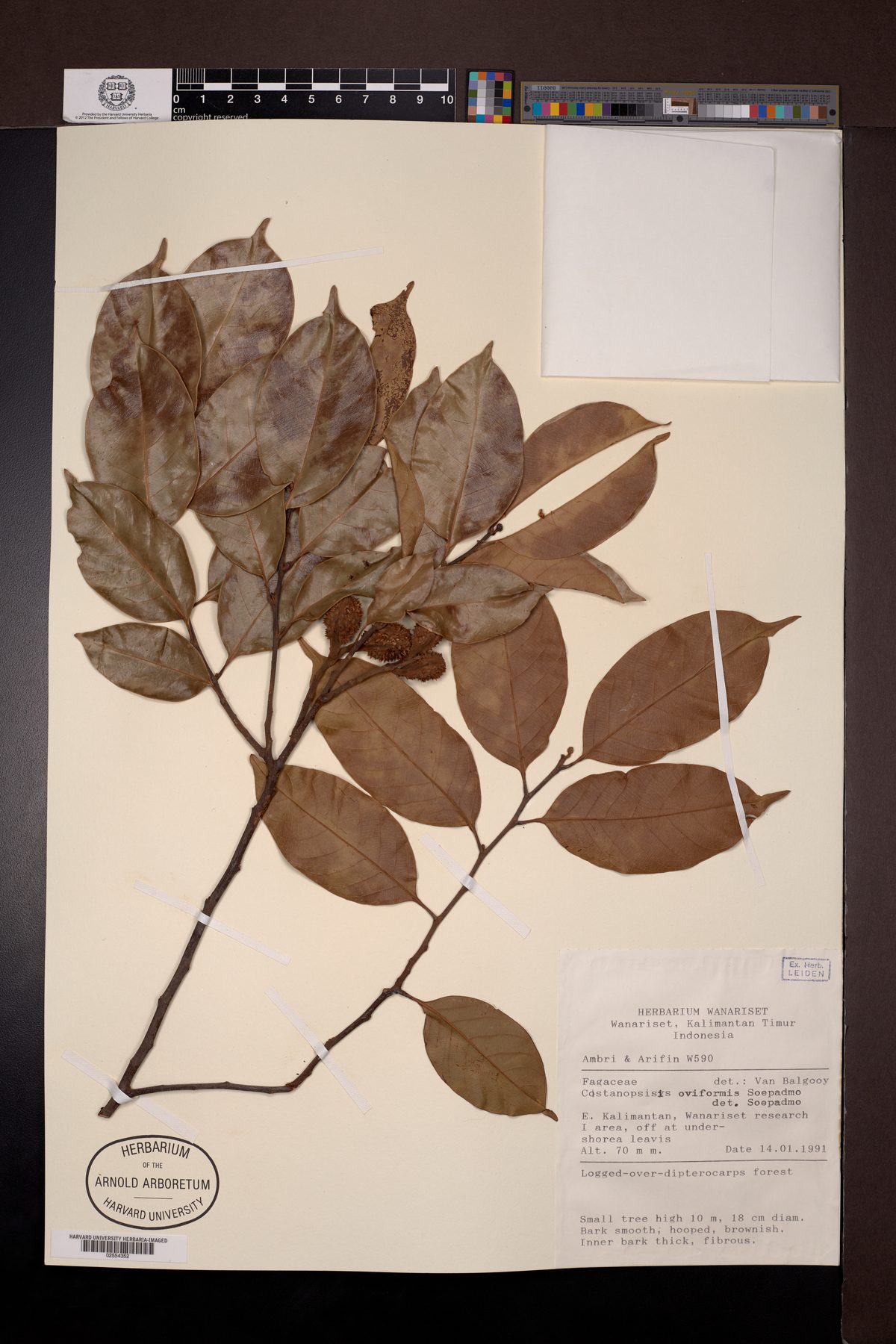
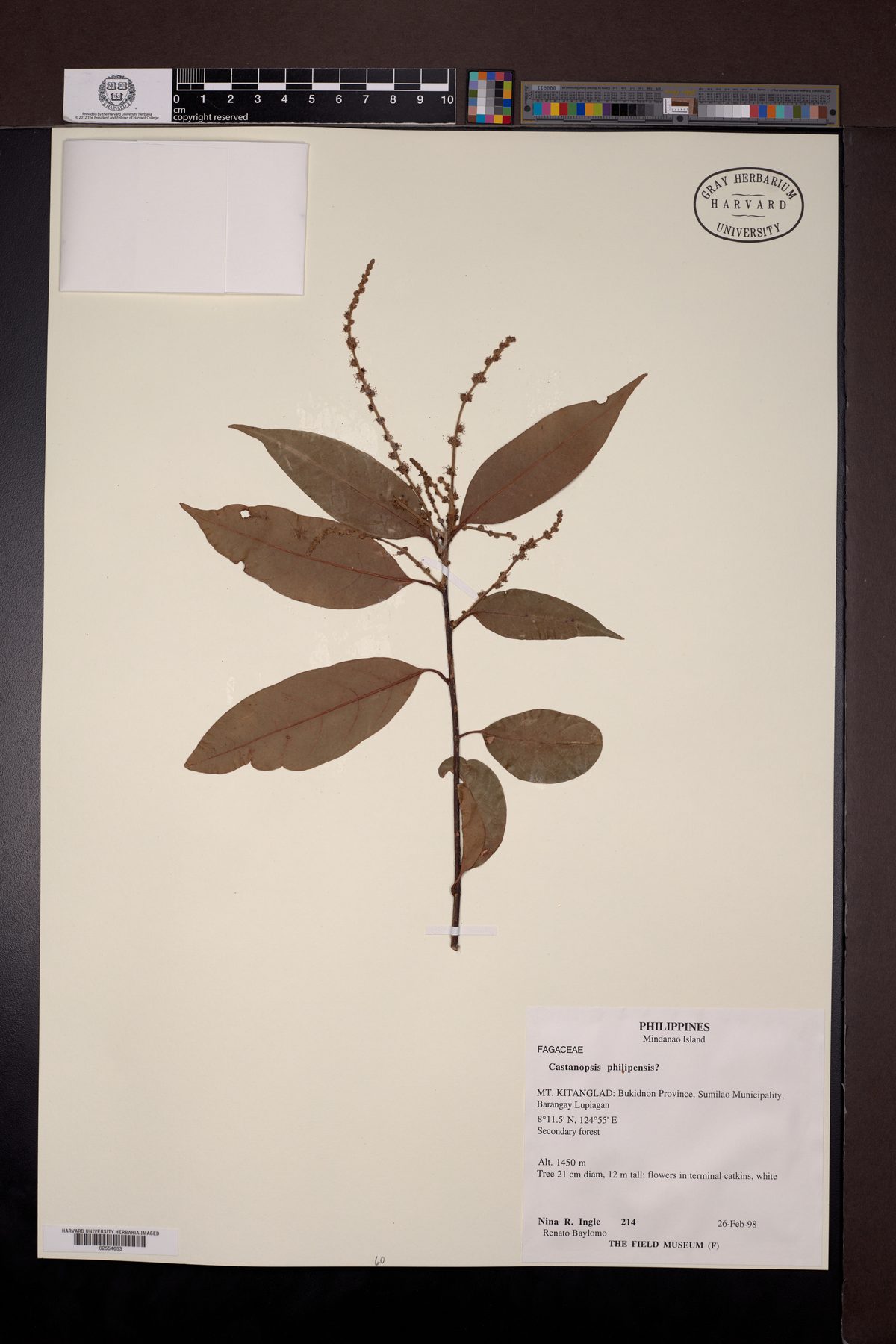
A tree. It grows up to 15-30 m high. The bark is dark grey and cracked. The trunk can be 1 m across. The trunk can be without branches for 25 m. The leaves are thin and leathery. They are 13-16 cm long by 5-7 cm wide. They are silvery grey underneath. The flowers are bell shaped with 6 lobes. The fruit is in a cup 3-4 cm across with 3 fruit.
Edible Uses
The seeds and nuts are edible and the plant is cultivated as a food source.
Distribution
A tropical plant. It grows in forests between 150-1,400 m altitude. It grows in dry fertile soil.
Where It Grows
Asia, India, Indonesia, Malesia, Myanmar, New Guinea, SE Asia, Thailand,
Cultivation
Plants are grown by seeds.
Propagation
Seed - easy to germinate if sown fresh. Self-sown seedlings can be transplanted.
Other Uses
The bark is a source of tannins and can be used as a dye, to weatherproof fibres etc. A decoction of the bark is used as a dye. It gives rattan work a black colour. The branches and stems of many Castanopsis species are used as bed logs in mushroom cultivation. The wood is strong and durable. It is used for constructing houses. The wood is a good fuel and can be used to make charcoal.
Other Information
It is a cultivated food plant.
Notes
There are about 120 Castanopsis species. Many have edible nuts.
Synonyms
Also Known As
Chyaran, Matauk-takauk, Pohon berangan saninten, Thit-e
References (9)
- Castillo, C., 2013, The Archaeobotany of Khao Sam Kaeo and Phu Khao Thong: The Agriculture of Late Prehistoric Southern Thailand. Ph. D. thesis University College, London p 381
- J. Bot. 1:182. 1863
- Mabberley, 1987,
- Soepadmo, 1972, Fagaceae, Flora Malesiana. Ser 1. Vol. 7 (2) p 311
- Sukarya, D. G., (Ed.) 2013, 3,500 Plant Species of the Botanic Gardens of Indonesia. LIPI p 184
Show all 9 references Hide references
- Verheij and Coronel, 1991, PROSEA
- Wickens, G.E., 1995, Edible Nuts. FAO Non-wood forest products. FAO, Rome. p 122
- Wiersema, J. H. & Leon, B., 2013, World Economic Plants. A Standard Reference CRC Press. 2nd Ed. p 151
- World Checklist of Useful Plant Species 2020. Royal Botanic Gardens, Kew