Quercus albocincta
Trel.
Cusi
iNaturalist· cc-by-nc
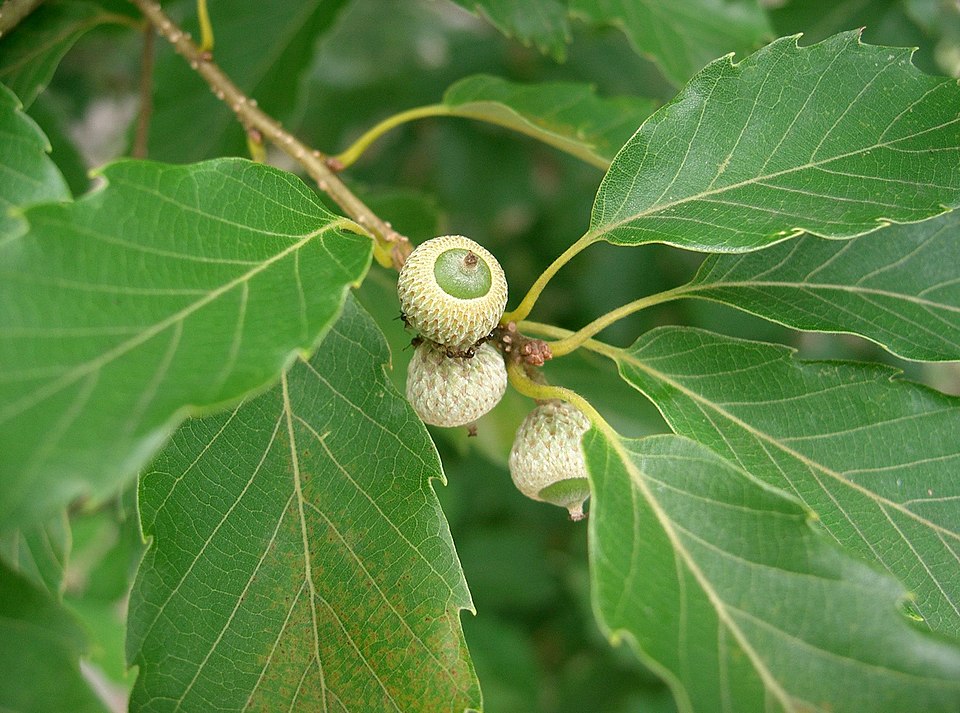
(c) Andrew Hipp, some rights reserved (CC BY-NC), uploaded by Andrew Hipp
iNaturalist· cc-by-nc
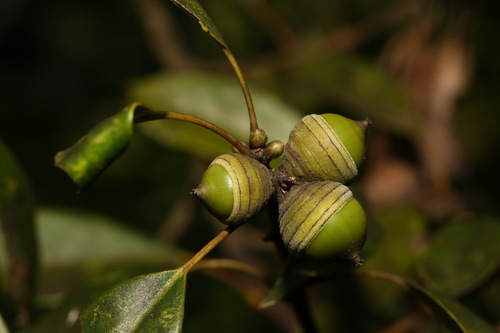
(c) jrebman, some rights reserved (CC BY-NC), uploaded by jrebman
iNaturalist· cc-by-nc
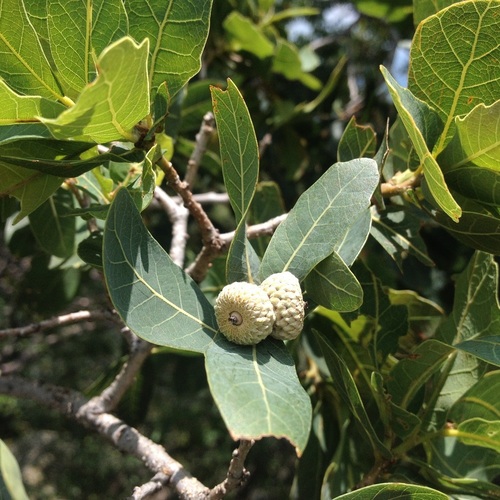
(c) J. Fernando Pío León, some rights reserved (CC BY-NC), uploaded by J. Fernando Pío León
Summary
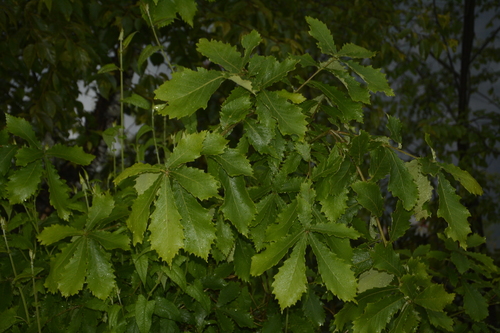
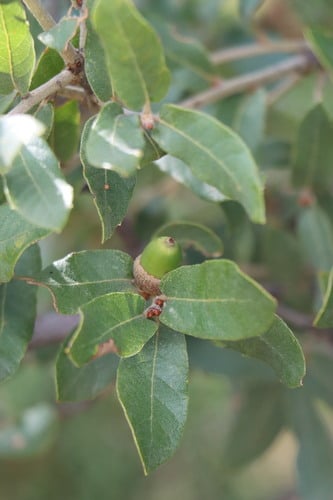
Source: WikipediaQuercus albocincta is a species of oak tree. It is native to the Sierra Madre Occidental of western Mexico, in the states of Sonora, Chihuahua, Durango, and Sinaloa. It has also been found in the southernmost part of Baja California Sur. It is a deciduous tree growing to about 15 metres (49 feet) in height with a trunk 25–50 centimetres (10–19+1⁄2 inches) in diameter. The leaves are stiff and leathery, elliptical or slightly egg-shaped, up to 16 cm (6+1⁄2 in) long, with 3–6 pairs of large bristle-tipped teeth along the edges.
Description
A wide spreading tree. It grows 12 m tall. The trunk can be 75 cm across. The bark is black and furrowed. The edges of the leaves have distinct lobes.
Edible Uses
The acorns can be eaten without preparation and are sold in local markets. The flowers are also edible.
Traditional Uses
The acorns can be eaten without preparation.
This uses section is brief — help expand it
Distribution
It is a tropical plant. It grows between 200-1,500 m above sea level.
Where It Grows
Central America, Mexico, North America,
Production
It flowers are produces acorns June to August.
Other Information
The acorns are sold in local markets.
Notes
There are about 600 Quercus species.
Also Known As
Cusi comestible, Ecino prieto, Hachuka, Roble
References (3)
- Altschul, S.V.R., 1973, Drugs and Foods from Little-known Plants. Notes in Harvard University Herbaria. Harvard Univ. Press. Massachusetts. no. 656
- Mapes, C. & Basurto, F., 2016, Biodiversity and Edible Plants of Mexico. Chapter 5 in R. Lira, et al. (eds.), Ethnobotany of Mexico, Ethnobiology, Springer. p 122
- Martin, P. S. et al, (Eds.), 1998, Gentry's Rio Mayo Plants. The Tropical Deciduous Forest & Environs of Northwest Mexico. University of Arizona Press. p 362