Quercus agrifolia
Née
California Live Oak, Encina, Coast Live oak
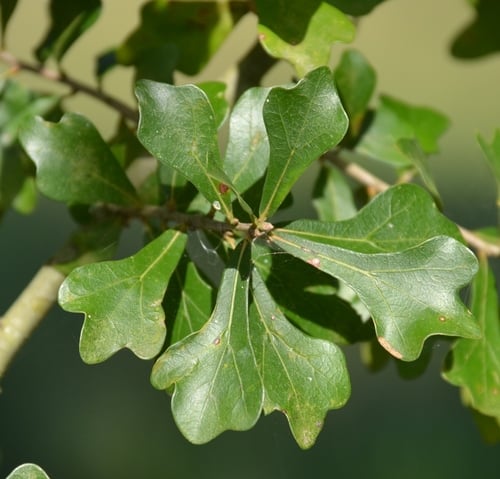
iNaturalist· cc-by-nc
(c) yerbasanta, some rights reserved (CC BY-NC), uploaded by yerbasanta
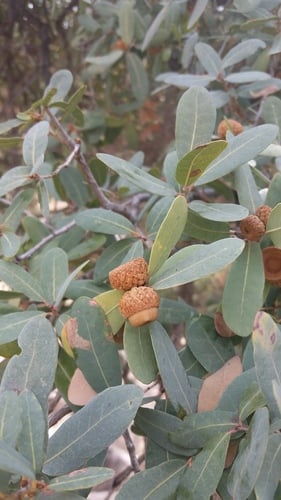
iNaturalist· cc-by-nc
(c) yerbasanta, some rights reserved (CC BY-NC), uploaded by yerbasanta
iNaturalist· cc-by-nc
(c) yerbasanta, some rights reserved (CC BY-NC), uploaded by yerbasanta
Summary
Source: WikipediaQuercus agrifolia, the California live oak, or coast live oak, is an evergreen live oak native to the California Floristic Province. Live oaks are so-called because they keep living leaves on the tree all year, adding young leaves and shedding dead leaves simultaneously rather than dropping dead leaves en masse in the autumn like a true deciduous tree. Coast live oaks may be shrubby, depending on age and growing location, but is generally a medium-sized tree. It grows west of the Sierra Nevada mountain range from Mendocino County, California, south to northern Baja California in Mexico. It is classified in the red oak section of oaks (Quercus sect. Lobatae), subsection Agrifoliae. This species is commonly sympatric with canyon live oak (Q. chrysolepis), and the two may be hard to distinguish because their spinose leaves are superficially similar.
Description
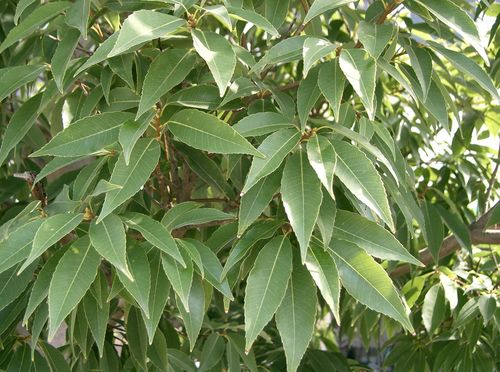
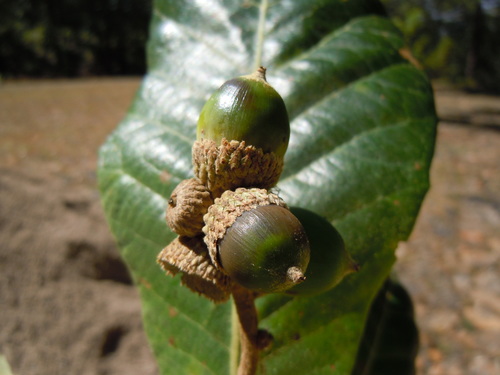
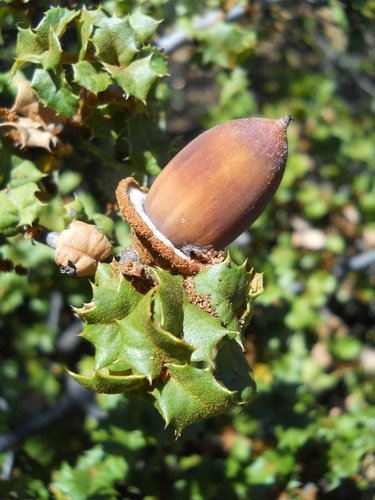
An evergreen tree. It grows 12 m high and spreads 10 m wide. It has branches almost to the ground. The bark is smooth and black. It becomes rough with age. The leaves are oval or round. They have a hard texture and teeth with spines along the edge. The fruit are acorns which are half enclosed in the cup.
Edible Uses
The seed, up to 4cm long and 2cm wide, was used as a staple food by several native North American Indian tribes and is edible when cooked. It can be dried and ground into a flour for thickening stews or mixed with cereals for bread. The seed contains bitter tannins that can be removed by washing thoroughly in running water, though minerals are also lost. Tannins can be leached from whole seeds or from the dried ground powder, with the powder leaching more quickly. Leaching whole seeds may take several days to several weeks; one traditional method was to wrap them in a cloth bag and place them in a running stream. A taste test confirms when enough tannin has been removed. A traditional preparation involved burying the seed in boggy ground over winter; germinating seed dug up in spring would have lost most of its astringency. The roasted seed also makes a coffee substitute.
Medicinal Uses
Any galls produced on the tree are strongly astringent and have been used in treating haemorrhages, chronic diarrhoea, and dysentery. A decoction of the chipped bark has been used as a wash on skin sores.
Distribution
It is a warm temperate plant. It suits hardiness zones 8-10. Arboretum Tasmania.
Where It Grows
Australia, Mexico, North America, Tasmania, USA,
Cultivation
Prefers a good deep fertile loam which can be on the stiff side. Plants are lime tolerant. Young plants tolerate reasonable levels of side shade. Tolerates moderate exposure, surviving well but being somewhat stunted. Trees are hardy in Britain if they are not too exposed, though another report says that they are wind-resistant. Trees grow well in S.W. England. Intolerant of root disturbance, trees should be planted in their permanent positions whilst young. A slow-growing but long-lived tree in the wild. Plants only fruit occasionally in Britain, though they fruited very heavily at Kew in the hot summer of 1989. The tree flowers on new growth produced in spring, the seed ripening in its first year. Hybridizes freely with other members of the genus. This species is notably resistant to honey fungus.
Propagation
Seed quickly loses viability if allowed to dry out. It can be stored moist and cool over winter but is best sown as soon as it is ripe in an outdoor seed bed, with protection from mice and squirrels. Small quantities can be sown in deep pots in a cold frame. Plants develop a deep taproot and should be moved to their permanent positions as soon as possible; seed sown in situ produces the best trees. Trees left in a nursery bed for more than 2 growing seasons will transplant very badly.
Other Uses
A mulch of the leaves repels slugs and grubs; fresh leaves should be avoided as they can inhibit plant growth. Oak galls — caused by larvae of various insects feeding within the growths — provide a rich source of tannin once the insect has left, and can also be used as a dyestuff. The seed cups are used as buttons. The wood is coarse-grained, hard, very heavy, and very brittle. It is not commercially exploited as a timber but is valued as a fuel.
Notes
There are about 600 Quercus species.
Synonyms
References (13)
- Anales Ci. Nat. 3:271. 1801
- Beckstrom-Sternberg, Stephen M., and James A. Duke. "The Foodplant Database." http://probe.nalusda.gov:8300/cgi-bin/browse/foodplantdb.(ACEDB version 4.0 - data version July 1994)
- Brickell, C. (Ed.), 1999, The Royal Horticultural Society A-Z Encyclopedia of Garden Plants. Convent Garden Books. p 853
- Cundall, P., (ed.), 2004, Gardening Australia: flora: the gardener's bible. ABC Books. p 1122
- Facciola, S., 1998, Cornucopia 2: a Source Book of Edible Plants. Kampong Publications, p 115
Show all 13 references Hide references
- Hedrick, U.P., 1919, (Ed.), Sturtevant's edible plants of the world. p 544
- Kermath, B. M., et al, 2014, Food Plants in the Americas: A survey of the domesticated, cultivated and wild plants used for Human food in North, Central and South America and the Caribbean. On line draft. p 733
- Menninger, E.A., 1977, Edible Nuts of the World. Horticultural Books. Florida p 19
- Moerman, D. F., 2010, Native American Ethnobotany. Timber Press. p 458
- Plants for a Future database, The Field, Penpol, Lostwithiel, Cornwall, PL22 0NG, UK. http://www.scs.leeds.ac.uk/pfaf/
- Saunders, C.F., 1948, Edible and Useful Wild Plants. Dover. New York. p 73
- Wickens, G.E., 1995, Edible Nuts. FAO Non-wood forest products. FAO, Rome. p 127
- World Checklist of Useful Plant Species 2020. Royal Botanic Gardens, Kew