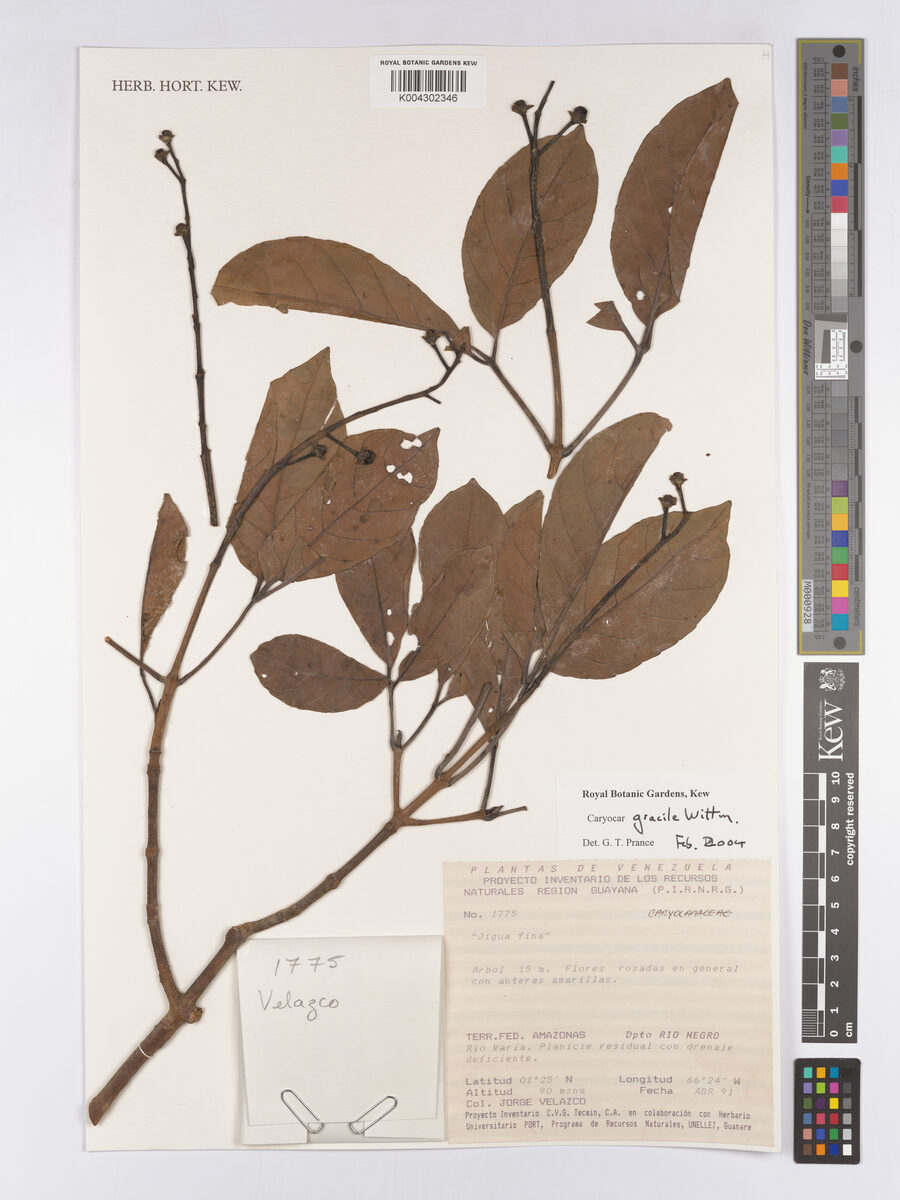
Caryocar villosum
(Aublet) Persoon
Piquia
iNaturalist· cc-by-nc
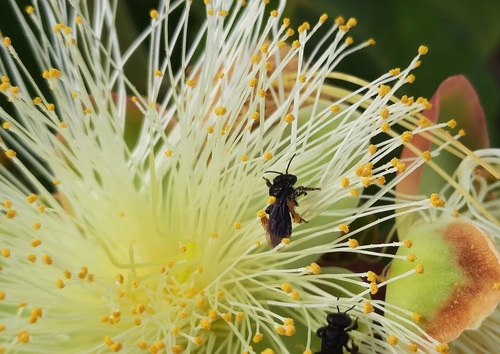
(c) Marcel Carita Vaz, some rights reserved (CC BY-NC), uploaded by Marcel Carita Vaz
iNaturalist· cc-by-nc
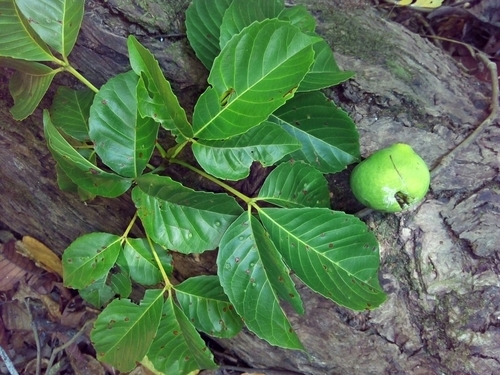
(c) Guillaume Léotard, some rights reserved (CC BY-NC)
iNaturalist· cc-by-nc
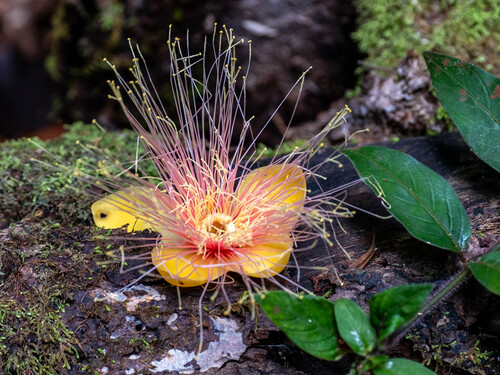
(c) Guillaume Léotard, some rights reserved (CC BY-NC)
Summary
Evergreen tree growing 30m tall and 35m wide at slow rate. Hardy to UK zone 10. Grows in light sandy, medium loamy, and heavy clay soils preferring well-drained conditions. Tolerates mildly acid to basic pH and moist soil. Requires full sun and cannot tolerate shade.
Description
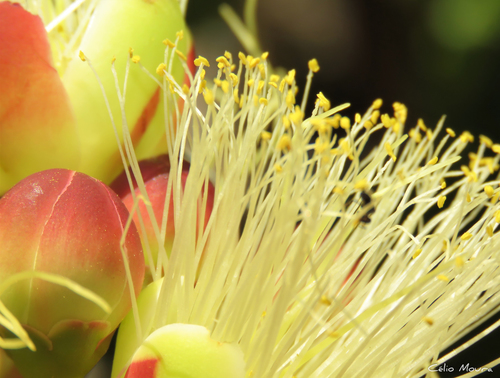
A tree. It grows to 20-40-50 m high. The trunk is 1-2.5 m across. The leaves have long leaf stalks. The leaves are compound with leaflets that are hairy on the upper surface. The leaflets are 6-12 cm long. The flowers occur in a cluster. The fruit are an irregular round shape. The outside is spiny. The fruit are 4-5 cm across. There are 1-2 white, oily seeds inside.
Edible Uses
The seeds of Caryocar villosum can be eaten raw or cooked as a dessert. The large, soft, white kernels have a delicious, rich, almond-like flavour and are rich in oil. An edible oil is obtained both from the tissue surrounding the seed and from the seed itself. The fruit can also be eaten raw or cooked — the fleshy, aromatic, yellow pulp has a slightly sweet flavour with a faint smell of rancid butter, and is more commonly prepared cooked. The seed case beneath the pulp bears rigid spines, so care should be taken when eating fresh fruit to avoid injury from these spines.
Traditional Uses
Seeds used to extract oil. The oil is used in cooking. The nut is eaten. Both the fruit and seeds contain edible oil. The fruit pulp is eaten fresh but usually after cooking. It is boiled in salted water. Caution: The seeds have rigid spines that must be avoided.
Medicinal Uses
The leaves and bark are diaphoretic.
Known Hazards
The seed case beneath the pulp has rigid spines - care should be taken when eating the fresh fruit that one does not harm themselves on these spines.
Distribution
It is a tropical plant. It grows in areas with 1700-2500 mm annual rainfall. It grows in dryland forest in the Amazon.
Where It Grows
Amazon, Asia, Bolivia, Brazil, Colombia, Guiana, Malaysia, Peru, SE Asia, South America*, Venezuela,
Cultivation
Plants are grown from seed. The ripe fruit are harvested from the tree or off the ground and the seeds are removed and dried in the sun. The seeds are in the pits and the pits are soaked in water fro 48 hours changing the water every 12 hours. They are then planted and grow in 30-60 days.
Propagation
Seed takes 6–12 months to germinate. Alternatively, immerse seeds in warm water for 48 hours, changing the water every 12 hours. Sow in individual containers in a sunny or lightly shaded position; pre-soaked seed can sprout within 30–50 days at a moderate germination rate. Grow young plants on in a sheltered position with some shade from the sun. Seedlings can be planted out when 25 cm tall. Good results can also be obtained from grafting and marcottage.
Other Uses
The heartwood is yellow to light brownish grey, clearly demarcated from a dirty white sapwood band approximately 15 mm wide. The wood is cross-grained with little taste or odour. It is rather hard, heavy, very tough, durable and highly resistant to wood-eating organisms. It works well, takes nails fairly well, planes moderately easily but very badly, turns moderately easily but indifferently, and polishes indifferently. It is suitable for house and ship building, cabinet making, wheel arches and hubs, fence posts and railway sleepers.
Production
Plants grow slowly.
Other Information
Fruit are sold in markets.
Notes
The Caryocaraceae occur in tropical America. There are 16 Caryocar species.
Nutrition
| Part | Moisture | kJ | kcal | Protein | Vit A | Vit C | Iron | Zinc |
|---|---|---|---|---|---|---|---|---|
| Fruit | — | — | — | 57 | — | — | — | — |
| Nuts | — | — | — | — | — | — | — | — |
| Nuts - oil | — | — | — | — | — | — | — | — |
Synonyms
Also Known As
Almendro, Amendoa de aspinho, Arbre a beurre, Bats suari, Pekea, Pequia, Petia, Piquia, Piqui, Ruamahi, Villous caryocar, Vinagreira
References (23)
- Altschul, S.V.R., 1973, Drugs and Foods from Little-known Plants. Notes in Harvard University Herbaria. Harvard Univ. Press. Massachusetts. no. 2830
- Arora, R. K., 2014, Diversity in Underutilized Plant Species - An Asia-Pacific Perspective. Bioversity International. p 93
- Bircher, A. G. & Bircher, W. H., 2000, Encyclopedia of Fruit Trees and Edible Flowering Plants in Egypt and the Subtropics. AUC Press. p 87
- Burkill, I.H., 1966, A Dictionary of the Economic Products of the Malay Peninsula. Ministry of Agriculture and Cooperatives, Kuala Lumpur, Malaysia. Vol 1 (A-H) p 474
- Etkin, N.L. (Ed.), 1994, Eating on the Wild Side, Univ. of Arizona. p 137
Show all 23 references Hide references
- Facciola, S., 1998, Cornucopia 2: a Source Book of Edible Plants. Kampong Publications, p 74
- Grandtner, M. M. & Chevrette, J., 2013, Dictionary of Trees, Volume 2: South America: Nomenclature, Taxonomy and Ecology. Academic Press p 104
- Hedrick, U.P., 1919, (Ed.), Sturtevant's edible plants of the world. p 172 (As Caryocar butyrospermum)
- Hermandez Bermejo, J.E., and Leon, J. (Eds.), 1994, Neglected Crops. 1492 from a different perspective. FAO Plant Production and Protection Series No 26. FAO, Rome. p15
- INFOODS:FAO/INFOODS Databases
- Lopez-Diago, D. & Garcia, N., 2021, Wild edible fruits of Colombia. Biota ColomBiana 22 (2) p 34
- Lorenzi, H., 2002, Brazilian Trees. A Guide to the Identification and Cultivation of Brazilian Native Trees. Vol. 01 Nova Odessa, SP, Instituto Plantarum p 95
- Lorenzi, H., Bacher, L., Lacerda, M. & Sartori, S., 2006, Brazilian Fruits & Cultivated Exotics. Sao Paulo, Instituto Plantarum de Estuados da Flora Ltda. p 113
- Martin, F. W., et al, 1987, Perennial Edible Fruits of the Tropics. USDA Handbook 642 p 91 (Also as Caryocar butyrospermum)
- Menninger, E.A., 1977, Edible Nuts of the World. Horticultural Books. Florida p 66 (As Caryocar butyrospermum)
- Paz, F. S., et al, 2021, Edible Fruit Plant Species in the Amazon Forest Rely Mostly on Bees and Beetles as Pollinators. Journal of Economic Entomology, XX(XX), 2021, 1–13
- Roa, J. A. G. & Boada, D. S. G., 2018, Fundación para el Fortalecimiento de la Fruticultura y Plantas Alimenticias no Convencionales en Colombia.
- Shanley, P. et al, (Eds), 2011, Fruit trees and useful plants in Amazonian life. Non-wood Forest Products No 20. FAO, CIFOR and PPI. p 109
- Syn. pl. 2(1):84. 1806
- van Roosmalen, M.G.M., 1985, Fruits of the Guianan Flora. Utrecht Univ. & Wageningen Univ. p 72
- Villachica, H., (Ed.), 1996, Frutales Y hortalizas promisorios de la Amazonia. FAO, Lima. p 18
- Wickens, G.E., 1995, Edible Nuts. FAO Non-wood forest products. FAO, Rome. p 114
- World Checklist of Useful Plant Species 2020. Royal Botanic Gardens, Kew