Caryocar coriaceum
Wittmack
Pequi, Pequia
iNaturalist· cc-by-nc
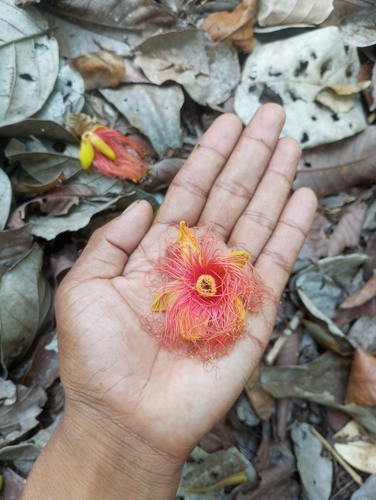
(c) Célio Moura Neto, some rights reserved (CC BY-NC), uploaded by Célio Moura Neto
iNaturalist· cc-by-nc
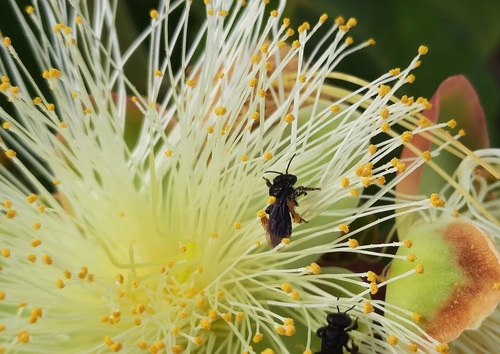
(c) leojales, some rights reserved (CC BY-NC)
iNaturalist· cc-by-nc
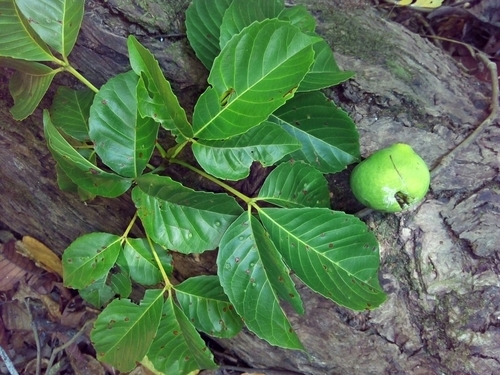
(c) leojales, some rights reserved (CC BY-NC)
Summary
Source: WikipediaCaryocar coriaceum is a species of plant in the Caryocaraceae family. It is endemic to Brazil.
Description
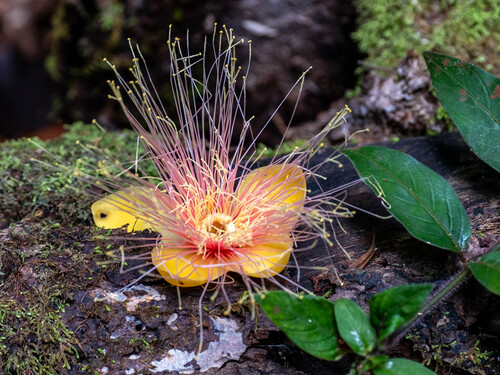
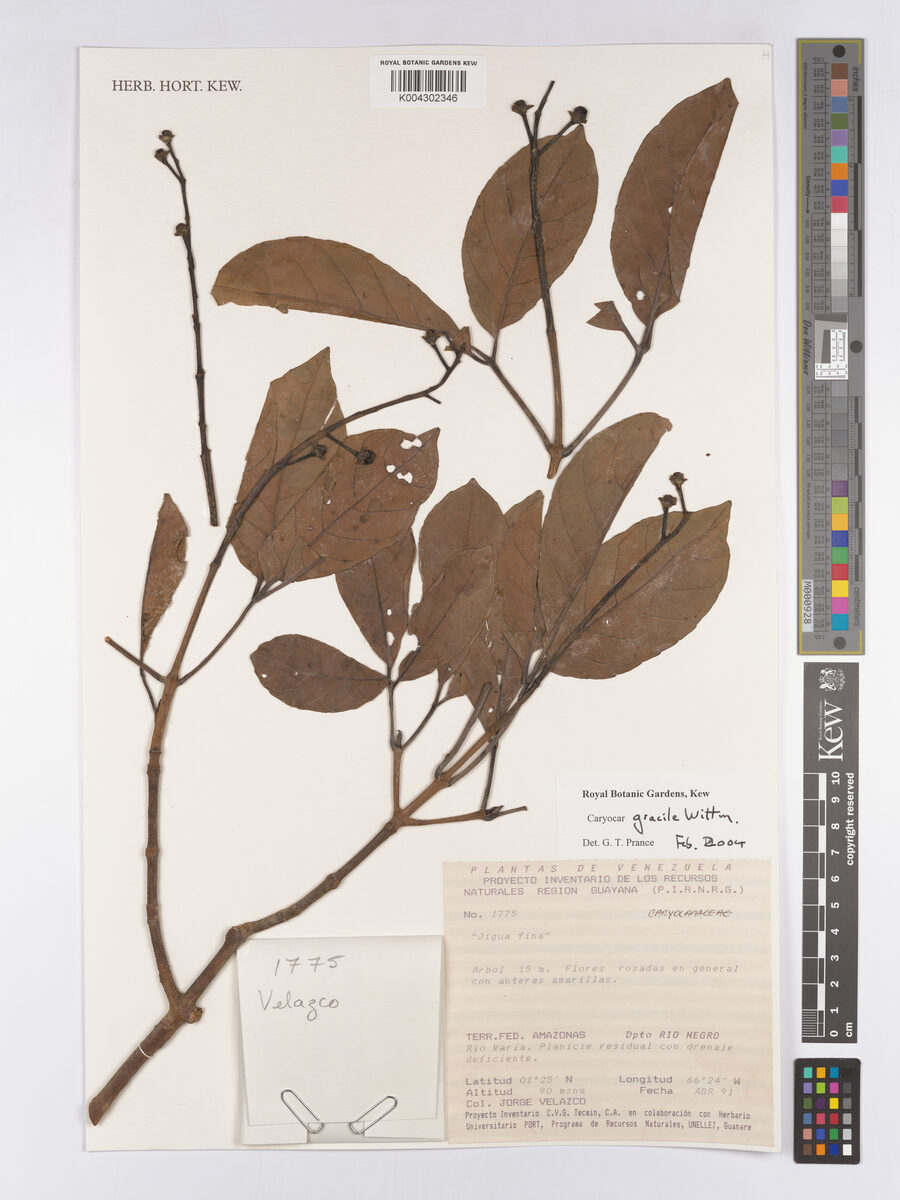
A partly deciduous tree. The trunk is twisted. It grows 8-12 m tall. The leaves are compound with 3 leaflets. The leaves are rough. The flowers are at the ends of branches. There are flowers of both sexes. The fruit are round or oblong and fleshy with a hard stone inside. There are 1-4 seeds in a woody covering that has rigid spines. The pulp is fleshy and creamy and has a sweet flavour.
Edible Uses
The fleshy pulp is usually cooked before eating and yields an edible oil. The kernel of the nut is also eaten. Both the fruit and kernels are nutritious.
Traditional Uses
The pulp of the fruit is usually cooked before eating. The kernel of the nut is also eaten. It yields an edible oil.
This uses section is brief — help expand it
Medicinal Uses
The fruit and kernels have antioxidant and anti-aging properties.
Distribution
A tropical plant. It grows in barren land in Brazil.
Where It Grows
Amazon, Brazil*, South America,
Cultivation
Plants are grown from seed. The seeds are collected from ripe fruit and removed by washing. Seeds need to be planted fresh. Seeds emerge in 80-120 days.
Propagation
Seed - best sown as soon as it is ripe, sowing the seed in individual containers placed in a sunny position. Germination rates are usually low, with the seed sprouting within 80 - 120 days.
Other Uses
The heartwood and sapwood are clearly demarcated. The wood is moderately heavy, strong, with low natural durability, difficult to work. It is used in the frames of mills, presses and for various types of cabinet making.
Other Information
The fruit and kernels are nutritious.
Notes
The Caryocaraceae occur in tropical America. There are 16 Caryocar species. They have antioxidant and anti-aging properties.
Nutrition
| Part | Moisture | kJ | kcal | Protein | Vit A | Vit C | Iron | Zinc |
|---|---|---|---|---|---|---|---|---|
| Fruit | 39.3 | 1274 | 304 | 2.4 | — | 15.9 | 1.6 | 1.2 |
| Nuts | — | — | — | — | — | — | — | — |
Also Known As
Piki
References (12)
- Bailao, E. F. L. C., et al, 2015, Bioactive Compounds Found in Brazilian Cerrado Fruits. International Journal of Molecular Sciences. 16:23760-23783 (As Caryocar spp.)
- Fagg, C. W. et al, 2015, Useful Brazilian plants listed in the manuscripts and publications of the Scottish medic and naturalist George Gardner (1812–1849). Journal of Ethnopharmacology 161 (2015) 18–29
- Grandtner, M. M. & Chevrette, J., 2013, Dictionary of Trees, Volume 2: South America: Nomenclature, Taxonomy and Ecology. Academic Press p 103
- Hunter, D., et al, 2019, The potential of neglected and underutilized species for improving diets and nutrition. Planta (2019) 250:709-729
- Leticia, Z., et al, 2015, Do Socioeconomic characteristics explain the knowledge and use of native food plants in semiarid environments in Northeastern Brazil? Journal of Arid Environments 115:53-61
Show all 12 references Hide references
- Lorenzi, H., Bacher, L., Lacerda, M. & Sartori, S., 2006, Brazilian Fruits & Cultivated Exotics. Sao Paulo, Instituto Plantarum de Estuados da Flora Ltda. p 111
- Lorenzi, H., 2009, Brazilian Trees. A Guide to the Identification and Cultivation of Brazilian Native Trees. Instituto Plantarum de Estuados da Flora Ltda. Vol. 3 p 71
- NYBG Herbarium "edible"
- Prance, Ghillean T. and Marlene Freitas da Silva, 1973, Caryocaraceae, Flora Neotropica, Vol. 12, Caryocaraceae p 29
- Wickens, G.E., 1995, Edible Nuts. FAO Non-wood forest products. FAO, Rome. p 114
- www.colecionandofrutas.org
- www.tradewindsfruit.com