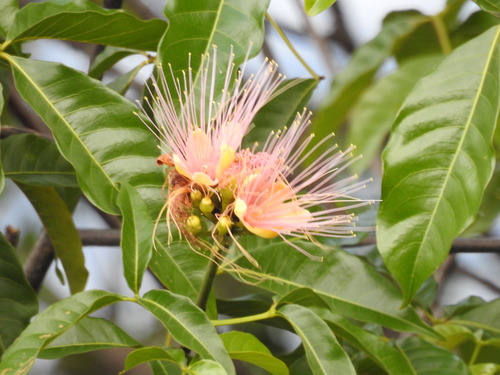
Caryocar brasiliense
A St-Hil.
Piquia-oil plant, Souari nut, Broadleaved Lucuma
iNaturalist· cc-by-nc
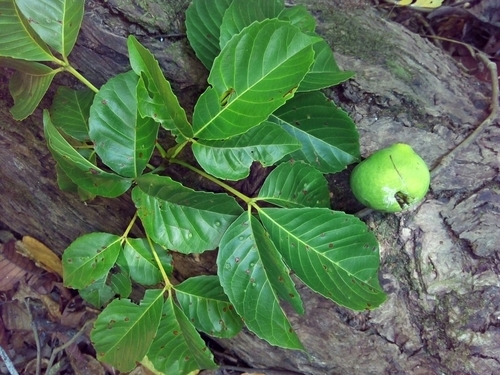
(c) Joás, some rights reserved (CC BY-NC), uploaded by Joás
iNaturalist· cc-by-nc
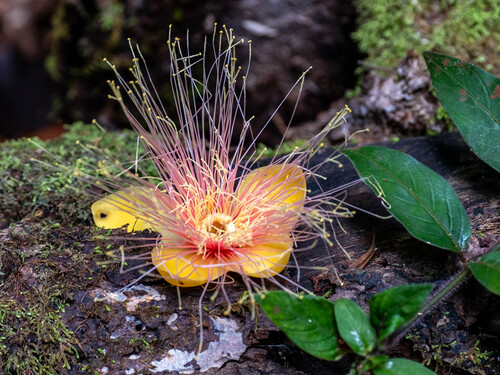
(c) AJDeberdt, some rights reserved (CC BY-NC)
iNaturalist· cc-by-nc
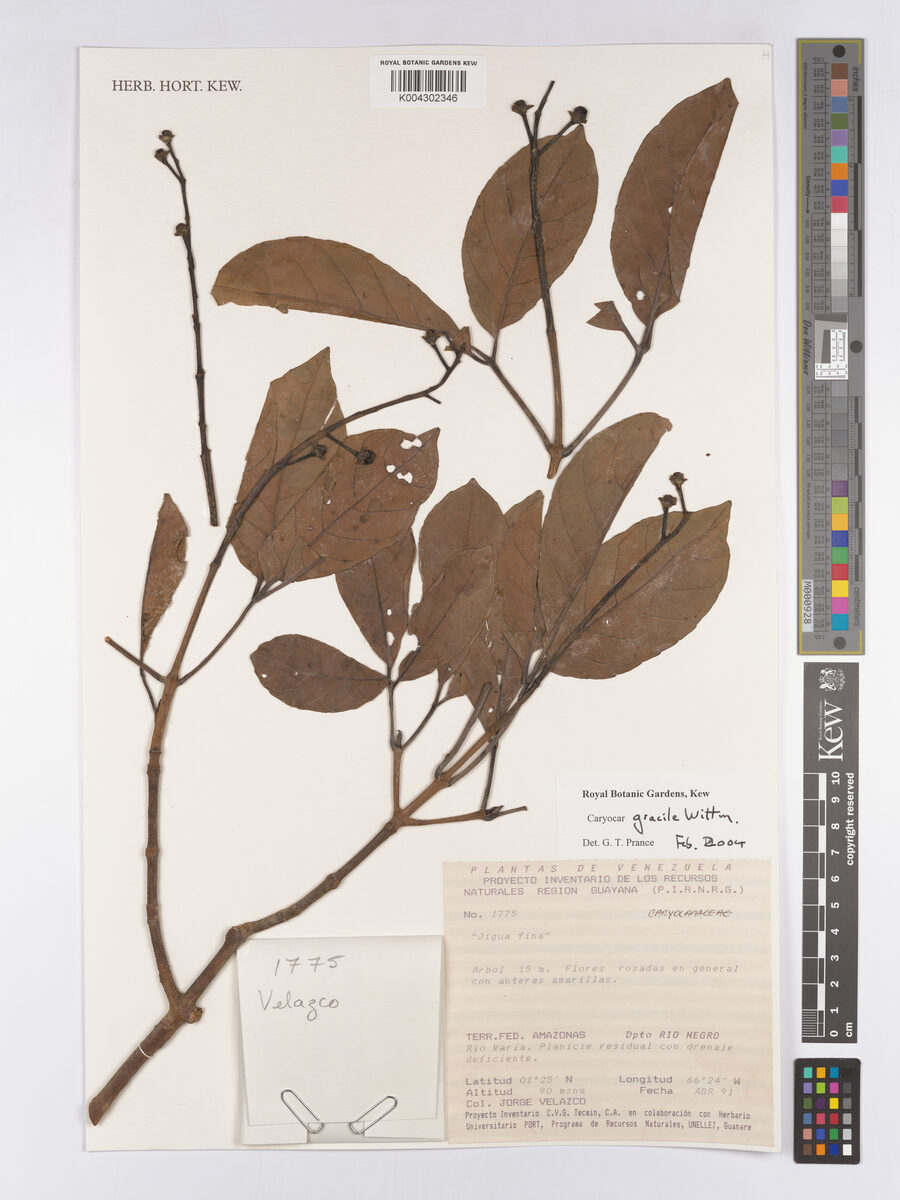
(c) Luiz Alberto Santos, some rights reserved (CC BY-NC), uploaded by Luiz Alberto Santos
Summary
Source: WikipediaCaryocar brasiliense, known as pequi (Portuguese pronunciation: [peˈki]) or souari nut, is an edible fruit popular in some areas of Brazil, especially in central-west Brazil.
Description
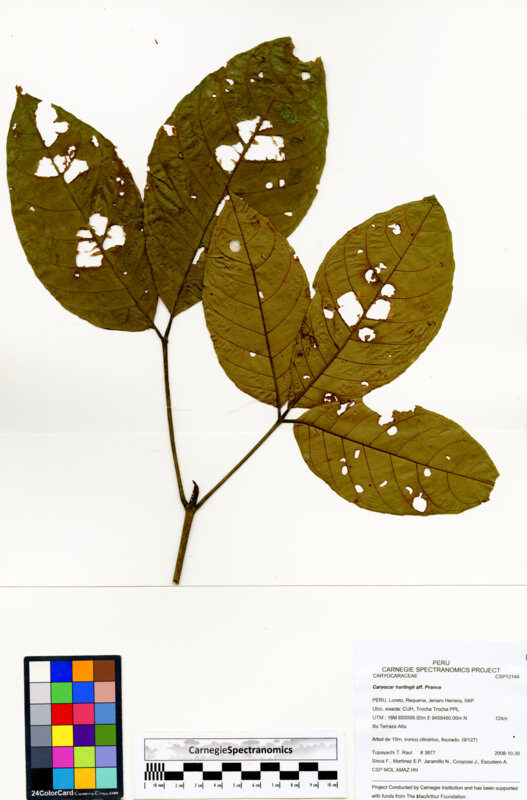
A medium sized tree. It grows 6-10 m tall. The trunk is twisted. The trunk is 20-30 cm across. The leaves are alternate. The leaves are made up of 3 leaflets. The leaflets are not equal on each half of the leaf. They are hairy. The flowers occur as 5-15 together. The fruit is green. The fruit is 4-5 cm across. It has 1-4 stones (nuts) covered by a yellow pulp. The surface of the fruit/nut is covered with very small spines and these have to be avoided. There are 2 subspecies.
Edible Uses
The oily, mucilaginous fruit of Caryocar brasiliense is nutritious, with a strongly scented, fleshy pulp and sweet flavour, though it is considered an acquired taste and is mainly used as a flavouring or famine food. It can be eaten fresh, used in sweets and liqueur, or cooked with rice along with the seed. A kind of butter and suet can be extracted from the fruit. The kernel is rarely eaten because the endocarp carries small spines that can injure the mucous membranes of the mouth. The seeds yield an edible oil used primarily for flavouring; its high melting point gives it potential as a cocoa butter substitute.
Traditional Uses
The pulp of the fruit is chewed raw. They are also cooked. The nut is chewed raw. The fruit is eaten fresh or used for sweets and liqueur. The fleshy covered pit or stone is cooked with rice to add flavour to the rice.
Medicinal Uses
The flowers, fruits and seeds are used in local medicine. The bark is diuretic and febrifuge. The fruits are used to treat the common cold and bronchitis, as is the seed oil when combined with honey. The leaves contain triterpenes, sterols and ellagic acid.
Known Hazards
The seed has a large number of small spines which can injure the mucous membranes of the mouth.
Distribution
A tropical plant. They grow naturally in the hot scrub land in North Brazil.
Where It Grows
Amazon, Argentina, Bolivia, Brazil*, Paraguay, South America,
Cultivation
Plants are grown from seed. The ripe fruit are harvested and allowed to open in the sun. The pits are dried. They can only be stored for a short time. The fresh pits with seeds inside are soaked in water for 48 hours changing the water every 12 hours. The seed germinate in 30-50 days.
Propagation
Seeds contain a germination inhibitor and can take up to one year to germinate. Stratification of the endocarp with the mesocarp removed is recommended. Alternatively, immerse seeds in warm water for 48 hours, changing the water every 12 hours. Sow in individual containers in a sunny or lightly shaded position. Pre-soaked seed can sprout within 30–50 days at a moderate germination rate. Seedlings can be planted out when 25 cm tall. Good results can also be obtained from grafting and marcottage.
Other Uses
The seed oil is used in the cosmetic industry and locally for soap-making, as an illuminant and as a lubricant. The leaves, bark and fruit pulp are a source of tannin. The wood is moderately heavy, soft and of good natural durability; it is used for engraving, construction, wooden machinery parts, furniture and fencing, as well as for fuel and charcoal production. The tree attracts wildlife and is suitable for xeriscaping, carbon farming and food forest systems.
Production
Trees grow slowly. A tree can be 1.5 m tall after 2 years. One tree can provide several thousand fruit each year.
Other Information
It is a cultivated fruit tree.
Notes
The Caryocaraceae occur in tropical America. There are 16 Caryocar species. It is an excellent source of Vitamin A. It has antioxidant properties.
Nutrition
| Part | Moisture | kJ | kcal | Protein | Vit A | Vit C | Iron | Zinc |
|---|---|---|---|---|---|---|---|---|
| Fruit | 54.6 | 1146 | 278 | 2.7 | — | 22.6 | 0.5 | 0.7 |
| Nuts | — | — | — | — | — | — | — | — |
| Fruit | 51.7 | — | 317.2 | 2.2 | — | — | — | — |
Synonyms
Also Known As
Amendoa-de-espinho, Brazilian souari nut, Choky apple, Grao-de-cavalo, Pequerim, Pequi, Pequia-pedra, Pequia, Piqui, Piquia-bravo, Piquia, Prin, Suari
References (24)
- A. F. C. P. de Saint-Hilaire, Fl. Bras. merid. 1:322, t. 67 bis. 1828
- Araujo, F. D., 1995, A review of Caryocar brasiliense (Caryocaraceae) - an Economically Valuable Species of the Centra Brazilian Cerrados. Economic Botany, 49(1): 40-48
- Bircher, A. G. & Bircher, W. H., 2000, Encyclopedia of Fruit Trees and Edible Flowering Plants in Egypt and the Subtropics. AUC Press. p 87
- Bortolotto, I. M., et al, 2015, Knowledge and use of wild edible plants in rural communities along Paraguay River, Pantanal, Brazil. Journal or Ethnobiology and Ethnomedicine. 11:46
- Bortolotto, I. M., et al, 2018, Lista preliminar das plantas alimenticias nativas de Mato Grosso do Sul, Brasil. Iheringia, Serie Botanica, Porto Alegre, 73 (supl.):101-116
Show all 24 references Hide references
- Brazil: Biodiversity for Food and Nutrition. http://www.b4fn.org/countries/brazil/
- Grandtner, M. M. & Chevrette, J., 2013, Dictionary of Trees, Volume 2: South America: Nomenclature, Taxonomy and Ecology. Academic Press p 103
- Hedrick, U.P., 1919, (Ed.), Sturtevant's edible plants of the world. p 172
- Hunter, D., et al, 2019, The potential of neglected and underutilized species for improving diets and nutrition. Planta (2019) 250:709-729
- Lorenzi, H., 2002, Brazilian Trees. A Guide to the Identification and Cultivation of Brazilian Native Trees. Vol. 01 Nova Odessa, SP, Instituto Plantarum p 94
- Lorenzi, H., Bacher, L., Lacerda, M. & Sartori, S., 2006, Brazilian Fruits & Cultivated Exotics. Sao Paulo, Instituto Plantarum de Estuados da Flora Ltda. p 110
- Martin, F. W., et al, 1987, Perennial Edible Fruits of the Tropics. USDA Handbook 642 p 91
- NYBG Herbarium "edible"
- Oliviera V. B., et al, 2012, Native foods from Brazilian biodiversity as a source of bioactive compounds. Food Research International 48 (2012) 170-179
- Paz, F. S., et al, 2021, Edible Fruit Plant Species in the Amazon Forest Rely Mostly on Bees and Beetles as Pollinators. Journal of Economic Entomology, XX(XX), 2021, 1–13
- Prance, Ghillean T. and Marlene Freitas da Silva, 1973, Caryocaraceae, Flora Neotropica, Vol. 12, Caryocaraceae p 25
- Silva, S y H. Tassara.1996. Frutas no Brasil. Empresa das Artes. São Paulo
- USDA, ARS, National Genetic Resources Program. Germplasm Resources Information Network - (GRIN). [Online Database] National Germplasm Resources Laboratory, Beltsville, Maryland. Available: www.ars-grin.gov/cgi-bin/npgs/html/econ.pl (10 April 2000)
- Vasquez, Roberto Ch. & Coimbra, German S., 1996, Frutas Silvestres Comestibles de Santa Cruz. p 88
- Wickens, G.E., 1995, Edible Nuts. FAO Non-wood forest products. FAO, Rome. p 60, 113
- Wiersema, J. H. & Leon, B., 2013, World Economic Plants. A Standard Reference CRC Press. 2nd Ed. p 148
- World Checklist of Useful Plant Species 2020. Royal Botanic Gardens, Kew
- www.colecionandofrutas.org
- www.tradewindsfruit.com