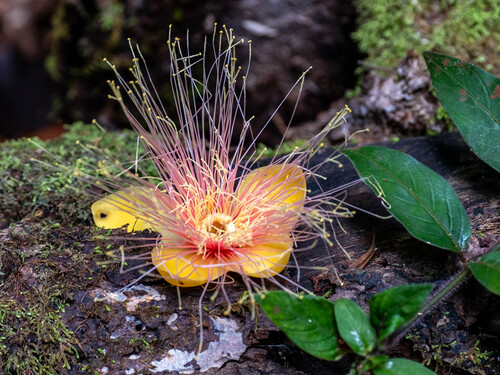
Caryocar costaricense
Donn.Sm.
Aji
iNaturalist· cc-by-nc
(c) Marvin López M., some rights reserved (CC BY-NC), uploaded by Marvin López M.
iNaturalist· cc-by-nc
(c) carohfr, some rights reserved (CC BY-NC)
iNaturalist· cc-by-nc
(c) hollytorres, some rights reserved (CC BY-NC)
Summary
Source: WikipediaCaryocar costaricense is a species of plant in the Caryocaraceae family. It is found in Colombia, Costa Rica, Panama, and Venezuela. It is threatened by habitat loss.
Description
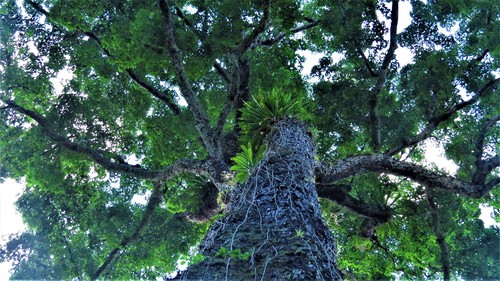
A tree. It grows 50 m tall. It has buttresses 1.5 m tall. The leaves are opposite and have 3 leaflets.
This description is brief — help expand it
Edible Uses
The fruit are cooked and eaten, and edible oil is extracted from the seeds.
Traditional Uses
The fruit are cooked and eaten. Edible oil can be extracted from the seed.
This uses section is brief — help expand it
Medicinal Uses
The bark has medicinal applications.
Distribution
It is a tropical plant. It grows in the moist lowlands.
Where It Grows
Central America, Colombia, Costa Rica, Panama, Venezuela,
Cultivation
A tree of moist lowland tropical areas.
Other Uses
The solid timber is used for constructing bridges, railroad ties etc. The heartwood is yellowish to light grayish-brown; it is hardly separable from the sapwood. The texture is medium to rather coarse; the grain interlocked; fresh material has a mild vinegary scent, but there is no discernible odour or taste when dry. The heartwood is rated as very durable in resistance to both brown-rot and white-rot fungi; classified as resistant to dry-wood termites and moderately resistant to marine borers. It is said to be easy to moderately difficult to saw, producing a rapid dulling of cutting edges; radial faces are difficult to finish smoothly because of interlocked grain. The wood is used for general and marine construction, heavy flooring, railway crossties, boat parts, furniture components; it is especially suitable where hardness and high wear resistance are needed.
Also Known As
Ajillo, Ajo, Almendro de bajo, Almendrillo, Almendro, Almendron, Cagui, Firme, Genene, Manu, Maqui-maqui, Pequia, Pequia brava, Pete rana do terra firme, Pete’, Pete-rana, Plomillo, Rana do terra
References (1)
- Flora of Panama