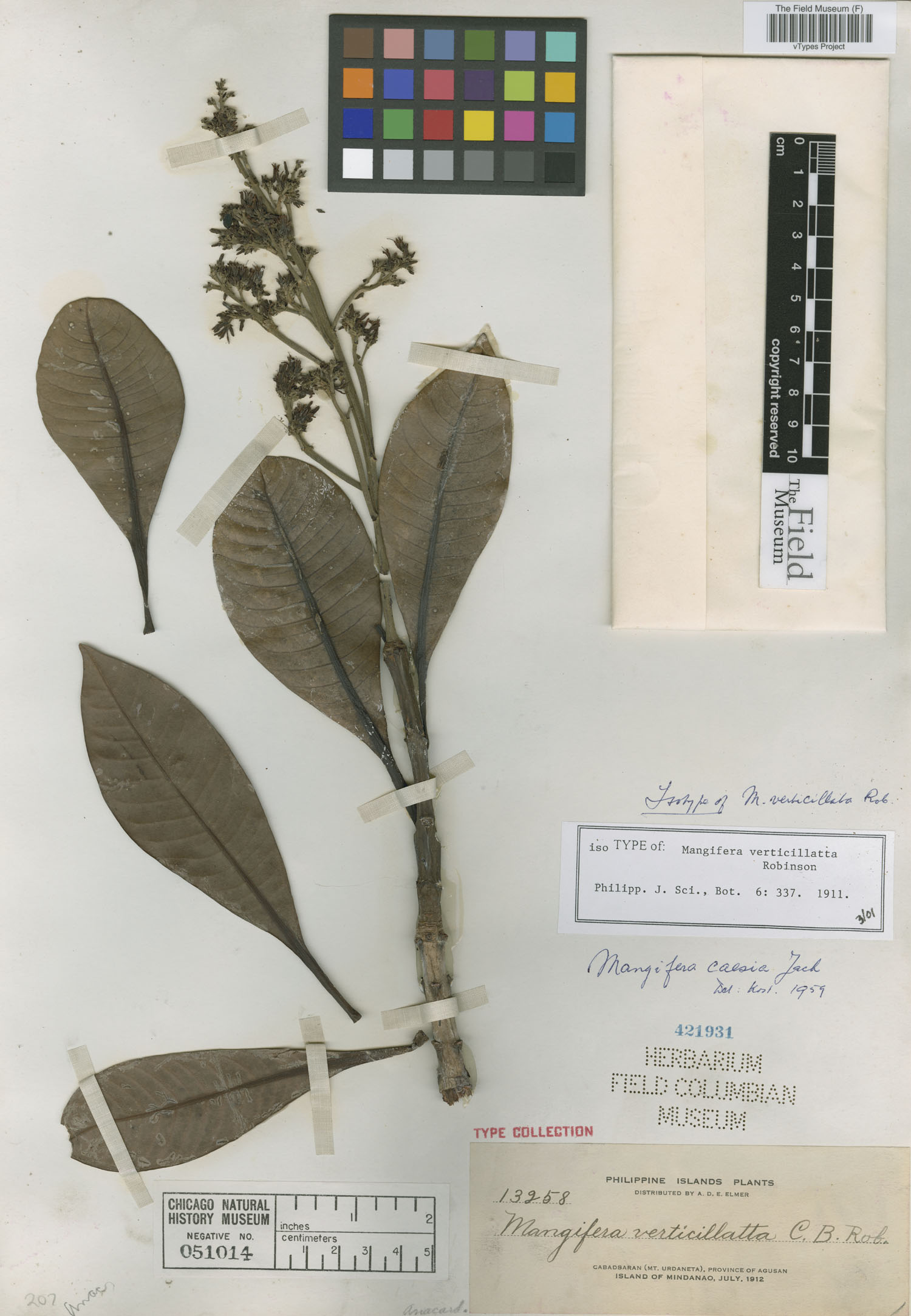
Anacardium giganteum
W. Hancock ex Engl.
Cajui, Giant cashew
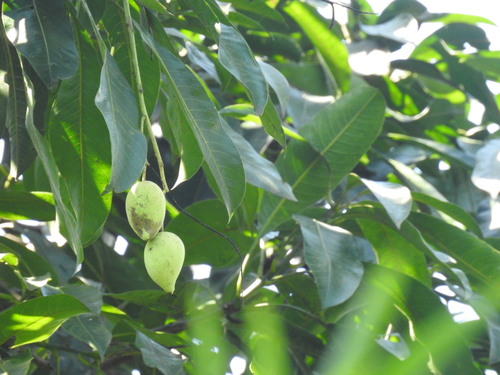
iNaturalist· cc-by-sa
(c) Sidnei Dantas, some rights reserved (CC BY-SA), uploaded by Sidnei Dantas
iNaturalist· cc-by-nc
(c) Royal Botanic Garden Edinburgh, some rights reserved (CC BY-NC)
iNaturalist· cc-by-sa
(c) Sidnei Dantas, some rights reserved (CC BY-SA)
Summary
Source: WikipediaAnacardium giganteum, also known as cajui, of the family Anacardiaceae are the trees that are huge, round and mostly straight, and occur usually in the upland rainforest and sometimes appear in the high flood plains that holds the soil, resistant to water-log. The fruit is edible and very sweet. Other names: Javillo, Cornonzuelo, Espave. The wood is used for temporary moulding on construction works. It is of low quality with coarse fibers. It bends and split when drying out. So it is used just after sawing. This wood contains silica, so it needs special saws to cut because it wears the metal very soon and for the same reason it is resistant to boring insects. It can be used as rootstock for other cashew varieties.
Description
An evergreen tree. It grows 25-30 m high. The trunk is 50-90 cm across. The bark is almost smooth. The leaves are 14-20 cm long and 8-12 cm wide. The flowers are pink but turn red. They have a scent. The fruit stalk becomes large and soft. It is 4 cm long. The nut is attached to it.
Edible Uses
The fleshy enlarged flower stalks are eaten green, cooked, or roasted, and are also made into an alcoholic beverage. The nuts are roasted and eaten.
Traditional Uses
The fleshy enlarged flower stalks are eaten green, cooked or roasted. They are also made into an alcoholic beverage. Caution: Alcohol is a cause of cancer. The nuts are roasted and eaten.
Medicinal Uses
The bark and leaf, boiled with the bark or fruit of the guava (Psidium guajava), is drunk in the treatment of coughs and dysentery. The bark and fruit are used in the treatment of diarrhoea, cancerous ulcers, and syphilis. A decoction of the bark is used to treat venereal diseases, iron deficiency, vomiting and sore throat. The bark is scraped, boiled, and the liquid drunk as an anti-diarrhoeal. The fruit is used in the treatment of diarrhoea.
Known Hazards
Alcohol made from the fruit stalk is a cause of cancer.
Distribution
It is a tropical plant. It grows in drier areas in the Amazon in Brazil. It suits the hot humid tropical lowlands.
Where It Grows
Amazon, Bolivia*, Brazil*, Colombia, Guianas, Guyana, Peru, South America, Suriname, Venezuela,
Cultivation
Plants are grown from seed. The ripe fruit are harvested and the nut removed for planting. The nut is soaked in water for 48 hours before planting, changing the water each 8 hours. Seeds germinate in 15-25 days. They are kept in light shade until planted in the field.
Propagation
Seed - it contains water-soluble germination inhibitors, which can be removed by soaking the seeds in cold water for 48 hours, changing the water every 8 hours. Sow the seeds in individual containers in a semi-shaded position - the germination rate of treated seed is usually high, with the seed sprouting within 15 - 25 days. Grow the seedlings on in a semi-shaded position until they are more than 30cm tall, by which time they can be planted in fairly open positions.
Other Uses
The wood is light in weight, smooth to cut, with a low resistance to wood-eating insects. The heartwood and sapwood are not differentiated. It is used to make low value items such as wood laminas, fillings for furniture, light boxes etc.
Production
Plants grow at a moderate rate. They can be 2 m tall in 2 years. The stalk ripens within 3-4 months during the rainy season.
Other Information
The fruit or fattened fruit stalk is popular.
Notes
There are 8-11 Anacardium species. They grow in tropical America.
Also Known As
Akayu-u, Boesi-kasjpe, Cajuacu, Cajuda-mata, Caju do matto, Hubudi, Merehi, Merey, Oloi, Sacha casho, Sacha cashu, Ubudi
References (24)
- Bircher, A. G. & Bircher, W. H., 2000, Encyclopedia of Fruit Trees and Edible Flowering Plants in Egypt and the Subtropics. AUC Press. p 26
- Cavalcante, P.B. 1991. Frutas comestíveis da Amazônia. Edições CEJUP.
- Facciola, S., 1998, Cornucopia 2: a Source Book of Edible Plants. Kampong Publications, p 9
- Grandtner, M. M. & Chevrette, J., 2013, Dictionary of Trees, Volume 2: South America: Nomenclature, Taxonomy and Ecology. Academic Press p 29
- Kermath, B. M., et al, 2014, Food Plants in the Americas: A survey of the domesticated, cultivated and wild plants used for Human food in North, Central and South America and the Caribbean. On line draft. p 60
Show all 24 references Hide references
- Lorenzi, H., et al, 2006, Brazilian Fruits & Cultivated Exotics. Instituto Plantarum de Estudos da Flora LTDA. p 33
- Lopez-Diago, D. & Garcia, N., 2021, Wild edible fruits of Colombia. Biota ColomBiana 22 (2)
- Useful plants of Guyana. Non-Timber Forest Products of the North-West District of Guyana Part 1. p 282
- Useful plants of Guyana. Non-Timber Forest Products of the North-West District of Guyana Part 2. p 11
- Johnson, M. and Colquhoun, A., 1996, Preliminary Ethnobotanical Survey of Kurupukari: An Amerindian Settlement of Central Guyana. Economic Botany, Vol. 50, No. 2, pp. 182-194
- Lorenzi, H., 2002, Brazilian Trees. A Guide to the Identification and Cultivation of Brazilian Native Trees. Vol. 02 Nova Odessa, SP, Instituto Plantarum p 17
- Lorenzi, H., Bacher, L., Lacerda, M. & Sartori, S., 2006, Brazilian Fruits & Cultivated Exotics. Sao Paulo, Instituto Plantarum de Estuados da Flora Ltda. p 33
- C. F. P. Martius, Fl. bras. 12(2):410. 1876 "A. giganteum Hance"
- Martin, F. W., et al, 1987, Perennial Edible Fruits of the Tropics. USDA Handbook 642
- Mitchell, J.D. and S.A. Mori. 1987. The cashew and its relatives (Anacardium: Anacardiaceae). Mem. NY Bot. Gard
- Paz, F. S., et al, 2021, Edible Fruit Plant Species in the Amazon Forest Rely Mostly on Bees and Beetles as Pollinators. Journal of Economic Entomology, XX(XX), 2021, 1–13
- Roa, J. A. G. & Boada, D. S. G., 2018, Fundación para el Fortalecimiento de la Fruticultura y Plantas Alimenticias no Convencionales en Colombia.
- Smith, N., Mori, S.A., et al, 2004, Flowering Plants of the Neotropics. Princeton. p 16
- van Roosmalen, M.G.M., 1985, Fruits of the Guianan Flora. Utrecht Univ. & Wageningen Univ. p 1
- Vasquez, R. and Gentry, A. H., 1989, Use and Misuse of Forest-harvested Fruits in the Iquitos Area. Conservation Biology 3(4): 350f
- Villachica, H. 1996. Frutales y hortalizas promisorios de la Amazonía. Tratado de Cooperación Amazónica.
- Wickens, G.E., 1995, Edible Nuts. FAO Non-wood forest products. FAO, Rome. p 105
- World Checklist of Useful Plant Species 2020. Royal Botanic Gardens, Kew
- www.colecionandofrutas.org