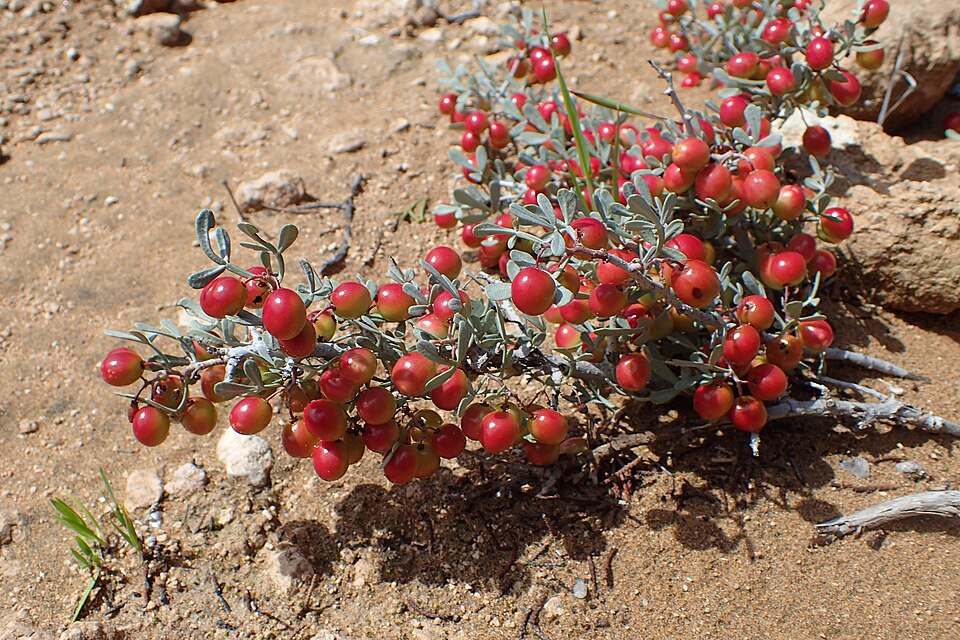
Mangifera torquenda
Kosterm.
Tayas mango
gbif· cc0
President and Fellows of Harvard College
Summary
Source: WikipediaMangifera torquenda is a species of flowering plant, a fruit tree in the mango family, that is native to Southeast Asia.
Description
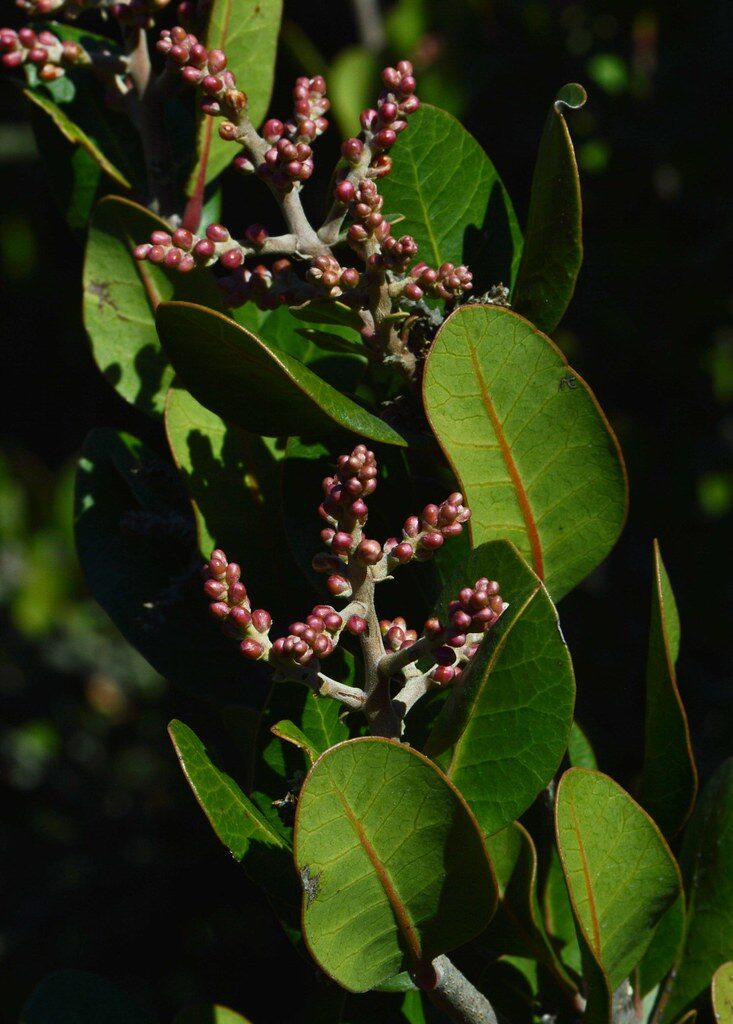
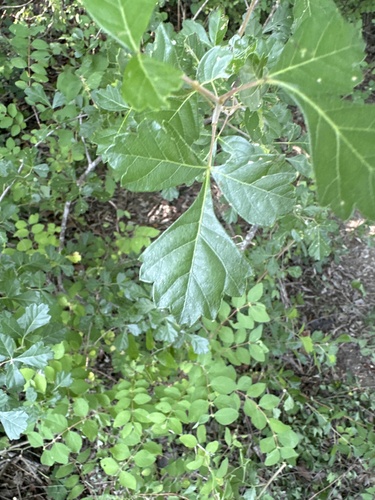
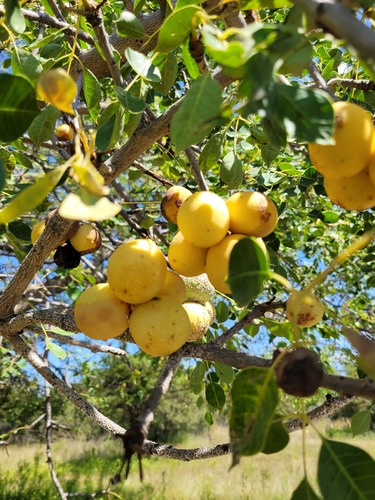
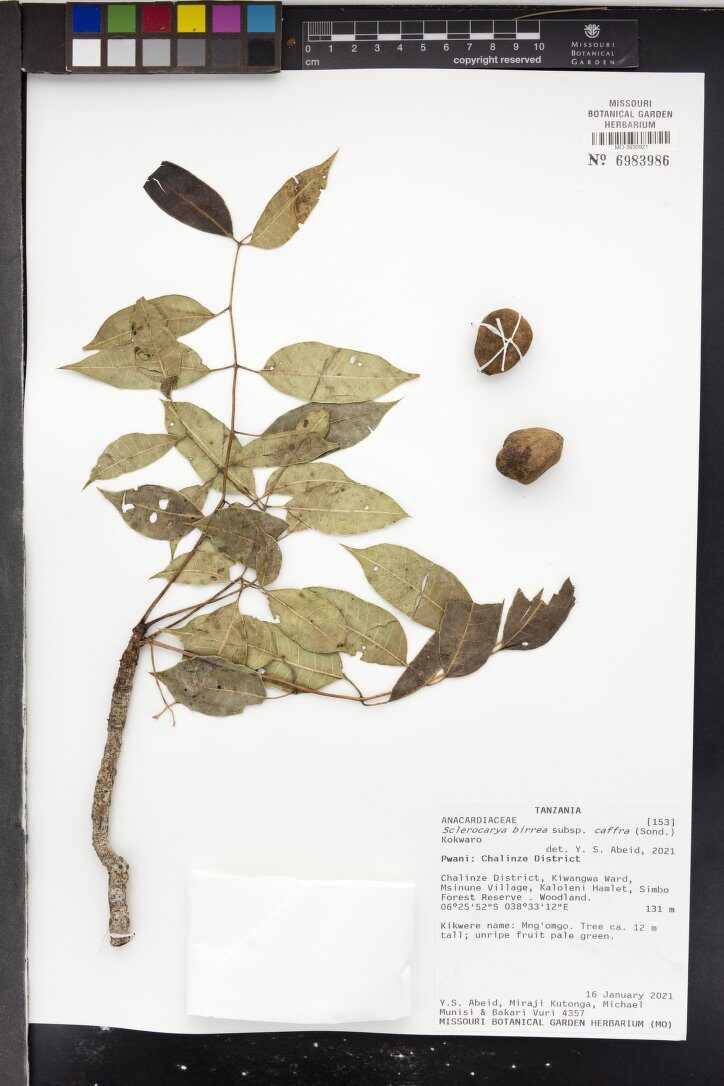
A tree. It grows 36 m high. The trunk is 60 cm across. The bark is grey and has shallow cracks. The leaves are arranged in spirals. They are thick and leathery. They are 13-23 cm long by 4-8 cm wide. The base is rounded or wedge shaped. The edges curve back. The leaf stalk is 2-7 cm long. The flowering stalks are near the ends of the branches. The flowers have a sweet scent. They are pale yellow. The fruit is round and 7.5 cm long by 6.5 cm wide. It is yellowish-green with darker spots. The pulp is pale yellow. The seeds have a grooved surface.
Edible Uses
The fruit is eaten fresh by peeling it with a cross-section and twisting the halves in opposite directions. Both green and ripe fruits are used for pickles and drinks.
Traditional Uses
The fruit is eaten. It is peeled by making a cross-section and twisting the two halves in opposite directions. The green and ripe fruits are used for pickles. The fruit are also used for drinks.
Known Hazards
The sap of the fruit has been known to cause itching to the mouth (this is more likely to be cause by the fruit rind, and not the pulp). Prior to eating, it is advisable to plunge a knife into the fruit near the stalk so that the irritant milky juice exudes.
Distribution
It is a tropical plant. It grows in lowland and hill forests up to 800 m above sea level.
Where It Grows
Asia, Indonesia, Malaysia, SE Asia,
Cultivation
Plants can be grown from seeds.
Other Uses
The heartwood is dark brown with black bands; it is not clearly demarcated from the dirty-white sapwood.
Other Information
It is cultivated.
Notes
An unresolved name in The Plant List.
Also Known As
Kemantan, Lamantan, Pohon mangga tayas
References (5)
- Mulyoutami, E., et al, 2009, Local knowledge and management os simpikng (forest gardens) among the Dayak people in East Kalimatan, Indonesia. Forest Ecology and Management. 257:2054-2061
- Siong, K. H., 2003, Indigenous Fruits of Sarawak. ITTO & Sarawak Forest Department. p 13
- Soepadmo, E. and Wong, K. M. and Saw, L. G., 1996, Tree Flora of Sabah and Sarawak. Forestry Malaysia. Volume Two. p 46
- Sukarya, D. G., (Ed.) 2013, 3,500 Plant Species of the Botanic Gardens of Indonesia. LIPI p 383
- Wong, K. C., 1995, Collection and Evaluation of Under-Utilized Tropical and Subtropical Fruit Tree Genetic Resources in Malaysia. JIRCAS International Symposium Series No. 3: 27-38