Voanioala gerardii
J. Dransf.
Voa-nio-ala
iNaturalist· cc0
no rights reserved, uploaded by Romer N. Rabarijaona
iNaturalist· cc-by-nc
(c) Bill Baker, some rights reserved (CC BY-NC)
iNaturalist· cc-by-nc
(c) Bill Baker, some rights reserved (CC BY-NC)
Description
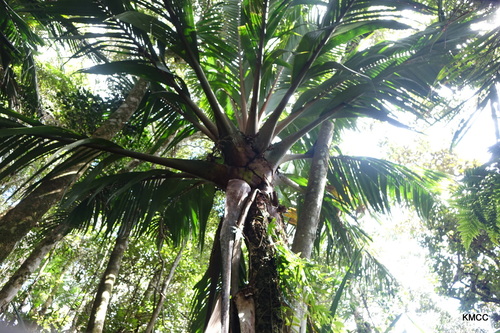
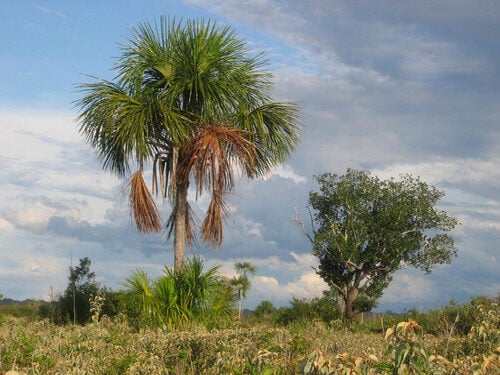
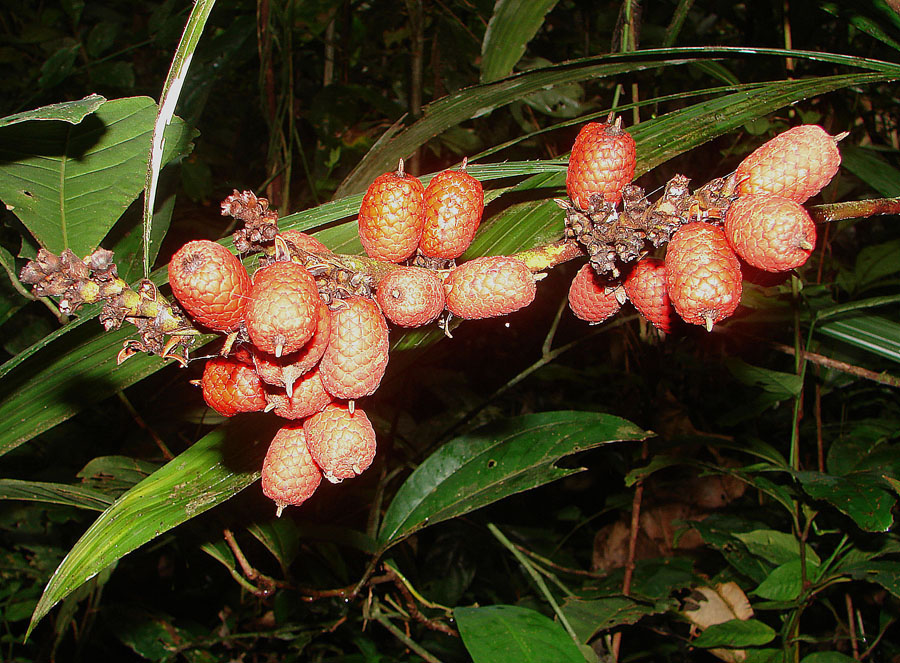
A solitary palm. It grows 15-20 m tall. It has a large root boss about 1 m across. The trunk is about 35 cm across. It is brown with indented rings of leaf base scars. The leaf crown is less than a half circle. The leaves are 5 m long. The leaflets are dark green and leathery. They are 1.6 m long. They are regularly spaced and stiff. The flowering stalk is 1.6 m long. It grows erect from the leaf crown but bends over with fruit. The mature fruit are bright red. They are 9 cm long. There are fibres over the seeds.
Edible Uses
The apical bud and young leaves are cooked and used as a vegetable. Harvesting this bud leads to the death of the tree since it is unable to make side branches.
Distribution
A tropical plant. It grows in swampy valley bottoms at about 400 m altitude in Madagascar.
Where It Grows
Africa, East Africa, Madagascar,
Cultivation
Prefers a warm, moist, well drained position. This species is thought perhaps to have been the ancestor of the coconut that we know today. Even though the nut only measures about 5cm x 7cm and weighs approximately 100 - 120 grams, the close relationship with the modern coconut, Cocos nucifera , can be observed in the similarities of the arrangement of the inflorescences and in the physical structure of the fruits (nuts).
Propagation
Seed - difficult to germinate and very slow growing.
Production
It is slow growing.
Notes
There is only one Voanioala species.
References (6)
- Dransfield, J. & Beentje, H., 1995, The Palms of Madagascar. Royal Botanical Gardens, Kew and The International Palm Society. p 446
- Haynes, J., & McLaughlin, J., 2000, Edible palms and Their Uses. University of Florida Fact sheet MCDE-00-50-1 p 2
- Johnson, D.V., 1998, Tropical palms. Non-wood Forest products 10. FAO Rome. p 115
- Kew Bull. 44:195. 1989
- Riffle, R.L. & Craft, P., 2003, An Encyclopedia of Cultivated Palms. Timber Press. p 471
Show all 6 references Hide references
- Schatz, G.E., 2001, Generic Tree Flora of Madagascar. Royal Botanical Gardens, Kew and Missouri Botanical Garden. p 71