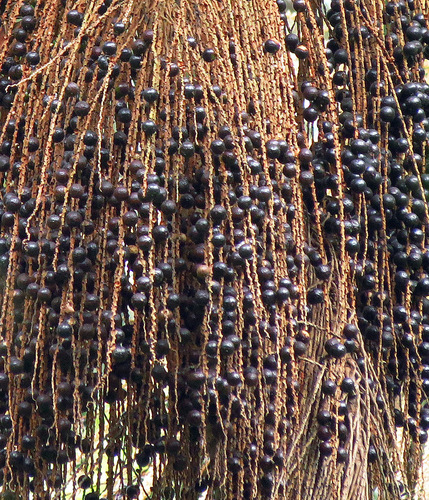
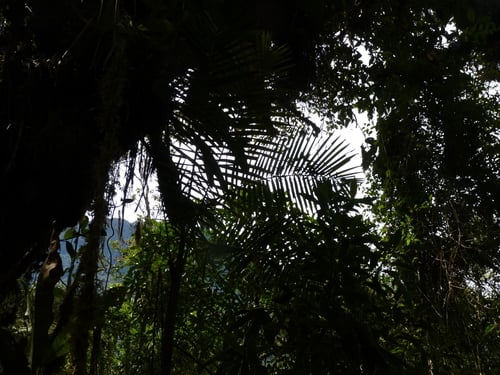
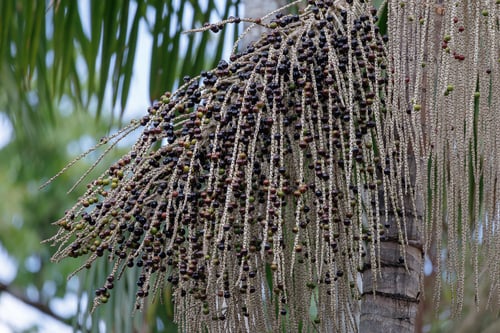
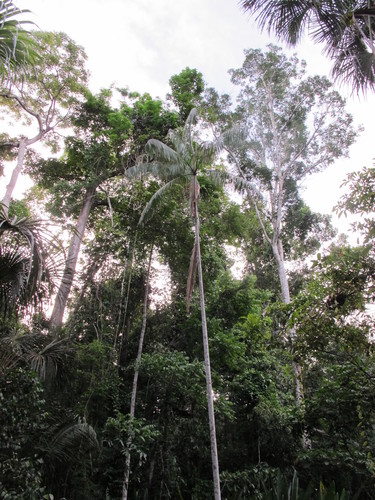
Ravenea sambiranensis
Jum. & H Perrier,
Anivo
iNaturalist· cc-by
(c) Louis Aureglia, some rights reserved (CC BY), uploaded by Louis Aureglia
iNaturalist· cc-by
(c) Louis Aureglia, some rights reserved (CC BY)
Summary
Source: WikipediaRavenea sambiranensis is a species of flowering plant in the family Arecaceae. It is found only in Madagascar. It is threatened by habitat loss.
Description
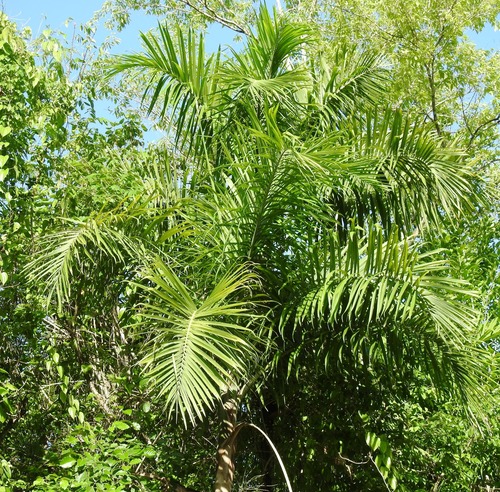
A large palm. It grows to 30 m high. The trunk is 30 cm across. The leaf crown is dense and erect. The leaves or young palms are straight and do not arch but in older plants are curved. The leaflets grow in a single flat plane. The leaflets are narrowly sword shaped and 60-100 cm long. They grow in a V shape.
Edible Uses
The apical bud, often known as a 'palm heart', is eaten as a vegetable. It is often cooked with manioc. It has a somewhat bitter flavour. Eating this bud leads to the death of the tree because it is unable to make side shoots. The fruits are also consumed.
Distribution
A tropical plant. It grows from sea level to 2000 m altitude in Madagascar. It grows in rainforest as well as on drier slopes. It suits humid locations. It needs well drained soil.
Where It Grows
Africa, East Africa, Madagascar,
Cultivation
A dioecious species, both male and female forms need to be grown if fruit and seed are required.
Other Uses
The black outer wood is very hard. It is suitable for making planks for floorboards.
Synonyms
Also Known As
Anivona, Mafabely, Ramangaisina, Soindro
References (6)
- Dransfield, J. & Beentje, H., 1995, The Palms of Madagascar. Royal Botanical Gardens, Kew and The International Palm Society. p 83
- Haynes, J., & McLaughlin, J., 2000, Edible palms and Their Uses. University of Florida Fact sheet MCDE-00-50-1 p 12
- Johnson, D.V., 1998, Tropical palms. Non-wood Forest products 10. FAO Rome. p 115
- Riffle, R.L. & Craft, P., 2003, An Encyclopedia of Cultivated Palms. Timber Press. p 433
- van der Burg, W.J., 2004. Ravenea robustior Jum. & H.Perrier. [Internet] Record from Protabase. Grubben, G.J.H. & Denton, O.A. (Editors). PROTA (Plant Resources of Tropical Africa), Wageningen, Netherlands. < http://database.prota.org/search.htm>. Accessed 22 October 2009
Show all 6 references Hide references
- World Checklist of Useful Plant Species 2020. Royal Botanic Gardens, Kew