Dypsis madagascariensis
(Beccari) Beentje & J, Dransfield
Green Cane Palm, Malagasy palm
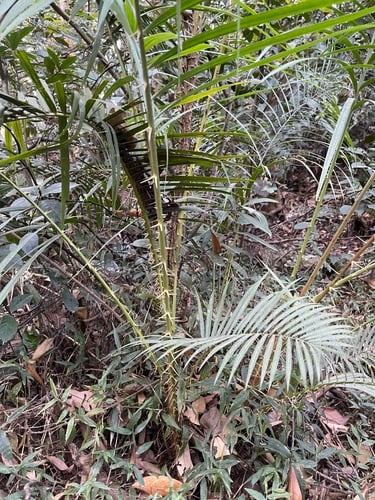
iNaturalist· cc-by-nc
(c) merveille, some rights reserved (CC BY-NC), uploaded by merveille
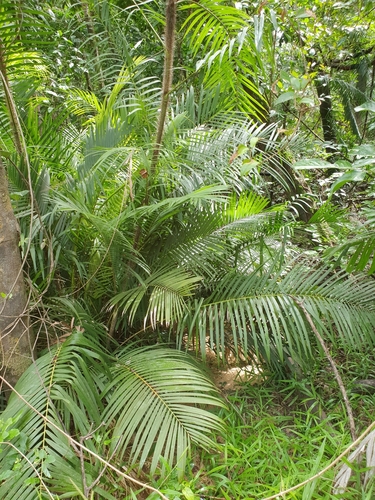
iNaturalist· cc-by-nc
(c) James Lefebvre, some rights reserved (CC BY-NC)
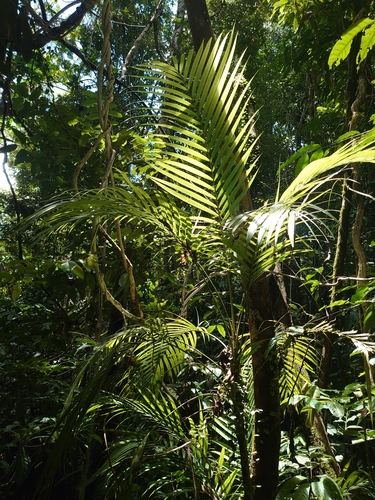
iNaturalist· cc-by-nc
(c) jeanjacquesgodon, some rights reserved (CC BY-NC)
Summary
Source: WikipediaDypsis madagascariensis (commonly known as the lucuba palm) is a species of flowering plant in the family Arecaceae. It is found only in Madagascar. It is threatened by habitat loss.
Description
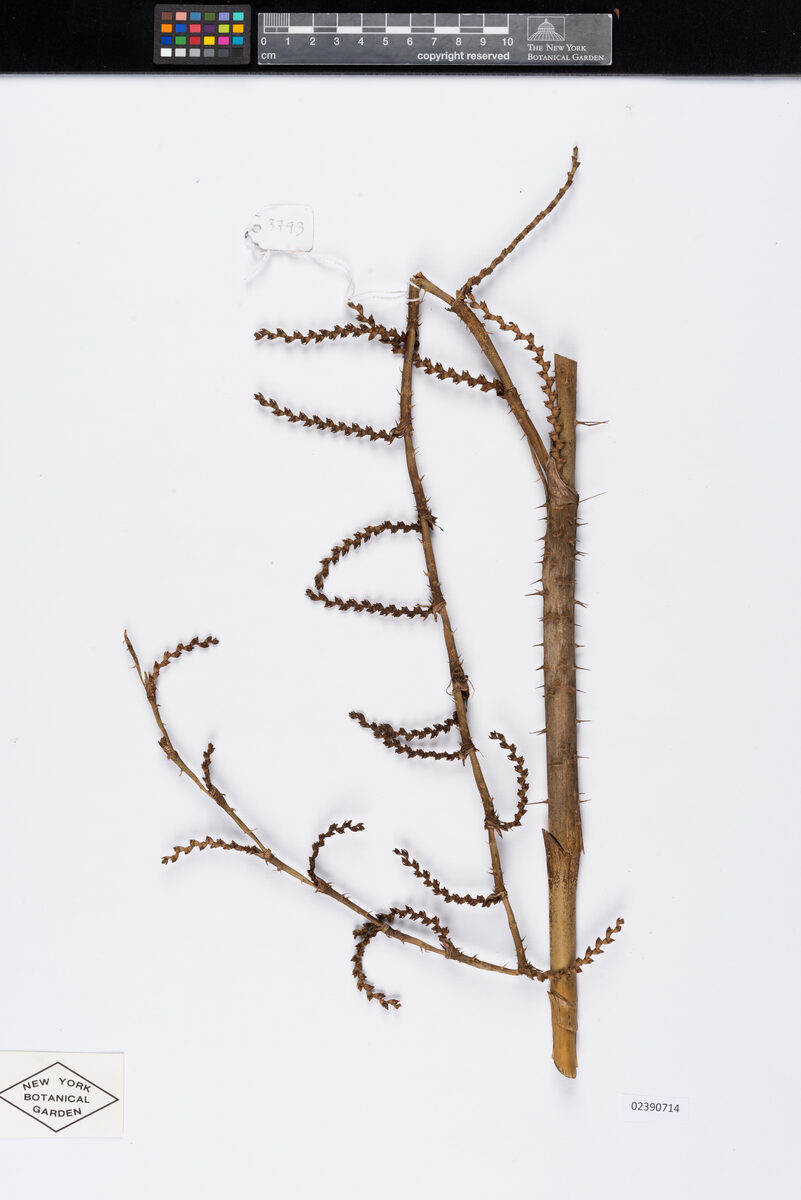
It can be a solitary palm or in tufts of 2-4. It grows 2-18 m tall. The trunk is 7-20 cm across. They are slightly swollen near the base. It tapers towards the top. They are greyish-green with prominent rings of leaf scars. The leaf crown is 7 m wide and 5 m tall. The crown-shaft is 25 cm high. It is smooth and light green. The leaves are feather like. The leaves are 3.1 m long and stiffly arch over. The leaves are in three rows up the trunk and have a sheathing base. There is a white mealy layer on the top of the sheath. The leaflets are 50 cm long and dark green. They grow in small groups. They come out at different angles giving a feathery appearance. The leaflets vary in shape and colour. The flowering stalks have broad branches and then many fine smaller branches. The flowers are yellow. The fruit are 1.5 cm long and oval and black.
Edible Uses
The fruit, palm heart, and cabbage (growing tip) are all edible and commonly used as vegetables.
Medicinal Uses
The plant (parts not specified but probably the bark and/or the fruits) is used in the treatment of headaches, jaundice and hepatitis; and also as an aid to lactation.
Distribution
A tropical plant. It grows in dry open forests. It cannot tolerate cold. It does best in full sun. It can tolerate drought but does best with adequate moisture. It can grow on a range of soils but they must be well drained. A tropical plant. In the Cairns Botanical Gardens (As Chrysalidocarpus lucubensis). In Brisbane Botanical gardens. In Townsville palmetum.
Where It Grows
Africa, Asia, Australia, Central America, East Africa, Hawaii, Indonesia, Madagascar*, Marquesas, Mayotte, Pacific, Panama, SE Asia, USA,
Cultivation
Plants can be grown from seeds.
Propagation
Seed - germinates easily when fresh. Pre-soak the seeds in water for 3 days prior to sowing - germination should then start within 2 weeks with up to 90% of the seeds sprouting. Growth is fast, with seedlings reaching a height of around 120 cm after one year, by which time they are ready to plant out.
Other Uses
The wood is very hard because of an outer layer of tough fibres. It is commonly used for floorboards of houses. Only the lower portion of mature trees are used for their timber, as the upper portions and the whole trunks of young plants are too soft to produce durable planks. This lower portion is cut in up to 3 sections, each 3 - 4 metres long. The sections are split in half, and the soft core is removed to produce 2 curved planks. The bark is scraped off, and the planks are tied together in bundles of 4 - 6.
Notes
There are 140 Dypsis species.
Synonyms
Also Known As
Farihazo, Herihery, Hirihiry, Kizohazo, Kindro, Kizohazo, Madiovozona, Palem dypsis madagaskar
References (16)
- Balick, M.J. and Beck, H.T., (Ed.), 1990, Useful palms of the World. A Synoptic Bibliography. Colombia p 121 (As Chrysalidocarpus lucubensis), 334 (As Chrysalidocarpus oleraceus),
- Blomberry, A. & Rodd, T., 1982, Palms. An informative practical guide. Angus & Robertson. p 84 (As Chrysalidocarpus lucubensis)
- Dransfield, J. & Beentje, H., 1995, The Palms of Madagascar. Royal Botanical Gardens, Kew and The International Palm Society. p 186
- Grubben, G. J. H. and Denton, O. A. (eds), 2004, Plant Resources of Tropical Africa 2. Vegetables. PROTA, Wageningen, Netherlands. p 561
- Haynes, J., & McLaughlin, J., 2000, Edible palms and Their Uses. University of Florida Fact sheet MCDE-00-50-1 p 6
Show all 16 references Hide references
- Hibbert, M., 2002, The Aussie Plant Finder 2002, Florilegium. p 66 (See Dypsis) (As Chrysalidocarpus lucubensis)
- Johnson, D.V., 1998, Tropical palms. Non-wood Forest products 10. FAO Rome. p 113
- Jones, D.L., 1994, Palms throughout the World. Smithtonian Institution, Washington. p 185 (As Chrysalidocarpus lucubensis)
- Jones, D.L., 2000, Palms of Australia 3rd edition. Reed/New Holland. p 145 (As Chrysalidocarpus lucubensis)
- Lemmens, R.H.M.J., 2007. Dypsis madagascariensis (Becc.) Beentje & J.Dransf. [Internet] Record from Protabase. Louppe, D., Oteng-Amoako, A.A. & Brink, M. (Editors). PROTA (Plant Resources of Tropical Africa), Wageningen, Netherlands. < http://database.prota.org/search.htm>. Accessed 15 October 2009.
- Marinelli, J. (Ed), 2004, Plant. DK. p 368
- Reitveld, S., 2013, The Animals and Plants of the Zazamalala Forest in Western Madagascar. p 47
- Riffle, R.L. & Craft, P., 2003, An Encyclopedia of Cultivated Palms. Timber Press. p 330
- Staples, G.W. and Herbst, D.R., 2005, A tropical Garden Flora. Bishop Museum Press, Honolulu, Hawaii. p 623
- Sukarya, D. G., (Ed.) 2013, 3,500 Plant Species of the Botanic Gardens of Indonesia. LIPI p 776
- World Checklist of Useful Plant Species 2020. Royal Botanic Gardens, Kew