Syagrus inajai
(Spruce) Becc.
Inajai
iNaturalist· cc-by-nc
(c) Renata Xavier, some rights reserved (CC BY-NC), uploaded by Renata Xavier
iNaturalist· cc-by-nc
(c) Marcio Santos Ferreira, some rights reserved (CC BY-NC)
Description
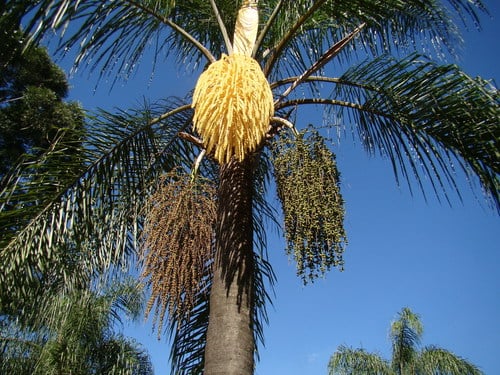
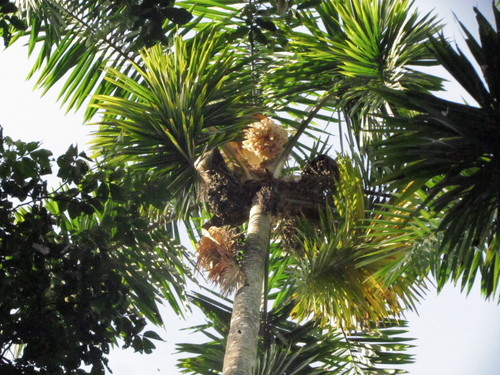
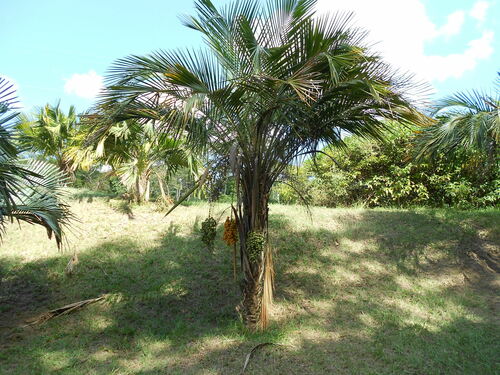
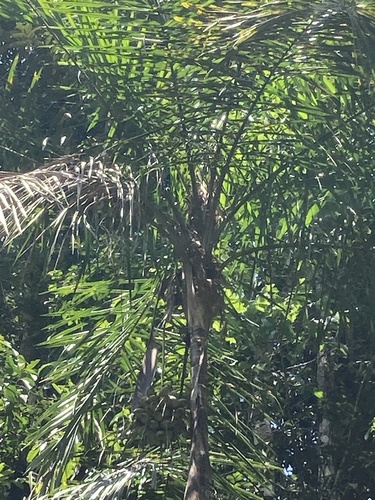
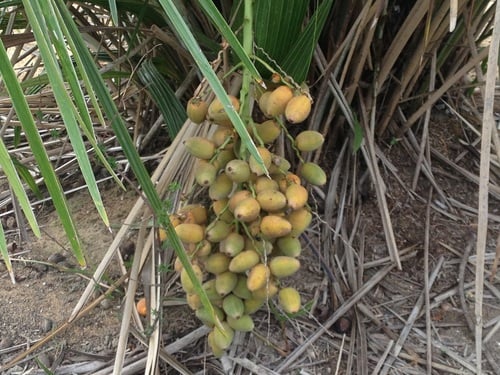
A solitary palm. It grows 16 m high. The trunk is 15 cm across. There are 15-18 leaves. The leaves are 3.3 m long. There are 51-110 leaflets on each side of the leaf. The leaflets are narrow and limp. They grow at different angles and hang down. The leaflets are in clusters of 2-7. The flowering stalk has a woody bract. There are 14-35 flowering branches. The fruit are oval. They are 3.2-4.5 cm long by 2-3 cm wide. They are yellow.
Edible Uses
The fruit and seeds are eaten.
Medicinal Uses
Pneumatophores from the roots of adult trees are broken into small pieces and made into a cold decoction. This is used in the treatment of measles, since the preparation refreshes the skin and reduces itching for the duration of the illness.
Distribution
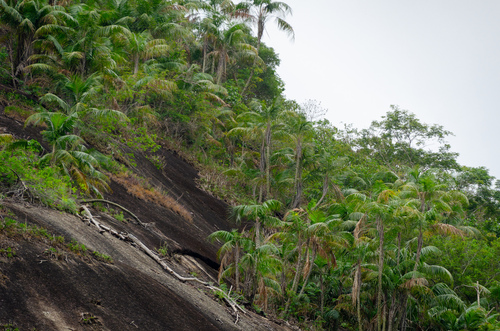
A tropical plant. It grows in lowland rainforest. It grows below 500 m altitude. It needs rich soil and constant moisture.
Where It Grows
Amazon, Brazil, Colombia, French Guiana, Guianas, Guyana, South America, Suriname, Venezuela,
Cultivation
A plant of the moist tropics, it can also be grown outdoors in warm subtropical areas. Prefers a sunny position. Grows best in a moist, well drained soil. Found mainly on clay soils in the wild.
Other Uses
The leaves are used for thatching. They are said to be durable. The wood is used in construction of houses, for fencing corrals, and occasionally in bow making.
Notes
There are about 30 Syagrus species.
Synonyms
Also Known As
Curua rana, Peh-peh
References (9)
- Agric. Colon. 10(2):467. 1916
- Henderson, A., Galeano, G and Bernal, R., 1995, Field Guide to the Palms of the Americas. Princeton. p 146
- Janick, J. & Paul, R. E. (Eds.), 2008, The Encyclopedia of Fruit & Nuts. CABI p 159
- Johnson, D.V., 1998, Tropical palms. Non-wood Forest products 10. FAO Rome. p 95
- Kermath, B. M., et al, 2014, Food Plants in the Americas: A survey of the domesticated, cultivated and wild plants used for Human food in North, Central and South America and the Caribbean. On line draft. p 842
Show all 9 references Hide references
- Marcia, M. J., et al, 2011, Palm Uses in Northwestern South America: A Quantitative Review. Bot. Rev. (2011) 77:462-570
- Riffle, R.L. & Craft, P., 2003, An Encyclopedia of Cultivated Palms. Timber Press. p 458
- van Roosmalen, M.G.M., 1985, Fruits of the Guianan Flora. Utrecht Univ. & Wageningen Univ. p 354
- World Checklist of Useful Plant Species 2020. Royal Botanic Gardens, Kew