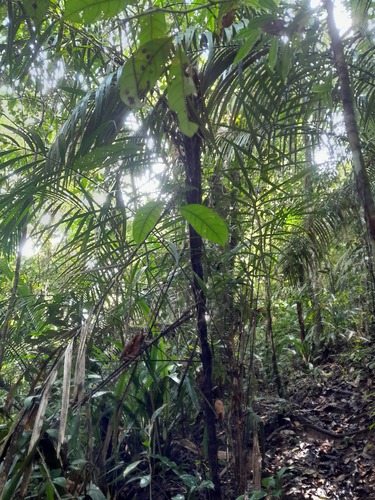
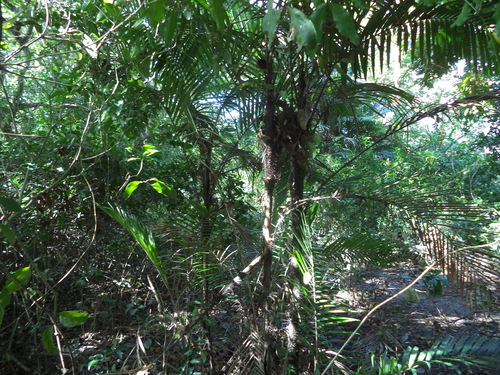
Syagrus flexuosa
(Mart.) Becc.
Acuma palm
iNaturalist· cc0
no rights reserved, uploaded by Tsssss
iNaturalist· cc-by-nc
(c) Marcus Athaydes, some rights reserved (CC BY-NC)
Description
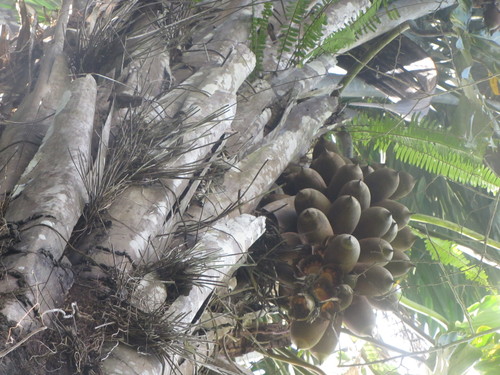
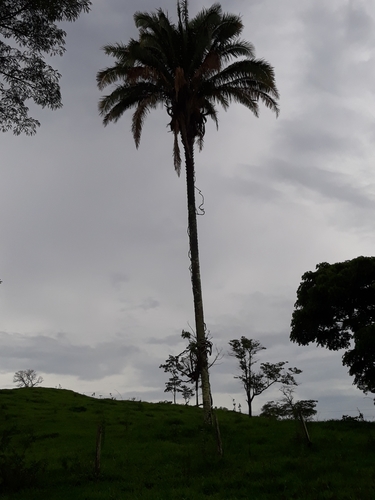
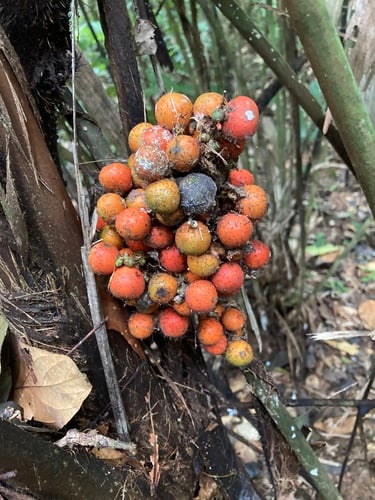
A small palm. The stems are slender. It can have one or several stems. They grow to 2-5 m high. The trunks are 8 cm across. Sometimes the trunk is covered with old leaf bases. The plant reaches 2-4 m across. The leaves are pinnate or feather like. These are 1-2 m long. The leaflets are narrow and deep green. The flowering stalks are 45 cm long. They arise from between the leaves and hang down. The flowers are green. The fruit are brown when ripe. They are slightly oval and 3 cm long.
Edible Uses
The fruit can be eaten raw. The nuts, palm heart, and cabbage are also edible parts.
Traditional Uses
The fruit can be eaten.
This uses section is brief — help expand it
Known Hazards
Plants are damaged by frost and require temperatures above 13°C.
Distribution
A tropical plant. It needs tropical or subtropical locations. In Brazil it grows to 1225m altitude. It needs a temperature above 13°C. Plants are damaged by frost. They need moist, well-drained soil. It suits hardiness zones 10-12.
Where It Grows
Australia, Brazil*, South America,
Cultivation
Plants are grown from seed. Seed are erratic to germinate.
Production
Seedlings grow slowly.
Notes
There are about 30 Syagrus species.
Synonyms
Also Known As
Acuma, Acum, Acuman, Coco de campo, Palmito do Campo
References (14)
- Agric. Colon. 10(2):466. 1916
- Bortolotto, I. M., et al, 2018, Lista preliminar das plantas alimenticias nativas de Mato Grosso do Sul, Brasil. Iheringia, Serie Botanica, Porto Alegre, 73 (supl.):101-116
- Brickell, C. (Ed.), 1999, The Royal Horticultural Society A-Z Encyclopedia of Garden Plants. Convent Garden Books. p 989
- Cundall, P., (ed.), 2004, Gardening Australia: flora: the gardener's bible. ABC Books. p 1384
- Gibbons, M., 2003, A pocket guide to Palms. Chartwell Books. p 196
Show all 14 references Hide references
- Henderson, A., Galeano, G and Bernal, R., 1995, Field Guide to the Palms of the Americas. Princeton. p 145
- Janick, J. & Paul, R. E. (Eds.), 2008, The Encyclopedia of Fruit & Nuts. CABI p 159
- Johnson, D.V., 1998, Tropical palms. Non-wood Forest products 10. FAO Rome. p 95
- Jones, D.L., 1994, Palms throughout the World. Smithtonian Institution, Washington. p 360
- Kermath, B. M., et al, 2014, Food Plants in the Americas: A survey of the domesticated, cultivated and wild plants used for Human food in North, Central and South America and the Caribbean. On line draft. p 842
- Lorenzi, H., Bacher, L., Lacerda, M. & Sartori, S., 2006, Brazilian Fruits & Cultivated Exotics. Sao Paulo, Instituto Plantarum de Estuados da Flora Ltda. p 92
- Oliviera V. B., et al, 2012, Native foods from Brazilian biodiversity as a source of bioactive compounds. Food Research International 48 (2012) 170-179
- Riffle, R.L. & Craft, P., 2003, An Encyclopedia of Cultivated Palms. Timber Press. p 457
- www.colecionandofrutas.org