Eugeissona utilis
Becc.
Stilt-Root Palm, Wild Borneo sago palm
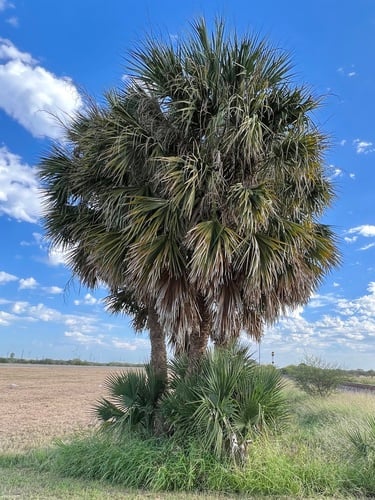
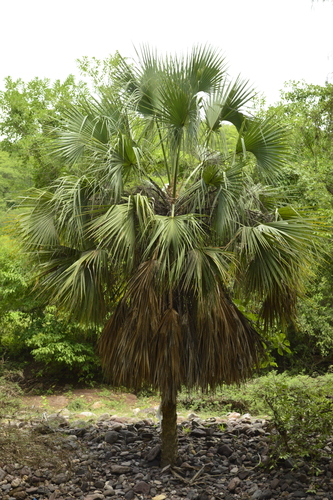
iNaturalist· cc-by
(c) Shawn O'Donnell, some rights reserved (CC BY), uploaded by Shawn O'Donnell
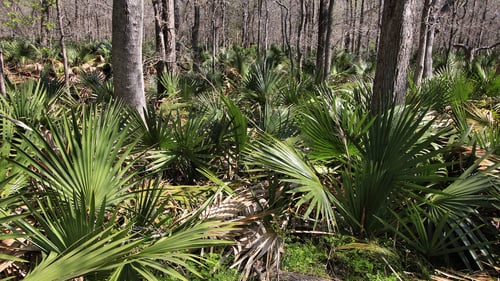
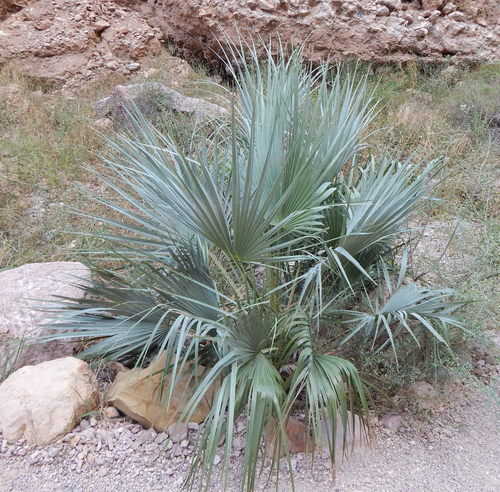
iNaturalist· cc-by
(c) Bernard DUPONT, some rights reserved (CC BY)
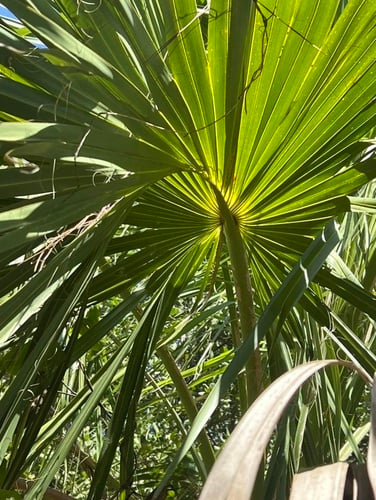
iNaturalist· cc-by
(c) Bernard DUPONT, some rights reserved (CC BY)
Summary
Source: WikipediaEugeissona utilis is an evergreen tree growing to 12 m tall and 12 m wide at a medium rate. Hardy to UK zone 10, it grows in light sandy, medium loamy, and heavy clay soils with good drainage. It tolerates mildly acid, neutral, and mildly alkaline pH. The tree requires full sun and prefers moist soil.
Description
A clumping palm. It grows 12-15 m high. The trunks are 25-30 cm across. The trunks are spiny and 9 m long. It has long prop roots. The leaves are large and up to 9 m long. They are erect and arch over. The lower part of the leaf stalks is covered with sharp short spines. The leaves have many narrow leaflets crowded along the midrib, and drooping. The flowering stalk is very large. They can be 2 m long. It grows upwards from the centre of the crown and has crowded branches. Each small branch has a single large flower. The flowers are purplish-black. They are about 8-9 cm long. The fruit are oval and brown. They are 8-10 cm long and 5-6 cm wide. They have small overlapping scales.
Edible Uses
The seed is occasionally eaten. A starch extracted from the stems is used to make sago of excellent quality. Pollen is produced in abundance — the violet pollen grains are eaten with rice or sago as a dessert. The terminal bud is also edible, though harvesting it will kill that shoot as the plant cannot form side branches.
Traditional Uses
The starch extracted from the stem is edible. The palm heart is edible. The pollen from the flower is used as a condiment.
This uses section is brief — help expand it
Medicinal Uses
None known
Distribution
A tropical plant. They need areas of high rainfall. It grows on forested ridges and low lying heath sites in Kalimantan and Sarawak. It is often on poor soils with plenty of humus. It grows in lowland rainforest and up to 750 m above sea level.
Where It Grows
Asia, Indonesia*, Malaysia*, Sarawak, SE Asia,
Cultivation
Plants succeed in moist tropical climates where temperatures never fall below 10°c, the average annual rainfall is 1,500mm or more and the driest month has 25mm or more rain. Requires a moist soil and a position in full sun. A multi-stemmed tree.
Propagation
Pre-soak seed for 24 hours in warm water, then sow in containers. Germination takes several months.
Other Uses
The leaves are used for thatching the walls and roofs of dwellings.
Production
Stems are ready to harvest after 5 years.
Other Information
Sago from the stems is a major food of the Dayak Punan people of Borneo.
Notes
There are 6 Eugeissona species.
Synonyms
Also Known As
Kadjatoa, Kajatao, Kinangan, Nanga, Palem sagu hutan borneo, Paluon, Pantu
References (18)
- Balick, M.J. and Beck, H.T., (Ed.), 1990, Useful palms of the World. A Synoptic Bibliography. Colombia p 216, 350, 617
- Blomberry, A. & Rodd, T., 1982, Palms. An informative practical guide. Angus & Robertson. p 99
- Chai, P. P. K. (Ed), et al, 2000, A checklist of Flora, Fauna, Food and Medicinal Plants. Lanjak Entimau Wildlife Sanctuary, Sarawak. Forestry Malaysia & ITTO. p 163, 169
- Facciola, S., 1998, Cornucopia 2: a Source Book of Edible Plants. Kampong Publications, p 28
- Haynes, J., & McLaughlin, J., 2000, Edible palms and Their Uses. University of Florida Fact sheet MCDE-00-50-1 p 6
Show all 18 references Hide references
- Hoare, A., 2003, Food use of the Lundayeh SW Sabah. Borneo Research Council.
- Jones, D.L., 1994, Palms throughout the World. Smithtonian Institution, Washington. p 213
- Johnson, D.V., 1998, Tropical palms. Non-wood Forest products 10. FAO Rome. p 47
- Kulip, J., 2003, An ethnobotanical survey of medicinal and other useful plants of Muruts in Sabah, Malaysia. Telopea 10(1) p 91
- Menninger, E.A., 1977, Edible Nuts of the World. Horticultural Books. Florida p 134
- Milow, P., et al, 2013, Malaysian species of plants with edible fruits or seeds and their evaluation. International Journal of Fruit Science. 14:1, 1-27
- Nuovo Giorn. Bot. Ital. 3:26. 1871
- PROSEA handbook Volume 9 Plants yielding non-seed carbohydrates. p 175
- Purseglove, J.W., 1972, Tropical Crops. Monocotyledons. Longmans p 427
- Riffle, R.L. & Craft, P., 2003, An Encyclopedia of Cultivated Palms. Timber Press. p 336
- Soepadmo, E., 1998, Plants. The Encyclopedia of Malaysia. Archipelago press. p 54
- Sukarya, D. G., (Ed.) 2013, 3,500 Plant Species of the Botanic Gardens of Indonesia. LIPI p 778
- Wickens, G.E., 1995, Edible Nuts. FAO Non-wood forest products. FAO, Rome. p165