Allagoptera arenaria
(Gomes) Kuntze
Cacando, Brazilian sand palm, Restinga palm, Seashore palm
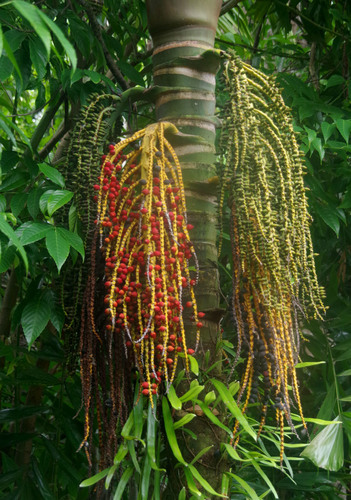
iNaturalist· cc-by
(c) mauroguanandi, some rights reserved (CC BY)
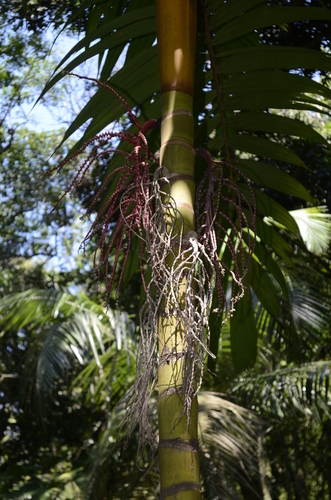
iNaturalist· cc-by-nc
(c) rafaelbessa, some rights reserved (CC BY-NC)
iNaturalist· cc-by-nc
(c) João Gava Just, some rights reserved (CC BY-NC), uploaded by João Gava Just
Summary
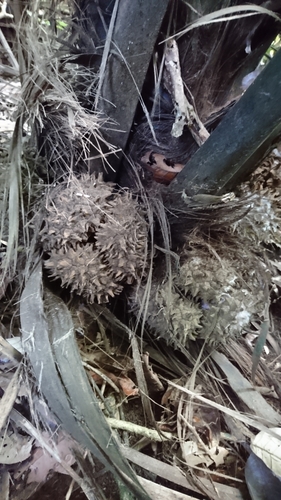
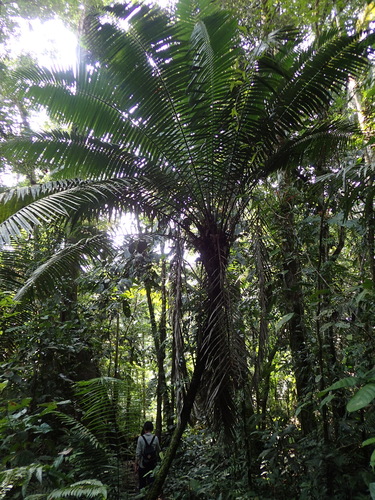
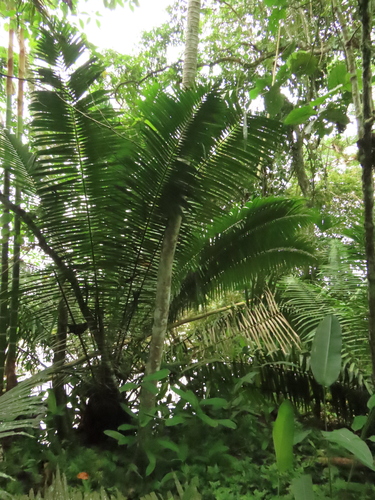
Source: WikipediaAllagoptera arenaria, popularly known as seashore palm, is a fruit tree native to the Atlantic Coast of Brazil. It grows in coastal strand, just above the high tide mark, and is widely cultivated as an ornamental throughout South America. Allagoptera arenaria is relatively short, reaching about 6 feet (1.8 m) tall. The plant is monoecious, with male and female plants in distinct spirals in the same spike. The leaves emerge right out of the ground from a subterranean trunk that is rarely visible, and grow in a swirling pattern, spreading out on different and seemingly random planes. There are 6–15 bright green to silvery green pinnately compound (feather-like) leaves 2–6 ft (0.61–1.83 m) long, with each leaflet about 2 ft (0.61 m) long. Its fruits are yellowish green and shaped like small coconuts, about 1 inch (25 mm) long and 0.5 in (13 mm) in diameter.
Description
A small clumping palm. It is about 4 m tall. It spreads 2-3 m wide. It has a branching underground trunk. The fronds are 1.2 m long. The fronds have leaflets along the stalk. They are dark green above and silvery underneath. The leaflets are irregularly arranged in groups in different planes. There are 2 or 3 in a cluster. They are somewhat curly. The flower stalk is 60 cm long and comes from a woody bract. The fruit are small and greenish-yellow. They are erect and look like corn on the cob. The fruit are 1-2 cm long. They are edible. Each fruit contains one seed.
Edible Uses
Allagoptera arenaria is cultivated extensively in South America for the edible fruits which are eaten fresh or made into a drink or jam. The leaves are used to make baskets and other woven objects.
Traditional Uses
The root is sweet and edible. The fruit are used for drinks.
This uses section is brief — help expand it
Distribution
It will tolerate extreme coastal exposure. A tropical and subtropical plant. It grows on the sand just above high tide mark in Brazil. It needs sandy soil and good light. It is salt tolerant. It suits hardiness zones 10-12. In Townsville palmetum.
Where It Grows
Australia, Brazil*, South America,
Cultivation
Plants are grown from seed. Seeds are erratic to germinate. Seed take about 3 months to germinate. Plants can be grown from suckers.
Other Uses
A fibre is obtained from the leaves. The plant has potential for paper making. The plant grows naturally on sand sunes and sandy soils, where it often forms large stands. It gathers sand, building up dunes around the stem, and may be useful for helping to slow erosion.
Production
Seedling growth is slow in the early stages.
Other Information
The fruit are enjoyed.
Notes
This is a palm under threat of extinction. Plants should be cultivated before harvesting, not collected from the wild. There are 4 Allagoptera species.
Synonyms
References (15)
- Cundall, P., (ed.), 2004, Gardening Australia: flora: the gardener's bible. ABC Books. p 124
- Facciola, S., 1998, Cornucopia 2: a Source Book of Edible Plants. Kampong Publications, p 26 (As Diplotemium maritinum)
- Gibbons, M., 2003, A pocket guide to Palms. Chartwell Books. p 33
- Haynes, J., & McLaughlin, J., 2000, Edible palms and Their Uses. University of Florida Fact sheet MCDE-00-50-1 p 2
- Henderson, A., Galeano, G and Bernal, R., 1995, Field Guide to the Palms of the Americas. Princeton. p 152
Show all 15 references Hide references
- Johnson, D.V., 1998, Tropical palms. Non-wood Forest products 10. FAO Rome. p 85
- Jones, D.L., 1994, Palms throughout the World. Smithtonian Institution, Washington. p 55, 124
- Jones, D.L., 2000, Palms of Australia 3rd edition. Reed/New Holland. p 114
- Llamas, K.A., 2003, Tropical Flowering Plants. Timber Press. p 91
- Lorenzi, H., Bacher, L., Lacerda, M. & Sartori, S., 2006, Brazilian Fruits & Cultivated Exotics. Sao Paulo, Instituto Plantarum de Estuados da Flora Ltda. p 64
- Monica Moraes, R., 1996, Allagoptera (Palmae). Flora Neotropica Vol. 73 pp 1-34.
- Revis. gen. pl. 2:726. 1891
- Riffle, R.L. & Craft, P., 2003, An Encyclopedia of Cultivated Palms. Timber Press. p 25, 248
- www.colecionandofrutas.org
- www.desert-tropicals.com