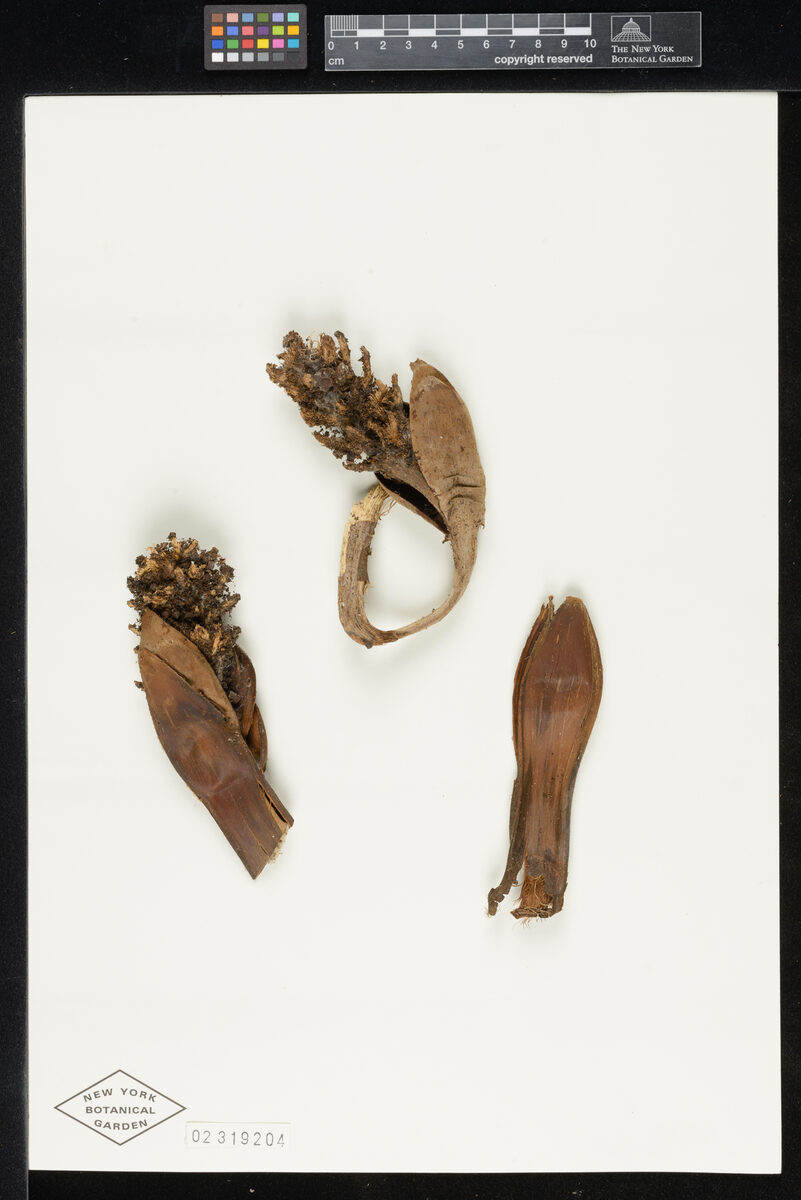
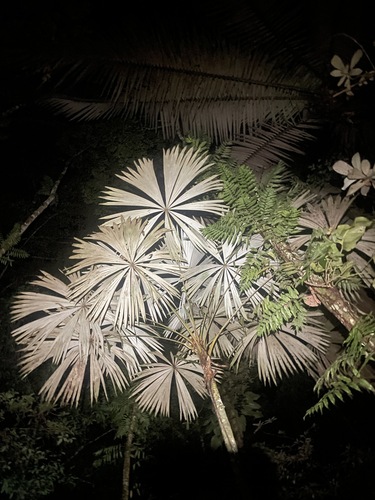
Wallichia oblongifolia
Griff.
Himalayan dwarf fishtail palm, Wallich's dwarf fishtail palm
iNaturalist· cc-by
(c) pbsg, some rights reserved (CC BY), uploaded by pbsg
iNaturalist· cc-by
(c) chintan sheth, some rights reserved (CC BY)
iNaturalist· cc-by
(c) chintan sheth, some rights reserved (CC BY)
Description
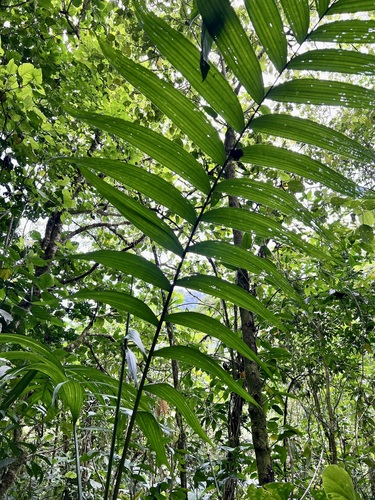
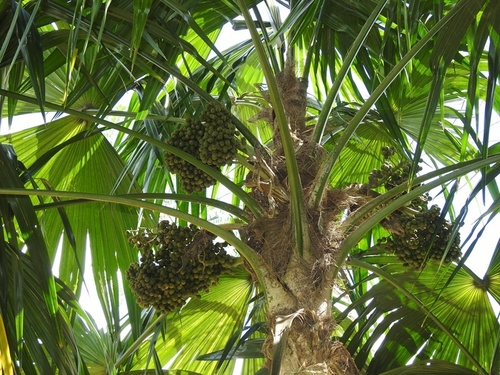
A small clustering palm. It grows 2 m tall. The fronds arch over. They have fishtail like leaflets. They are silvery white underneath. The leaves are arranged in spirals. There are 16 or 17 pinnae on each side of the stalk. The fruit are greenish-brown and 1.5 cm long.
Edible Uses
Starch is extracted from the stems and used as a famine food.
Traditional Uses
The stems are used for the preparation of an intoxicating drink. Starch is extracted from the stems and used as a famine food.
This uses section is brief — help expand it
Medicinal Uses
The stems are used in the preparation of an intoxicating drink.
Distribution
A tropical plant. It grows in the Himalayas up to 1,600 m above sea level. It suits a warm, sheltered moist site. In Yunnan.
Where It Grows
Asia, Bangladesh, Bhutan, China, Himalayas, India, Nepal, Northeastern India, Myanmar, SE Asia, Sikkim,
Cultivation
Species in this genus are generally monoecious. However, in the wild this species has only been seen with either all staminate or all pistillate inflorescences, never both, and thus there is a possibility that this species is dioecious.
Other Uses
The leaves are used for thatching and making brooms..
Synonyms
Also Known As
Tache
References (4)
- Ambasta, S.P. (Ed.), 2000, The Useful Plants of India. CSIR India. p 686 (As Wallichia densiflora)
- Hist. nat. palm. 3:190. 1838
- Murtem, G. & Chaudhrey, P., 2016, An ethnobotanical note on wild edible plants of Upper Eastern Himalaya, India. Brazilian Journal of Biological Sciences, 2016, v. 3, no. 5, p. 63-81 (As Wallichia densiflora)
- Salvi, J. et al, 2016, A review: Underutilized wild edible plants as a potential source of alternative nutrition. International Journal of Botany Studies. Volume 1; Issue 4; May 2016; Page No. 32-36 (As Wallichia densiflora)