Welfia regia
H. Wendl. ex Andre
Royal welfia
iNaturalist· cc-by-nc
(c) Jhon Alexander Mantilla Carreño, some rights reserved (CC BY-NC), uploaded by Jhon Alexander Mantilla Carreño
iNaturalist· cc-by-nc
(c) Jhon Alexander Mantilla Carreño, some rights reserved (CC BY-NC), uploaded by Jhon Alexander Mantilla Carreño
iNaturalist· cc-by
(c) Eduardo Chacón Madrigal, some rights reserved (CC BY), uploaded by Eduardo Chacón Madrigal
Description
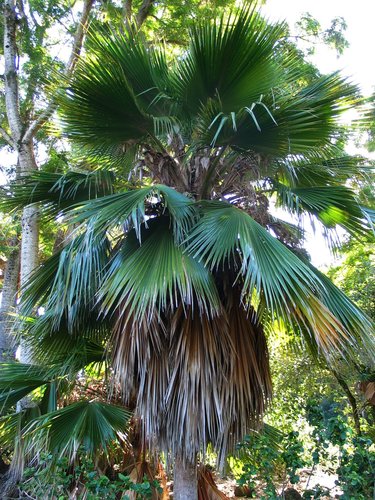
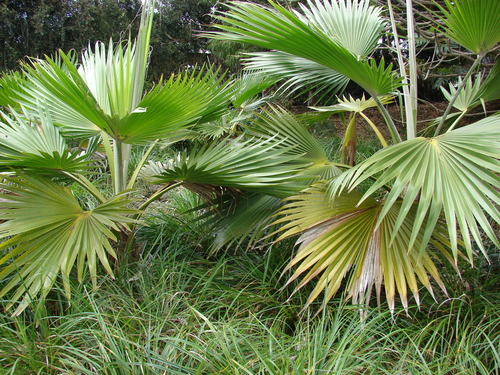
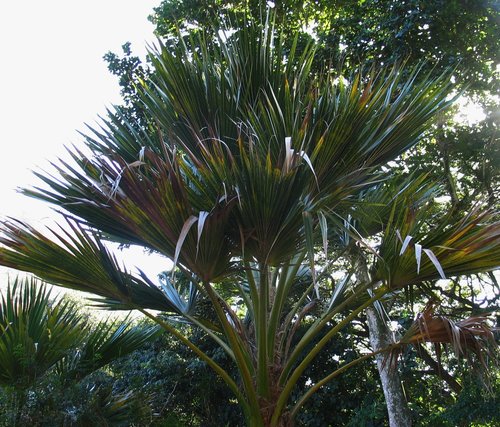
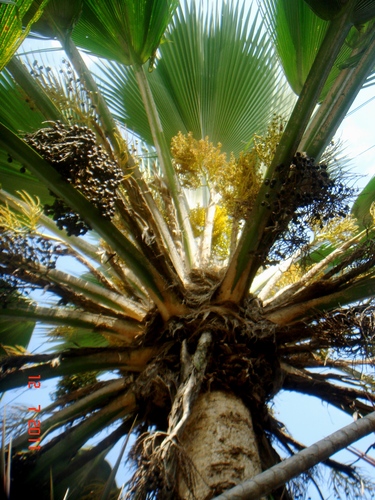
A palm. The stems are single. They are 7-20 m tall and 10-15 cm across. They are greyish. There are 10-30 erect leaves. They arch over towards the tip. The leaves are reddish when young. It has a conspicuous leaf sheath. The leaf blade is 3-6 m long. There are 40-90 leaflets along each side. The middle leaflets are 1 m long and 5-10 cm wide. The flowering stalk has a 10-15 cm long stalk before branching. There are 5-12 branches. They are large and hang down. They can be 1 m long and 2.5-3.5 cm thick. They have deep large pits. These are in 8 files along the branch. The fruit are oblong and 3.5-4.5 cm long and 2 cm wide. They are reddish-brown.
Edible Uses
Leaves - cooked. The apical bud, often known as a 'palm heart', is eaten as a vegetable. Eating this bud leads to the death of the tree because it is unable to make side shoots.
Distribution
A tropical plant. They grow in lowland and mountain rainforest. They are on slopes and ridges in areas with high rainfall. They grow from sea level to 1500 m altitude.
Where It Grows
Central America, Colombia, Costa Rica, Ecuador, Honduras, Nicaragua, Panama, Peru, SE Asia, Singapore, South America,
Cultivation
A tree of the tropics, where it can be found at elevations up to 1,500 metres. It is found in areas of high rainfall.
Other Uses
The leaves are used for thatching. Durable, they can last for several years. The stems are used as pillars in traditional houses, especially in coastal areas due to their ability to resist rot when submerged in salt water.
Synonyms
Also Known As
Amargo, Palmito, Camara, Cuasbil, Palma conga, Palma san juan, Palma tigre, Palmera, Palmilera, Palmito
References (8)
- Balick, M.J. and Beck, H.T., (Ed.), 1990, Useful palms of the World. A Synoptic Bibliography. Colombia p 57 (As Welfia georgii), 659 (As Welfia georgii),
- Condit, R., et al, 2011, Trees of Panama and Costa Rica. PrincetonField Guides. p 84
- Grandtner, M. M. & Chevrette, J., 2013, Dictionary of Trees, Volume 2: South America: Nomenclature, Taxonomy and Ecology. Academic Press p 704
- Henderson, A., Galeano, G and Bernal, R., 1995, Field Guide to the Palms of the Americas. Princeton. p 209
- Marcia, M. J., et al, 2011, Palm Uses in Northwestern South America: A Quantitative Review. Bot. Rev. (2011) 77:462-570
Show all 8 references Hide references
- Roa, J. A. G. & Boada, D. S. G., 2018, Fundación para el Fortalecimiento de la Fruticultura y Plantas Alimenticias no Convencionales en Colombia.
- World Checklist of Useful Plant Species 2020. Royal Botanic Gardens, Kew
- Zuchowski W., 2007, Tropical Plants of Costa Rica. A Zona Tropical Publication, Comstock Publishing. p 237